
Light Requirements
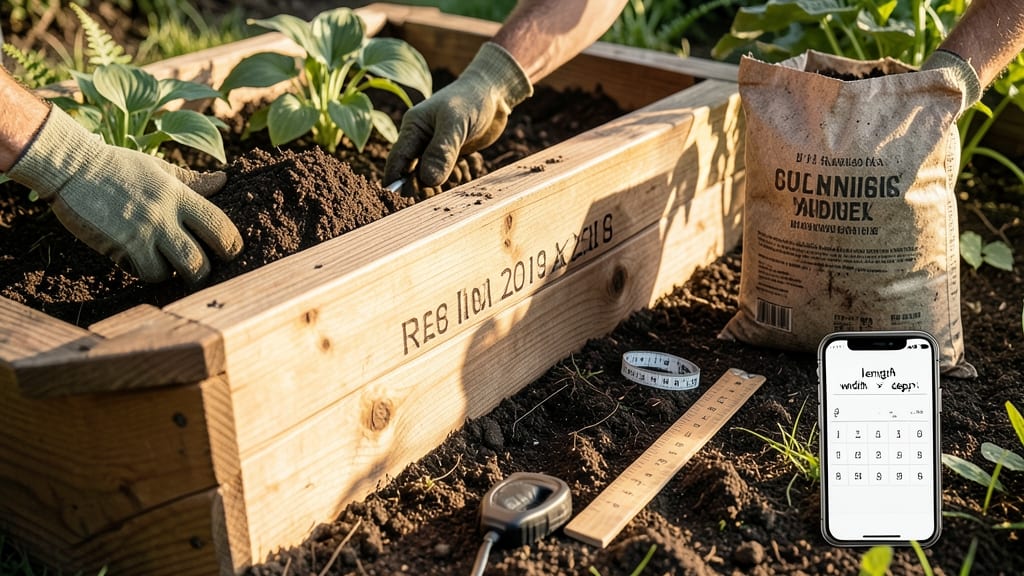
For an 8x4x2 raised garden bed, you'll need 12.8 cubic feet (0.36 cubic meters) of soil—about 1.5 cubic yards—to fill it completely. To cut costs, blend topsoil with compost (20% ratio) or opt for lightweight mixes like coconut coir if your soil is dense.
Calculating the exact amount of soil involves multiplying the bed's dimensions: 8 feet (length) × 4 feet (width) × 2 feet (depth) equals 64 cubic feet of space.
However, soil naturally compacts when added, so you'll need about 20% more volume than the raw calculation—hence the 12.8 cubic feet figure. 🌱 This accounts for settling over time and ensures your plants have optimal root space.
For larger projects, converting to cubic yards (1 cubic yard = 27 cubic feet) simplifies ordering bulk soil.
Beyond volume, the type of soil mix matters just as much. While topsoil alone works, it often drains too quickly or lacks nutrients. A 20% compost blend improves moisture retention and fertility without breaking the bank.
For example, mixing 1 part compost with 4 parts topsoil creates a balanced, cost-effective growing medium. If you're working with heavy clay soil, lightweight amendments like coconut coir can reduce weight while improving aeration.
💡 In This Article
- Calculating Soil Volume for an 8x4x2 Raised Bed
- Budget-Friendly Soil Mixes for Raised Beds
Calculating soil volume for an 8x4x2 raised bed
The basic formula for calculating soil volume is straightforward: multiply the bed's length, width, and depth. For an 8x4x2 raised bed, that's 8 feet × 4 feet × 2 feet = 64 cubic feet of raw space.
However, soil doesn't stay perfectly loose—it naturally compacts over time, especially when watered and worked.
This is why you need about 20% more volume than the raw calculation, bringing your total to 12.8 cubic feet (or 0.36 cubic meters). 🌱 Think of it like packing a suitcase: you can't fit as much as you'd expect because items shift and compress.
Converting to cubic yards makes ordering soil easier since most suppliers sell by the yard. Since 1 cubic yard = 27 cubic feet, your 12.8 cubic feet of soil translates to roughly 0.47 cubic yards.
However, most suppliers round up to 1.5 cubic yards to account for compaction and potential settling. This extra volume ensures your bed stays full and fertile, especially as organic matter breaks down over time.
For example, a bag of topsoil labeled as 1 cubic foot might actually yield only 0.8 cubic feet when compacted in the bed.
Soil amendments like compost or peat moss change the equation. Compost, for instance, has a bulk density of about 40 pounds per cubic foot, while topsoil averages 75-100 pounds per cubic foot.
Mixing in compost not only improves fertility but also reduces the overall weight of your soil blend. If you're using a 20% compost mix, you'll need slightly more total volume because compost holds more air and water, but it won't compact as much as pure topsoil.
This is why a 1:4 compost-to-topsoil ratio is ideal—it balances aeration, drainage, and cost efficiency.
For heavier soils like clay, consider adding lightweight amendments such as coconut coir or perlite. These materials reduce bulk density, making it easier to fill the bed without overloading the structure.
For instance, coconut coir has a bulk density of about 10-15 pounds per cubic foot, which is significantly lighter than topsoil.
This can be a game-changer if your bed is on a second story or if you're transporting soil manually. 💫 The trade-off is slightly higher cost, but the long-term benefits for plant health often justify the investment.
Here’s a quick comparison to help visualize the differences:
- Topsoil: 75-100 lbs/cubic foot, compacts heavily over time
- Compost: 40 lbs/cubic foot, improves aeration and moisture retention
- Coconut coir: 10-15 lbs/cubic foot, lightweight but retains moisture well
- Peat moss: 20-30 lbs/cubic foot, ideal for acidic-loving plants
Understanding these differences helps you tailor your soil mix to your specific needs—whether you're growing heavy feeders like tomatoes or delicate herbs that prefer well-draining soil. The key is to start with the right volume and adjust based on your soil's natural behavior over time. 🔥