
Vegetables
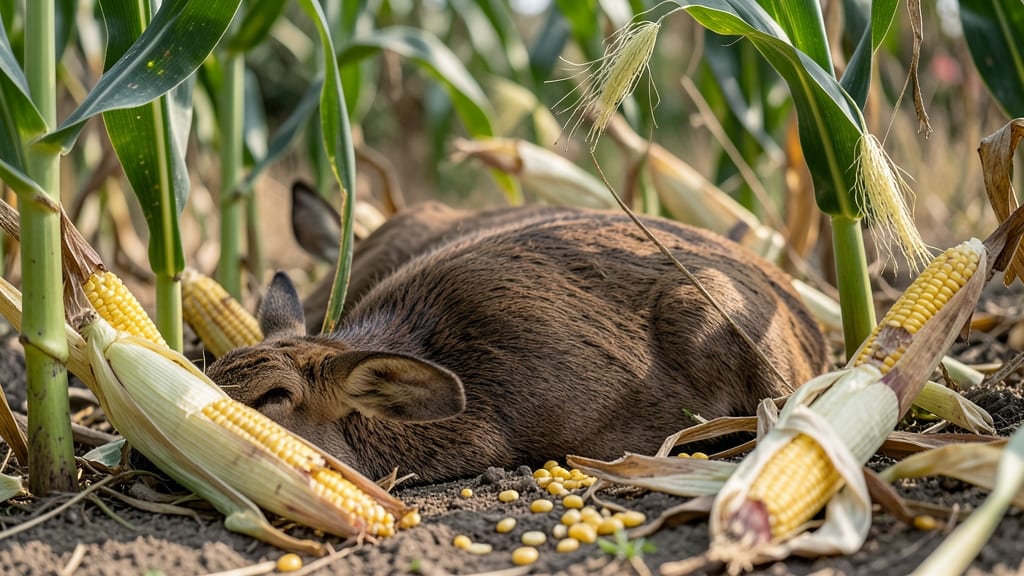
Deer bed in corn fields because the dense stalks and thick foliage create perfect shelter from predators and harsh weather, while scattered kernels provide easy food access. This behavior causes significant crop damage and soil compaction, pushing farmers to use deterrents like fencing or repellents.
Cornfields become deer magnets during growing seasons because they offer both safety and sustenance. 🌾 The stalks grow tall enough to block wind and rain while keeping deer hidden from aerial predators like hawks, while the fallen kernels create a natural food source.
Unlike other crops, corn's vertical growth provides year-round cover, making it a prime spot for deer to rest and graze. Farmers often notice the worst damage during late summer when corn is mature but hasn't yet been harvested, giving deer easy access to both food and shelter.
This habit doesn't just mean lost crops—it also compacts the soil, reducing future yield potential. The weight of multiple deer bedding in the same area over time creates hardpan layers that make planting difficult.
Many farmers report losing 10-30% of their corn crop annually to deer browsing and bedding, with the most severe cases occurring in areas with high deer populations and limited alternative habitat.
💡 In This Article
- Why Corn Fields Attract Deer for Bedding
- Effective Deer-Proofing Strategies for Corn Crops
Why corn fields attract deer for bedding
Cornfields create an ideal deer habitat because they combine three critical elements: vertical cover, food availability, and seasonal reliability. The stalks grow to 6-12 feet tall, providing windbreaks that reduce exposure to predators while deflecting harsh weather.
Studies show deer prefer areas with at least 75% canopy cover, and corn's dense foliage meets this requirement perfectly. Unlike soybeans or wheat, which offer only ground-level cover, corn's vertical structure allows deer to remain hidden from both aerial and ground predators while maintaining visibility of their surroundings.
The food factor is equally important—deer don't just bed in cornfields; they actively graze on fallen kernels, which scatter abundantly during pollination and harvest.
A single mature corn plant can drop 50-100 kernels during wind events, creating a natural smorgasbord. 🌾 This food source becomes especially critical during late summer when other forage is scarce.
Research from the University of Wisconsin found that cornfields with 10% or more dropped kernels see 40% higher deer activity compared to fields with minimal waste. The combination of shelter and sustenance makes cornfields more attractive than alfalfa or clover fields, which lack the same vertical structure.
Seasonal patterns further explain why cornfields become deer hotspots. Deer are most active during dawn and dusk, when they feed and bed down. During corn's vegetative stage (June-July), the plants are tall enough to provide cover but haven't yet produced kernels, making them prime resting spots.
By August-September, when kernels mature, deer shift to feeding more actively—but they continue bedding in the same fields due to the established comfort of the terrain. This seasonal behavior creates a year-round attraction, unlike crops that only offer temporary benefits.
Comparing cornfields to other crops reveals why deer prefer them so consistently. Soybean fields, for example, offer good cover but lack the vertical density of corn, while clover provides food but no significant shelter. Even alfalfa, which deer love for its protein content, doesn't match corn's three-dimensional habitat.
The soil compaction from repeated deer bedding further reinforces their preference—once a field becomes trampled, deer return because it's already familiar and comfortable. This creates a feedback loop where damage begets more damage unless intervention occurs.
One often-overlooked factor is the thermal regulation cornfields provide. The dense stalks create microclimates that stay 5-10°F warmer than open fields during cold nights, offering deer protection from frostbite and hypothermia.
This thermal advantage, combined with the other benefits, makes cornfields the #1 choice for deer bedding across much of North America—outperforming even hardwood forests in agricultural areas. The result? Farmers lose an estimated $1.2 billion annually in crop damage and reduced yields due to deer activity.