
Planting
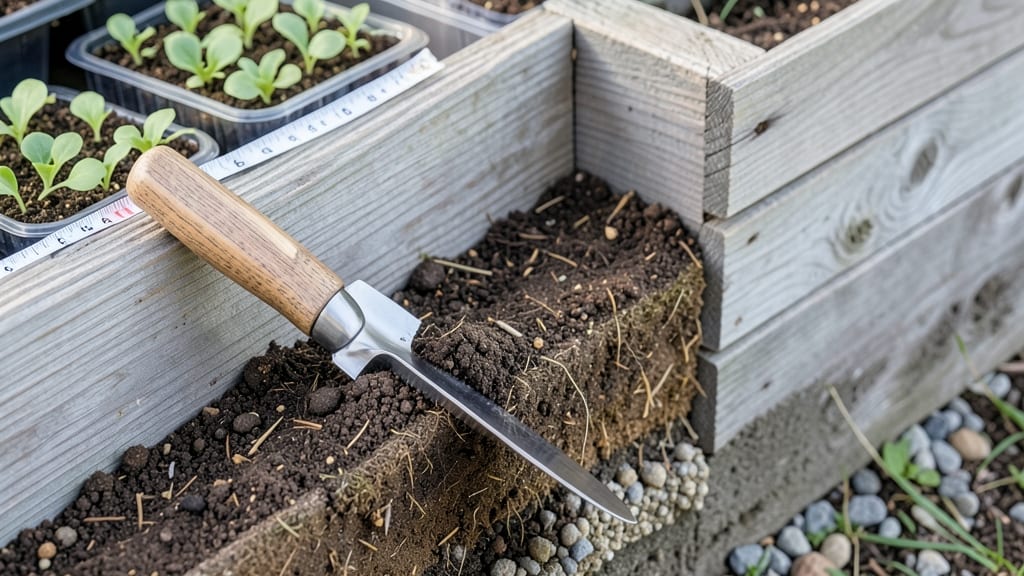
To determine how deep a raised garden bed needs to be, aim for 6 to 12 inches for most vegetables and herbs, while root crops like carrots and potatoes require 12 to 18 inches. Soil quality and drainage are key factors for plant health.
A raised garden bed's depth directly impacts root growth and nutrient access. 🌱 Shallow-rooted plants like lettuce or basil thrive in 6-inch beds, while deeper beds let root vegetables stretch comfortably.
I've found that adding 4-6 inches of compost at the bottom creates the perfect growing zone by improving drainage and aeration while keeping moisture balanced.
For long-term success, consider your local climate and soil type. Sandy soils may need extra depth to retain moisture, while clay-heavy soils benefit from raised beds that prevent waterlogging. The extra height also makes gardening easier on your back while extending your growing season by warming up faster in spring.
💡 In This Article
- Root Depth Requirements for Different Plants
- Building the Perfect Raised Garden Bed for Soil Health
Root depth requirements for different plants
Root systems vary dramatically between plant types, and this directly impacts how deep your raised bed should be. Shallow-rooted plants like lettuce, spinach, and herbs (basil, parsley, chives) thrive in just 4-6 inches of soil because their roots spread horizontally to access nutrients near the surface.
These plants prioritize leafy growth over vertical expansion, so deeper beds won't benefit them. 🌿 Meanwhile, medium-rooted vegetables like beans, peas, and beets need 8-12 inches to establish strong anchor systems while accessing moisture and nutrients efficiently.
The real game-changer is root crops—carrots, potatoes, and parsnips—which demand 12-18 inches of depth. These plants grow roots that can extend 12-18 inches downward, and restricting them in shallower beds leads to stunted growth or deformed shapes.
For example, a carrot planted in a 6-inch bed might grow only 3-4 inches long, while the same variety in a 16-inch bed can reach its full 8-10 inch potential. The deeper soil allows roots to push through compacted layers, accessing water and nutrients that shallow beds simply can't provide.
Even flowers and ground covers have specific needs. Radishes, for instance, are shallow-rooted like lettuce but grow quickly—so they need at least 6 inches to develop their signature crunchy texture. Meanwhile, perennials like asparagus require 12-18 inches of depth because they develop thick, woody roots that store energy for years.
The key is matching the bed depth to the plant's mature root system, not its seed size or early growth stage.
What most gardeners overlook is how root depth affects nutrient absorption. Plants with deeper roots can access nutrients from a larger soil volume, reducing competition between plants. In a 6-inch bed, all plants are fighting for the same nutrients in the top layer, which can lead to deficiencies.
Deeper beds create a vertical nutrient gradient, where different layers can support different growth stages—roots can spread downward while leaves expand upward without crowding.
Consider this comparison: A tomato plant's roots can spread 2-3 feet wide but only 12-18 inches deep. While its roots won't need a 2-foot deep bed, the extra depth helps stabilize the plant and prevents the roots from hitting the bed's bottom prematurely.
This is why many gardeners opt for 12-inch beds—they accommodate most vegetables while leaving room for future expansion or deeper-rooted additions.
For container gardening enthusiasts, this translates to choosing the right pot size. A 5-gallon container (about 12 inches deep) works for tomatoes, peppers, and bush beans, while a 10-gallon container (about 18 inches deep) is better for root crops or larger plants.
The rule of thumb: If a plant's mature root depth exceeds your bed's height by more than 2 inches, it's time to upgrade your growing space. 🌱