
Light Requirements
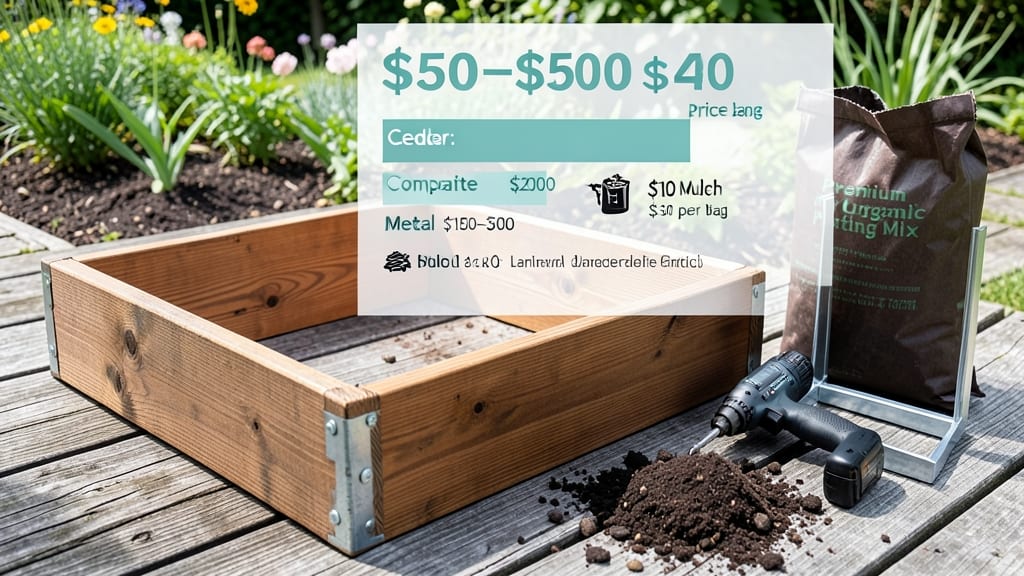
Raised garden beds cost between $100 and $1,500+, depending on materials (cedar: $100–$500, composite lumber: $200–$800, stone/brick: $500–$1,500+) and size (4’x8’ averages $200–$600). DIY kits reduce costs by 30–50%, while pre-built beds add $100–$300 for labor and assembly.
Building your own raised bed can save you hundreds compared to pre-assembled options, but the material choice makes a huge difference. 💫 Cedar remains the budget-friendly favorite, balancing affordability with natural rot resistance, while stone or brick beds last decades but start at $500+.
I’ve seen DIY projects drop costs by nearly half—just be prepared for extra time and tools. Size also plays a big role: a 4’x4’ frame might run $150–$300, but scaling up to 8’x12’ jumps to $800–$1,500+ for premium materials.
Don’t forget hidden expenses like soil, drainage layers, or hardware cloth for pest protection. A 4’x8’ bed filled with quality gardening mix can add another $100–$200, and pre-built kits often include assembly fees.
For long-term savings, cedar or composite lumber offers the best balance of durability and upfront cost—just weigh whether you prioritize quick assembly or lasting value.
💡 In This Article
- Raised Garden Bed Cost Factors by Material Type
- Budget Breakdown: DIY vs. Pre-Built Raised Beds
Raised garden bed cost factors by material type
The material you choose directly impacts both the upfront cost and long-term value of your raised bed. Cedar, for example, costs $100–$500 for a 4’x8’ frame because it’s naturally rot-resistant and lightweight, making it ideal for DIY projects.
Its aromatic oils deter pests, but it may require sealing every 2–3 years to maintain its 10–15-year lifespan. In contrast, redwood—another softwood—runs $150–$600 for the same size due to its higher natural durability (up to 20 years) and resistance to warping.
Composite lumber, made from recycled wood fibers and plastic, costs $200–$800 for a 4’x8’ bed but offers 25+ years of weather resistance without needing paint or sealant. The trade-off? It’s heavier and less eco-friendly than natural wood.
Stone or brick beds start at $500–$1,500+ for a 4’x8’ frame, thanks to their 50+ year lifespan and zero maintenance—though labor costs can add $300–$800 if hiring a mason. 🔥 For budget-conscious gardeners, cedar or redwood strikes the best balance between cost and longevity.
Durability isn’t the only factor—maintenance also affects long-term costs. Cedar and redwood require occasional sealing to prevent moisture damage, while composite lumber needs no upkeep. Stone or brick beds, while low-maintenance, may develop cracks over time, requiring mortar repairs that can cost $50–$200 per fix.
If you’re prioritizing sustainability, cedar (sustainably sourced) or reclaimed wood can cut costs by 20–30% compared to new lumber.
Consider your climate too. In humid regions, cedar’s natural oils help it resist rot, but composite lumber outperforms it in extreme heat or cold. For example, a cedar bed in Arizona might need sealing annually, while a composite bed would last decades without treatment.
The key is matching the material to your local conditions—cedar for moderate climates, composite for harsh weather, and stone for permanent installations. 💫
Pro tip: Mix materials for cost savings. Use cedar for the frame and fill the bottom with cheaper gravel or bricks, then add soil on top. This hybrid approach can reduce costs by 15–25% while still delivering durability. Just ensure the base is level to prevent warping over time.
Finally, don’t overlook the weight factor. Stone or brick beds can weigh 2,000–5,000+ pounds, requiring a sturdy foundation or concrete footings. Cedar or composite beds, at 50–200 pounds, are easier to move or modify later. This flexibility can save you money on future adjustments or repairs. ✨