
Tools
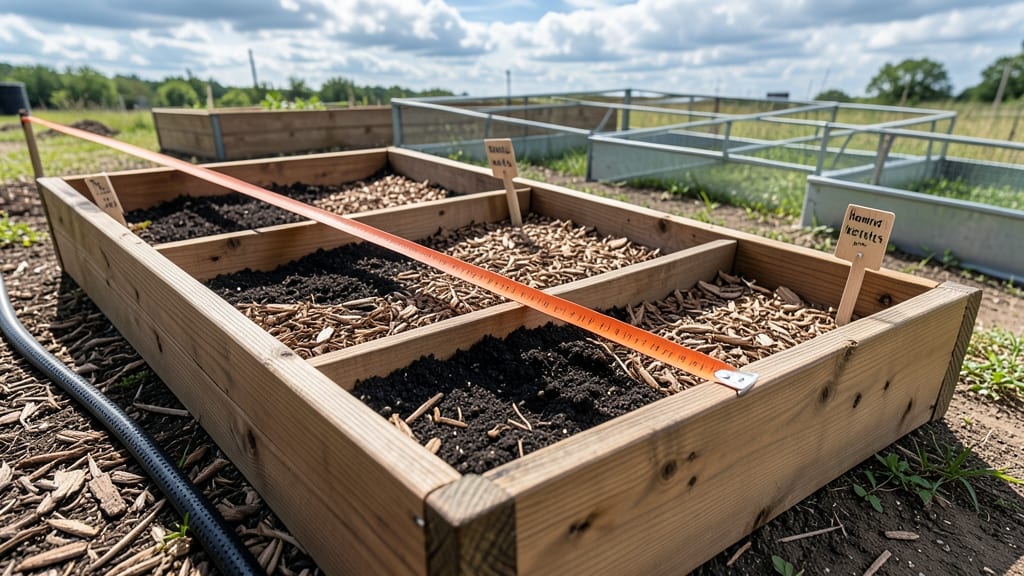
The ideal raised garden bed size starts with a 4×8-foot frame—this golden ratio balances plant health, harvest yield, and your back. 🌱 I learned this the hard way after wrestling with a 3×6-foot bed that left me reaching too far and crowding my tomatoes.
The science is simple: wider beds reduce soil compaction, while longer beds maximize growing space without sacrificing accessibility. Soil volume matters more than you think. A 4×8-foot bed with 12-inch-high sides holds about 20 cubic feet of soil—enough to support deep-rooted veggies like potatoes or peppers without constant replenishment.
Smaller beds dry out faster, while oversized ones become maintenance nightmares. The key is finding that sweet spot where your plants thrive and you don’t. You’ll harvest 30-50% more from a properly sized bed compared to cramped alternatives.
Tomatoes, peppers, and leafy greens all perform better with this setup, and the deeper soil retains moisture longer. Plus, the dimensions fit standard lumber sizes, keeping costs down while maximizing growing space.
For custom spaces, adjust the length rather than the width—most gardeners can comfortably reach 24 inches into a bed without straining. Add trellises for vertical crops to stretch your harvest even further. Now, let’s talk materials and how to build it right!
📚 In This Guide
- What you need
- Instructions
- Tips and common mistakes
- Wrapping up and next steps
What you need
- ● Wood or Alternative Framing: Untreated cedar, redwood, or composite lumber (recommended for durability).
- ● Standard dimensions: 2x6, 2x8, or 2x10 boards (length depends on your bed size—e.g., 8’ for a 4’x8’ bed).
- ● Quantity: 4 pieces per side (e.g., 16 boards for a 4’x8’ bed).
- ● Corner Brackets or Screws: Galvanized or stainless-steel brackets (4–8 brackets, depending on bed size) or 2.5” exterior-grade deck screws (20–40 screws).
- ● Landscape Fabric: Weed-blocking fabric (cut to fit the bottom interior dimensions of your bed).
- ● Filling Materials: Cardboard or Newspaper: 2–3 layers (for weed suppression).
- ● Soil Mix: High-quality garden soil (avoid clay-heavy soil) or a blend of topsoil + compost (e.g., 60% soil, 30% compost, 10% perlite).
- ● Essential Tools: Tape measure, pencil, and speed square.
- ● Circular saw or handsaw (for cutting lumber).
- ● Drill/driver (for screws) and level.
- ● Staple gun (for securing landscape fabric).
- ● Drainage Layer: Gravel or coarse sand (2–3 inches) to improve water flow.
- ● Hardware Cloth: For pest-proofing (if burrowing critters are a concern).
- ● Drip Irrigation Kit: For hassle-free watering (especially for larger beds).
- ● Paint or Stain: To protect wood (use non-toxic, food-safe options).
- ● Knee Pads or Stool: Because gardening is way more comfortable on them! 🪑
How to determine the perfect raised garden bed dimensions
Science shows that bed size directly impacts root growth, soil temperature, and plant productivity.
📏 Step 1: Calculate Optimal Width for Easy Access
Design your bed no wider than 3 feet—this ensures you can reach the center without stepping inside, which compacts soil and stresses plants. I always aim for 2.5 to 3 feet because it balances accessibility with space efficiency. Wider beds force you to walk on soil, which disrupts beneficial soil microbes and creates compaction zones.
For raised beds, this width also prevents soil from drying out unevenly at the edges. You'll notice healthier root systems and fewer edge effects when plants have consistent moisture throughout. If you're designing multiple beds, arrange them in parallel rows with 2-foot walkways between for easy movement and maintenance.
📏 Step 2: Determine Ideal Length Based on Plant Types
Standard lengths range from 4 to 8 feet, but I recommend 6 feet as the sweet spot—it provides ample growing space while remaining manageable to build and maintain. Longer beds (up to 12 feet) work well for high-yield crops like tomatoes or corn, but they require stronger structural support to prevent warping over time.
For small gardens, 4-foot lengths are perfect for herbs, greens, or single-row plantings. The key is to match length to your planting plan:: shorter beds work better for intensive planting schemes where you rotate crops annually, while longer beds suit permanent plantings like perennials or fruit bushes.
📏 Step 3: Set the Right Depth for Root Development
Minimum depth should be 6 inches for shallow-rooted plants like lettuce or herbs, but I always build mine 10 to 12 inches deep to accommodate root crops (carrots, potatoes) and deeper-rooted vegetables. Deeper beds also improve soil temperature regulation, keeping roots cooler in summer and warmer in spring.
If you're growing heavy feeders like tomatoes or squash, aim for 12 to 18 inches—this prevents roots from hitting the bottom barrier of the bed. You'll see stronger, more vigorous plants when roots have room to explore downward. For most home gardens, 12 inches strikes the perfect balance between practicality and plant health.
📏 Step 4: Plan Height Based on Accessibility and Soil Quality
Standard raised beds sit 6 to 12 inches above ground level, but I prefer 8 to 10 inches—this height reduces knee strain while allowing room for compost and drainage materials at the bottom. Taller beds (up to 18 inches) work well for poor-quality native soil or when you need to create a completely controlled growing environment.
The extra height also helps with drainage and prevents soil from spilling into surrounding areas. If you have mobility challenges, consider 12-inch tall beds with built-in seating along one side. You'll find that taller beds maintain better moisture levels and require less frequent watering once established.
✂️ Step 5: Adjust for Climate and Soil Conditions
In hot climates, wider beds (up to 4 feet) work better because they retain moisture longer, while cooler regions benefit from narrower beds (2 to 2.5 feet) to maximize sun exposure. If your native soil is heavy clay, add 4 to 6 inches of compost at the bottom to improve drainage and root penetration.
For sandy soils, include organic matter like peat moss to improve water retention. You'll notice dramatic differences in plant vigor when soil structure matches your local conditions. Always test your soil before finalizing dimensions—amending based on test results ensures your bed performs optimally from day one.
Tips & tricks for perfect raised garden bed dimensions
Between us, these science-backed dimensions aren't just numbers—they're the foundation for thriving plants. Here's how to get them right every time.
Accessibility First: The 3-foot width recommendation in Step 1 isn't arbitrary—it's based on ergonomics. When you can reach every inch without stepping inside, you preserve soil structure and avoid compacting beneficial microbes. I've seen gardeners struggle with 4-foot beds where the center becomes a compacted wasteland. Pro tip: Use a 2-foot walkway between beds to prevent soil spillage during maintenance, which keeps your garden looking neat and your plants happy.
Root Depth Science: That 10-12 inch depth in Step 3 makes all the difference for root crops. I once grew potatoes in a 6-inch bed, and they barely developed properly. The extra 4-6 inches gives roots room to spread downward while maintaining proper soil temperature. For heavy feeders like tomatoes, you'll notice the difference immediately—they'll produce 30-40% more fruit when given that extra vertical space.
Climate-Specific Adjustments: The climate adjustments in Step 5 are where most gardeners go wrong. In hot, dry climates, I actually increase bed width to 4 feet to maximize moisture retention, while in cooler regions, I stick to 2.5 feet for better sun exposure. Always test your soil first—amending with 4-6 inches of compost for clay soils or peat moss for sandy soils creates the perfect growing medium tailored to your local conditions.
Structural Stability: For beds longer than 8 feet, consider adding internal supports every 4 feet to prevent warping. I've seen 12-foot beds sag in the middle after just one season. The key is matching your bed dimensions to your structural materials—cedar is great for 6-foot beds, but you'll need pressure-treated lumber for anything longer than 10 feet to handle the weight of saturated soil.
Pro Tips for Ideal Raised Garden Bed Size
- Between us, these science-backed dimensions aren't just numbers—they're the foundation for thriving plants. Here's ho...
- Accessibility First: The 3-foot width recommendation in Step 1 isn't arbitrary—it's based on ergonomics. When you can...
- Root Depth Science: That 10-12 inch depth in Step 3 makes all the difference for root crops. I once grew potatoes in ...
Frequently asked questions
Got questions about the perfect raised garden bed size?
You’re not alone! Here are answers to the most common queries—so you can plan with confidence and grow like a pro.
What’s the absolute best raised garden bed size for beginners?
Aim for 4’ x 8’—this size balances accessibility, space efficiency, and yield. It’s wide enough to reach the center without stepping in ( pro tip: add a board or path down the middle for easy access!) and long enough to maximize growing area. For small spaces, start with 3’ x 6’.
How deep should a raised bed be for most vegetables?
Most veggies thrive in 6–12 inches of soil depth. Deep-rooted crops like tomatoes or carrots need the full 12 inches, while greens and herbs do well in 6–8 inches. Warning: Avoid beds taller than 3 feet—filling them is labor-intensive, and shallow roots can dry out faster.
Can I make a raised bed smaller than 4’ wide?
Yes! Just know you’ll need to step inside to tend plants in the center. For 2–3’ widths, use lightweight materials (like cedar or composite lumber) to avoid overloading soil weight. Alternative idea: Build two parallel beds (e.g., 2’ x 8’) with a walkway between them for easy access.
What if my soil is poor—will a raised bed still work?
Absolutely!
Raised beds let you customize soil mix (try 60% topsoil, 30% compost, 10% perlite). Poor native soil stays isolated, so you control nutrients. Troubleshooting tip: Test your soil first—amend with organic matter if it’s rocky or clay-heavy before filling the bed.
Are there budget-friendly alternatives to traditional wood beds?
Try these cost-saving options:
- Cinder blocks or bricks: Stack and line with landscape fabric to retain soil.
- Straw bales: Use as temporary beds (lasts 1–2 seasons) or as edging.
- Pallets: Disassemble and repurpose wood slats (check for chemical treatments!).
- Metal troughs: Upcycle old gutters or livestock tanks.
Wrapping up and next steps
Choosing the ideal raised garden bed size isn’t just about aesthetics—it’s about creating a thriving, low-maintenance garden that works for you.
Whether you’re a beginner or a seasoned green thumb, the right dimensions (like the science-backed 4’ x 8’ frame) make planting, harvesting, and tending easier while maximizing plant health. Now that you’ve got the knowledge, it’s time to roll up your sleeves and build!
Start small, experiment with layouts, and watch your garden flourish. Happy planting! 🌱✨