
Landscaping
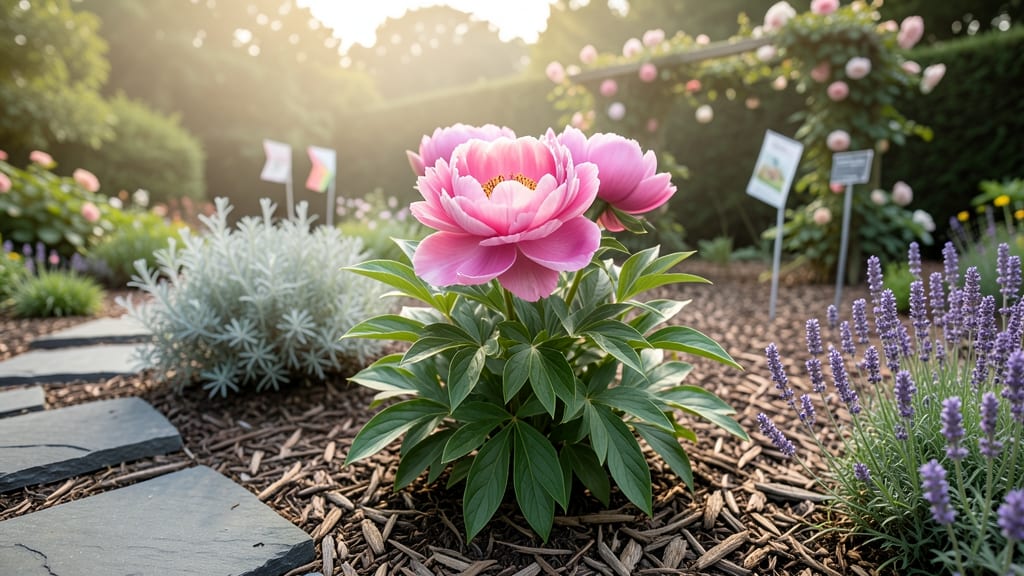
Your peony flower bed ideas could be the envy of the neighborhood—romantic layers that bloom in spring, provide structure in summer, and even add winter interest. 🌸 I designed my first peony bed after realizing how much drama a single variety could bring, and now it’s the centerpiece of my garden, drawing compliments every spring.
The secret isn’t just the peonies—it’s the supporting cast. Pair bold pink ‘Sarah Bernhardt’ with delicate white ‘Bowl of Beauty’ for contrast, then tuck in evergreen shrubs like boxwood or dwarf lilacs for year-round structure.
Add a few spring bulbs like daffodils or tulips to bloom before the peonies take over, and you’ll have color from March through June.
By late summer, the peony foliage turns a rich, velvety green that frames other perennials like black-eyed Susans or sedum, while their seed pods add texture through fall. Even in winter, the skeletal stems create a striking silhouette against snow.
This design works for small city gardens or spacious backyards—just adjust the scale. Let’s make yours unforgettable!
📚 In This Guide
- What you need
- Instructions
- Tips and common mistakes
- Wrapping up and next steps
What you need
- ● Peony plants: 5–15 bare-root or potted peonies (depending on bed size; choose early-, mid-, or late-blooming varieties for extended color).
- ● Compost or aged manure: 2–3 cubic feet (blend into soil for nutrients).
- ● Organic mulch: 2–3 inches (straw, shredded bark, or pine needles).
- ● Garden soil or topsoil: 1–2 cubic yards (amend with compost for drainage).
- ● Fertilizer: Balanced 10-10-10 or slow-release peony-specific fertilizer (1–2 lbs per 10 sq ft).
- ● Garden shovel or spade: For digging and soil prep.
- ● Garden trowel: For planting individual peonies.
- ● Wheelbarrow or bucket: For mixing soil and compost.
- ● Measuring tape: To mark bed dimensions (aim for 3–4 ft wide for easy maintenance).
- ● Garden gloves: To protect your hands (peonies have thorns!).
- ● Pruners: For trimming dead foliage post-planting.
- ● Companion plants: Low-growing perennials like lavender, catmint, or ornamental grasses for texture.
- ● Edging materials: Brick, stone, or metal borders to define the bed.
- ● Drip irrigation kit: For consistent moisture (especially in hot climates).
- ● Decorative stakes or labels: To track peony varieties and blooming times.
How to design a stunning peony flower bed with seasonal interest
Peonies bring drama and romance to any garden—here's how to layer them for year-round beauty.
🌿 Step 1: Choose the Right Peony Varieties for Seasonal Impact
Select peonies with staggered bloom times to ensure continuous color from late spring through early summer. I recommend blending early bloomers like 'Sarah Bernhardt' with mid-season varieties such as 'Bowl of Beauty' and late-season types like 'Coral Charm'. This creates a cascading effect where one variety fades just as another peaks.
For height variation, plant tall varieties like 'Bartzella' at the back of the bed (3-4 feet tall) and shorter types like 'Duchesse de Nemours' (2-3 feet) toward the front. This layered approach prevents the bed from looking flat once the peonies finish blooming. Include a few herbaceous peonies like 'Pink Hawaiian Coral' for their delicate foliage that adds texture long after the flowers fade.
☀️ Step 2: Select Complementary Perennials for Year-Round Appeal
Peonies need companions that thrive in their shade once the foliage emerges. I plant Russian sage ('Perovskia atriplicifolia') behind the peonies for its silvery foliage and purple spikes that bloom in late summer. In front, I add catmint ('Nepeta') and salvia ('Salvia nemorosa') for their drought tolerance and contrasting foliage textures.
For early spring interest before peonies bloom, incorporate heuchera ('Coral Bells') with its colorful foliage and pulmonaria ('Lungwort') for its spotted leaves. These plants also provide ground cover that suppresses weeds—something peonies despise. In fall, sedum ('Stonecrop') and heuchera continue the show with their autumn colors long after peony blooms have passed.
🪴 Step 3: Plan the Layout for Maximum Impact
Arrange peonies in odd-numbered groupings of 3, 5, or 7 for natural visual appeal. Space them 3-4 feet apart to allow mature plants room to spread. I always plant them in a slightly staggered pattern rather than perfect rows—this creates a more organic, flowing look. Mark planting spots with stakes before digging to maintain proper spacing.
Dig holes 2 inches deeper than the root ball and 2 inches wider to encourage root expansion. Amend the soil with compost to improve drainage—peonies hate soggy roots. Place a handful of bone meal in the bottom of each hole for phosphorus, which promotes strong root development and abundant blooms. This is the moment that matters: proper planting ensures decades of reliable blooms.
✂️ Step 4: Add Mulch and Seasonal Accents
Spread 3 inches of mulch around the base of plants, keeping it 6 inches away from stems to prevent rot. I use shredded bark for its neat appearance and slow decomposition. In spring, add a layer of mulch roses ('Alchemilla mollis') and ferns ('Matteuccia struthiopteris') for lush green backdrops that contrast beautifully with peony blooms.
For winter interest, incorporate ornamental grasses like feather reed grass ('Calamagrostis acutiflora') and switchgrass ('Panicum virgatum'). Their upright forms catch snow and add movement to the winter landscape. Place evergreen shrubs like dwarf boxwood ('Buxus microphylla') at the edges to provide structure when peonies are dormant.
💧 Step 5: Maintain for Long-Term Beauty
Water deeply once a week during the first growing season to establish roots, then every 10-14 days once established. Peonies are drought-tolerant once mature, but consistent moisture during their first two years prevents flopping stems. I always water at the base to avoid wetting the foliage, which reduces disease risk.
Deadhead spent blooms by cutting stems back to the first set of healthy leaves. This encourages a second flush of blooms on many varieties and keeps the plant focused on root development. In late fall, cut back foliage to 2 inches above ground level—this prevents disease and makes it easier to spot new growth in spring. Real talk: peonies reward patience with decades of blooms if you establish them properly.
Tips & tricks for stunning peony flower beds
A few strategic moves transform a simple peony garden into a romantic, year-round masterpiece.
Variety Layering Secret: When selecting peonies in Step 1, prioritize varieties with 3-4 week bloom overlaps. For example, pair 'Sarah Bernhardt' (early) with 'Bowl of Beauty' (mid) and 'Coral Charm' (late). This creates a cascading color effect where one variety fades just as another peaks—like a living bouquet that never ends. I've seen gardens where this simple timing strategy turns a single-season display into a spring-to-summer spectacle.
Companion Plant Strategy: The perennials you choose in Step 2 serve dual purposes beyond aesthetics. Russian sage and salvia not only provide seasonal color but also suppress weeds naturally—something peonies absolutely despise. For maximum impact, plant these companions 6-12 inches away from peony stems to avoid root competition. The key is creating a 3-tiered structure: tall grasses at the back, mid-height perennials in the middle, and low-growing heuchera in front.
Planting Depth Matters: In Step 3, that extra 2 inches deeper you dig for the root ball isn't just about space—it's about creating an insulation layer that protects against temperature fluctuations. I've seen peonies planted too shallowly struggle during winter freezes. The wider hole (2 inches) encourages lateral root growth, which translates to stronger stems and bigger blooms over time. Don't skip the bone meal—this phosphorus boost is what gives peonies their legendary floral abundance.
Mulch Maintenance Hack: The 3 inches of mulch in Step 4 should be refreshed annually in early spring. I use a shredded cedar bark blend because it decomposes slowly while naturally repelling deer. Keep that 6-inch stem clearance sacred—it prevents rot and fungal issues. Pro tip: Sprinkle a thin layer of gravel around the stems before adding mulch to create a moisture barrier that keeps stems dry.
Pro Tips for Peony Flower Bed Ideas
- A few strategic moves transform a simple peony garden into a romantic, year-round masterpiece.
- Variety Layering Secret: When selecting peonies in Step 1, prioritize varieties with 3-4 week bloom overlaps. For exa...
- Companion Plant Strategy: The perennials you choose in Step 2 serve dual purposes beyond aesthetics. Russian sage and...
Frequently asked questions
Got questions about creating your dream peony flower bed? Here are some of the most common ones—and their answers!
When is the best time to plant peonies for a long-lasting flower bed?
The ideal time to plant peonies is in early fall (September–October) or late winter/early spring (February–March) before buds swell. This gives roots time to establish before summer heat. Avoid planting in extreme heat or frost—peonies hate soggy roots!
How do I keep pests like deer, rabbits, and slugs from destroying my peony bed?
Peonies are tough but can fall prey to deer, rabbits, and slugs. Try these tricks:
- Fencing: A 3–4 ft tall fence deters deer and rabbits.
- Repellents: Spray peonies with hot pepper wax or use commercial deer repellent.
- Slug barriers: Surround plants with copper tape or crushed eggshells.
- Companion plants: Add lavender or rosemary—their scent repels pests!
Can I mix peonies with other perennials, or do they need their own space?
Peonies thrive with companion plants that complement their height and bloom time. Great pairings:
- Daylilies (tall, drought-tolerant)
- Salvia (purple-blue spikes for contrast)
- Grasses (like Miscanthus for texture)
- Roses (classic pairing for romance!)
Do peonies survive winter, or do I need to protect them?
Peonies are hardy perennials (USDA zones 3–8) and handle winter well! However, in extremely cold climates (below 0°F), add a 3–4 inch layer of mulch (straw or shredded leaves) after the ground freezes. Never cover with mulch in spring—wait until buds appear!
What’s the secret to making my peony bed look extra romantic?
Layering is key! For a dramatic, lush look:
- Use odd-numbered groupings (3, 5, or 7 plants) for natural flow.
- Add low-growing ground covers like ajuga or heuchera for texture.
- Incorporate ornamental grasses or clematis to climb nearby trellises.
- Lighting! Solar-powered path lights or string lights add magic at dusk.
Wrapping up and next steps
Transforming your garden into a peony paradise is all about blending romance with practicality—layering textures, colors, and seasonal interest for a year-round showstopper. 🌸 From classic pinks to bold purples, these ideas prove peonies aren’t just spring stars; they’re the heart of a timeless, low-maintenance landscape.
Whether you’re a beginner or a seasoned gardener, the key is confidence in your vision and a willingness to experiment.
Now that you’re inspired, grab your gloves and sketch that dream bed! Start small—pick one design, gather your plants, and let nature do the rest. Your future will thank you for every petal you plant today. Happy gardening! 🌱