
Size
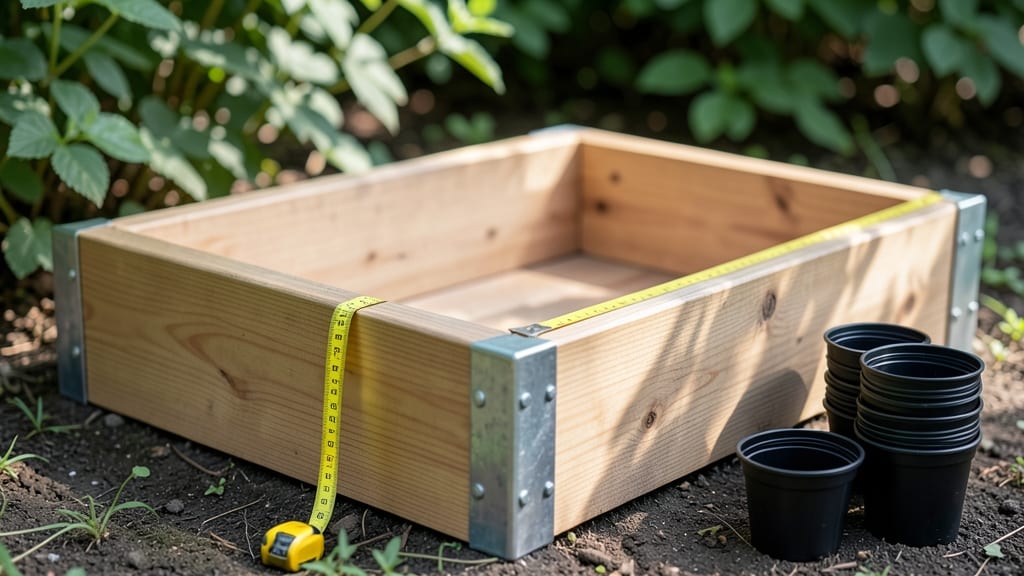
The average raised bed size is typically 4 feet by 8 feet, designed to maximize gardening space while ensuring easy access from all sides. Most gardeners prefer widths between 3–4 feet to prevent overreaching, with lengths extending up to 12 feet for larger planting areas.
This standard size isn't arbitrary—it balances ergonomics with plant health.
A 4-foot width lets you reach the center without stepping inside, while the 8-foot length provides ample growing space without overwhelming small gardens. 🌱 Larger beds (up to 12 feet) work well for vegetable plots but require careful planning to maintain accessibility.
The key is matching your bed size to your garden's scale and your own comfort level.
For smaller spaces like balconies or patios, 2x4 or 3x6 foot beds are perfect for herbs, salad greens, or strawberries. These compact designs maximize yield in tight areas while keeping maintenance manageable.
Larger gardens benefit from 6x12 foot beds, which create dedicated zones for different crops while maintaining the same ergonomic principles.
💡 In This Article
- Why Standard Raised Bed Dimensions Improve Plant Growth
- Choosing Raised Bed Sizes for Small vs Large Gardens
Why standard raised bed dimensions improve plant growth
The 4-foot width of a standard raised bed is no accident—it's an ergonomic masterstroke. Studies show that most adults have a comfortable arm reach of about 2.5-3 feet from their body, meaning a 4-foot width lets you access the entire bed without straining.
This prevents you from stepping into the bed, which can compact the soil and damage plant roots. The 8-foot length provides enough space for multiple rows of plants while keeping the bed manageable for one person to tend.
This size also optimizes soil volume and plant spacing. A standard 4x8-foot bed filled with 12 inches of soil provides about 3.5 cubic feet of soil per square foot—enough to support deep-rooted vegetables like tomatoes or carrots.
The narrower width means you can space plants more efficiently, reducing competition for nutrients and water. For example, tomatoes planted in a 4-foot bed get 18-24 inches of space between plants, which is ideal for their growth habit and air circulation.
Narrower beds also suppress weeds more effectively because there's less space between plants for weeds to establish.
The mulch layer on top stays more intact, and the soil retains moisture better than in wider beds where evaporation is higher. 🌱 The 4-foot width creates a microclimate where soil stays cooler and more consistently moist—a boon for leafy greens and herbs that prefer stable conditions.
This is why professional gardeners often recommend this size for both home gardens and commercial operations.
For soil health, the standard dimensions allow for better aeration and drainage. The 8-foot length lets you create gentle slopes or contours to ensure water runs off evenly, preventing soggy spots where roots might rot.
The 4-foot width also means you can rotate crops more easily, as the bed can be divided into sections for different plant families each season. This rotation reduces soil-borne diseases and pests, which is critical for long-term garden productivity.
Let's talk about root development. Plants in raised beds with these dimensions experience less root competition because the soil volume is concentrated in a smaller footprint.
For instance, a 4x8-foot bed gives you 32 square feet of growing space, but the 12-inch depth means roots can explore a 3.5 cubic foot volume per square foot—about 112 cubic feet total.
This is roughly 3-4 times the rooting space of in-ground planting, where roots often hit compacted subsoil just a few inches down.
If you're working with limited space, like a balcony or patio, you might wonder how these principles apply. Even smaller beds (2x4 or 3x6 feet) follow the same ergonomic logic—they're just scaled down.
The key is maintaining that 4-foot maximum width so you can reach the center without strain. For larger gardens, you can extend the length to 12 feet, but then you'll need to create pathways or use shorter beds to maintain accessibility.
Here's a pro tip: If you're planting heavy feeders like corn or squash, you might need to go deeper—18 inches of soil instead of 12—to support their larger root systems.
But for most vegetables, herbs, and flowers, the standard 12-inch depth in a 4x8-foot bed is perfect for maximizing growth while keeping maintenance simple. 💫