
Light Requirements
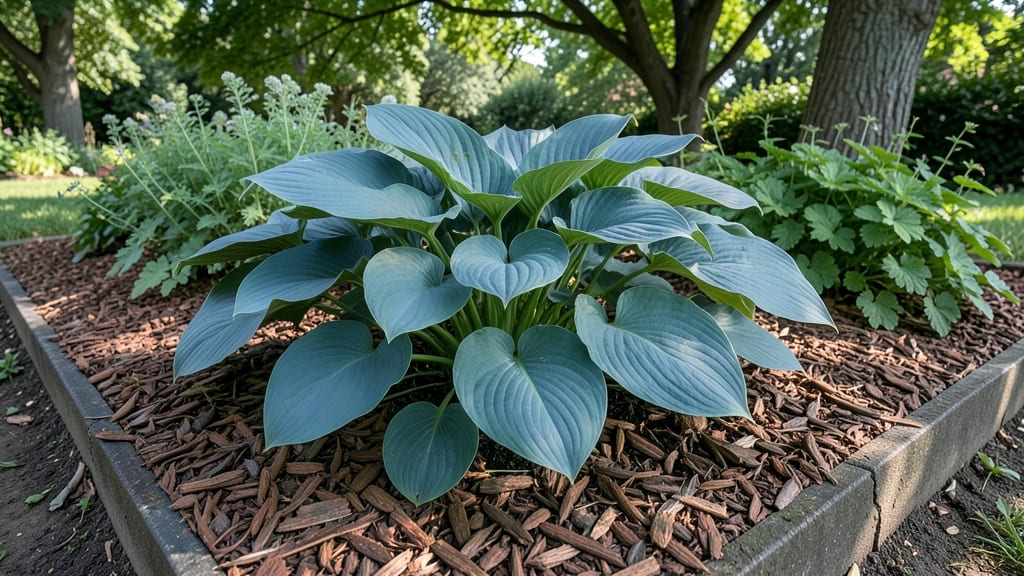
Hostas can grow in full shade, thriving in low-light conditions with proper soil moisture and organic matter, though leaf variegation may fade and growth slows compared to sun exposure. Choose shade-tolerant varieties like 'Blue Angel' or 'Halcyon' for best results.
Hostas are nature's perfect shade gardeners because they've evolved to make the most of limited sunlight.
Their broad leaves maximize light absorption, and their fibrous root systems spread wide to access moisture in deeper soil layers. 🌿 While sun exposure brings brighter foliage and faster growth, shade-tolerant varieties actually benefit from cooler conditions that reduce stress and pest pressure.
The key is maintaining consistently moist, well-draining soil—hostas in full shade won't tolerate drying out, even if they're not growing as vigorously as their sunlit cousins.
What's fascinating is how hostas adapt their leaf colors under different light conditions. Varieties like 'Patriot' maintain their dramatic blue-green contrast even in deep shade, while others like 'Francee' develop more vibrant variegation when given some filtered light.
This makes selecting the right cultivar crucial—some varieties simply won't perform well when deprived of any sunlight at all.
For gardeners working with dark corners, I always recommend starting with the seven most shade-tolerant varieties that maintain their best characteristics year-round. The trade-off between slower growth and pest resistance often makes hostas the ideal choice for low-light garden spaces where other perennials would struggle.
💡 In This Article
- How Hostas Adapt to Full Shade Survival Mechanisms
- Top 7 Shade-Loving Hosta Varieties and 3 to Avoid
How hostas adapt to full shade survival mechanisms
Hostas have evolved remarkable physiological adaptations that make them thrive where many other plants would wither. Their broad, horizontal leaves contain high concentrations of chlorophyll, allowing them to efficiently capture even minimal light—sometimes as little as 2-3 hours of direct sunlight per day.
This chlorophyll efficiency is particularly noticeable in deep green varieties like 'Blue Angel', which maintains vibrant color even in complete shade, unlike sun-loving perennials that require 6+ hours of light to prevent leaf yellowing.
The secret lies in their slow-growth strategy. Hostas prioritize root development over rapid foliage expansion, creating extensive fibrous root systems that spread 2-3 feet wide to access moisture and nutrients in deeper soil layers.
This adaptation is crucial because shade conditions often mean less energy from photosynthesis, so hostas conserve resources by growing more slowly but more efficiently. 🌱 In contrast, sun-loving plants like daylilies or coneflowers allocate more energy to rapid above-ground growth, which becomes unsustainable in low-light environments.
Leaf color changes provide fascinating insights into hosta adaptations. Variegated varieties like 'Halcyon' often develop more pronounced white or yellow edges in partial shade because the chlorophyll-deficient cells (which create variegation) become more visible when overall light levels are low.
However, in full shade, these same varieties may revert to solid green as the plant prioritizes chlorophyll production over decorative patterns—a survival mechanism to maximize light absorption. This explains why some gardeners report their once-stunning variegated hostas turning uniformly green over time in deep shade.
Another key adaptation is their ability to tolerate cooler soil temperatures. Hostas in full shade benefit from the cooler, more stable ground temperatures that reduce stress and pest pressure. Unlike sun-exposed plants that may suffer from heat stress or drought, shade hostas maintain consistent growth patterns.
This is why they're often recommended for northern exposures or areas with dense tree canopies where other plants would struggle to establish.
Hostas also demonstrate remarkable resilience in their water requirements. Their shallow but extensive root systems allow them to access moisture from larger soil volumes, making them more drought-tolerant than many might expect in shade conditions.
However, this doesn't mean they're completely drought-proof—consistent soil moisture remains critical, especially during the first growing season when establishing roots. The trade-off between their shade tolerance and moisture needs explains why hostas often thrive in woodland gardens where the forest floor stays naturally damp.
When comparing hostas to other shade-tolerant perennials, their advantage becomes clear. While plants like ferns or astilbes also handle low light, hostas combine this with low-maintenance care, pest resistance, and year-round interest through their foliage.
Their ability to maintain structural integrity even with minimal light makes them the gold standard for dark garden corners where other plants might fail to thrive. 🌿
The botanical magic happens at the cellular level too. Hosta leaves contain specialized cells called chloroplasts that are particularly efficient at capturing blue and red light wavelengths—precisely the spectrum that penetrates through tree canopies.
This spectral adaptation allows them to utilize the limited light available in full shade conditions where other plants might struggle to photosynthesize effectively.