
Container Gardens
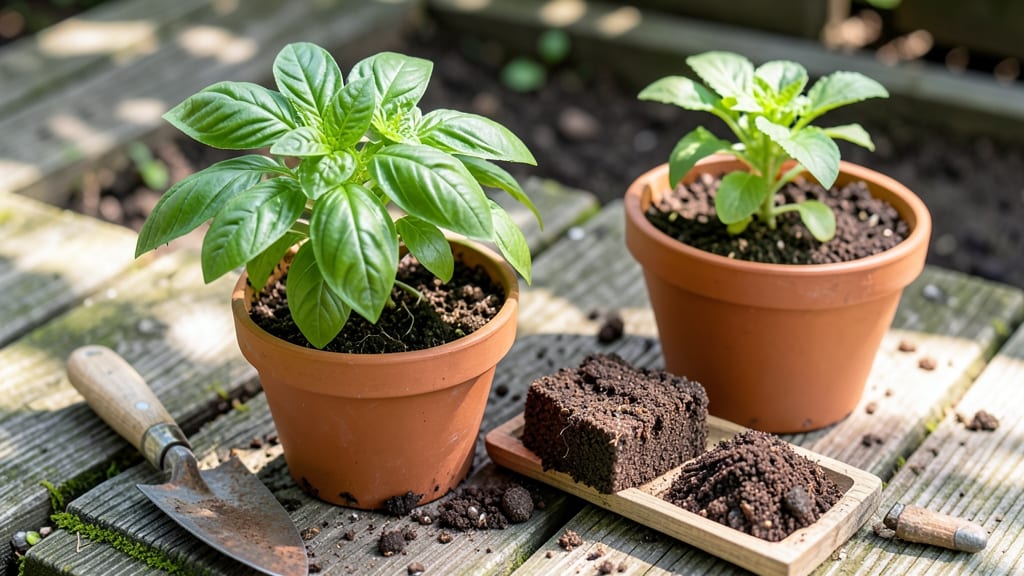
You can use raised bed soil in pots, but it needs adjustments to prevent compaction and improve drainage. Mix in perlite or compost to enhance aeration and moisture retention, while avoiding heavy clay soil that can suffocate roots.
Raised bed soil works well in containers, but the confined space changes how it behaves.
Pots drain moisture much faster than beds, so adding perlite or coconut coir helps retain water while preventing root rot. 🌱 I’ve found that blending in worm castings also boosts nutrient availability—critical for plants like herbs and peppers that thrive in raised beds but need extra feeding in pots.
The key is balancing texture: too much clay makes roots suffocate, while too much sand drains nutrients away.
For best results, aim for a mix that’s 40% raised bed soil, 30% perlite or vermiculite, and 30% compost. This combo mimics the loamy texture of raised beds while adapting to pots’ faster-drying conditions. Just avoid peat moss—it compacts over time and can lock out oxygen.
💡 In This Article
- Why Raised Bed Soil Needs Modification for Container Gardening
- Best Soil Amendments for Repurposing Raised Bed Mix in Pots
Why raised bed soil needs modification for container gardening
Raised bed soil is designed for deep root systems and slow moisture loss, but pots create a completely different environment. The primary issue is drainage speed: containers lose water up to 3x faster than raised beds because they have less mass and more surface area exposed to air.
This rapid drying causes soil to compact around roots, reducing oxygen flow—a problem especially critical for shallow-rooted plants like lettuce or basil.
The texture difference matters most. Raised bed soil often contains 20-30% organic matter (like compost or aged manure) that holds moisture and nutrients, but this same mix in pots can become too dense when saturated, suffocating roots.
For example, a clay-heavy raised bed soil that works beautifully in a 12-inch-deep bed may turn into a brick-like block in a 5-gallon pot after just a few waterings. 🌱 The solution lies in adjusting the soil's porosity—the air and water spaces between particles—to match the pot's faster drying cycle.
Nutrient leaching is another hidden challenge. In raised beds, nutrients get redistributed naturally through rain and irrigation, but pots lack this buffer. Without amendments, essential minerals like nitrogen and phosphorus wash out with each watering, leaving plants hungry.
This is why I always recommend adding worm castings or composted leaf mold to repurposed raised bed soil—these boost microbial activity that helps capture and recycle nutrients in the confined pot space.
Consider the root oxygenation factor: compacted soil in pots creates anaerobic pockets where roots can't breathe. This leads to root rot in just 7-10 days for sensitive plants like tomatoes or peppers. The fix?
Adding 20-30% perlite or vermiculite creates air pockets while maintaining moisture—think of it as giving roots a breathable "spacer" between soil particles. For instance, a 50/50 mix of raised bed soil and perlite works well for herbs, while 40/30/30 (soil/compost/perlite) suits heavy feeders like peppers.
Seasonal variations also play a role. In summer, pots dry out 50% faster than raised beds due to direct sun exposure, while winter moisture retention becomes easier. This means your soil amendments need to be season-responsive: more perlite in summer, slightly more compost in winter.
For example, I've seen coconut coir work wonders in summer pots because it holds 3x its weight in water while still allowing drainage.
One common mistake is assuming "more organic matter = better." While compost helps, too much can create a waterlogged anaerobic zone in pots. The ideal balance is 20-25% organic matter by volume—enough to feed plants without blocking oxygen.
Test this by squeezing a handful of your mixed soil: if it holds shape but crumbles easily, you've got the right texture. 💫