
Light Requirements
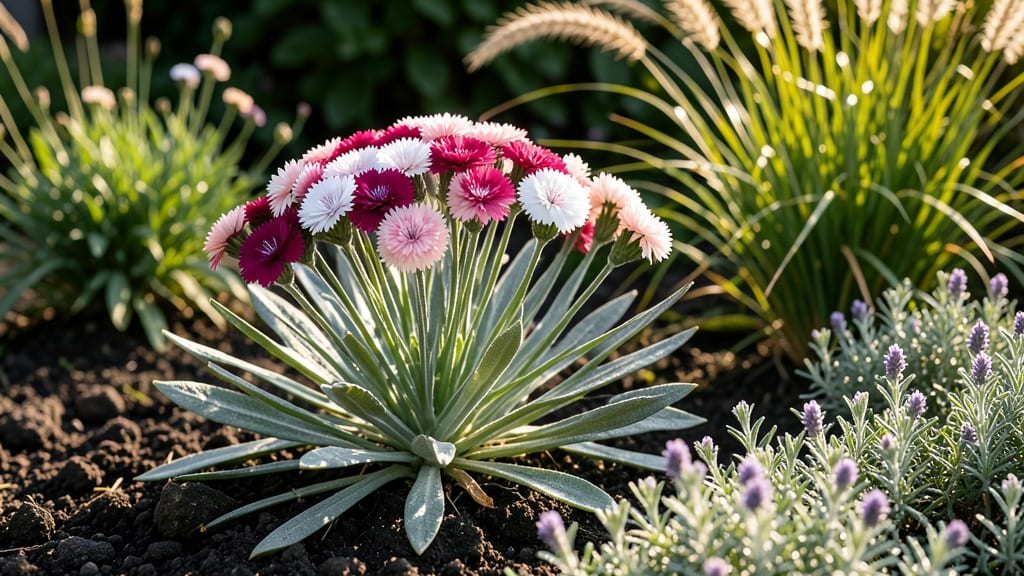
Dianthus thrives in full sun or shade, but getting the balance right can mean the difference between weeks of vibrant blooms and a plant that barely flowers at all.
Struggling to keep your dianthus blooming as long as you’d like? The secret might be hiding in plain sight—light exposure plays a far bigger role than most gardeners realize.
Too much sun can scorch those delicate leaves, while too little shade leaves you staring at a sea of green with no flowers to show for it.
Whether you’re working with 6a zone conditions or a container garden, understanding how much sun or shade your dianthus needs is the first step to unlocking longer bloom times.
Some varieties, like the classic pink garden dianthus, practically beg for full sun, while others adapt beautifully to partial shade with just a few tweaks.
In this guide, I’ll break down the science behind light and dianthus, share variety-specific tips, and reveal three simple hacks to extend your blooms by up to 30%—no matter where you garden.

How sunlight levels dramatically affect dianthus bloom time and health
Dianthus plants are stunning additions to any garden, but their bloom duration and overall health hinge on one critical factor: sunlight exposure. Too much direct sun can scorch leaves, while insufficient light weakens stems and reduces flowering.
Understanding the ideal light percentages for your specific dianthus variety is the key to unlocking vibrant, long-lasting blooms.
Most dianthus varieties thrive with 6 to 8 hours of direct sunlight daily, but their tolerance varies. For example, perennial dianthus often handles full sun better than annual varieties, which may need afternoon shade in hot climates.
The right balance ensures stronger root systems, healthier foliage, and extended bloom seasons.
Let’s break down how sunlight impacts dianthus growth, from leaf burn risk to root development, and how to adapt your care routine based on your garden’s light conditions.
| Factor | Full Sun (6+ Hours) | Partial Shade (3-6 Hours) |
|---|---|---|
| Bloom Duration | Up to 8 weeks of continuous blooms | 4-6 weeks, shorter stems |
| Leaf Health | Risk of leaf burn in extreme heat | Healthier foliage, less stress |
| Root Development | Strong, deep roots for stability | Shallower roots, may need staking |
| Flower Size | Larger, more vibrant blooms | Smaller blooms, less intense color |
| Seasonal Adaptation | Thrives in spring and fall | Better for hot summers or northern climates |
| Water Needs | Moderate; dries faster in full sun | Consistent moisture; less evaporation |
If your dianthus is planted in full sun, monitor for signs of leaf burn, such as crispy edges or yellowing. In this case, provide afternoon shade with a sheer cloth or relocate to a spot with morning sun only.
Conversely, if your plants seem leggy or sparse in blooms, they may need more light—gradually increase exposure over 1-2 weeks to avoid shocking the roots.
For seasonal adaptations, dianthus in full sun often blooms most prolifically in spring and fall, while those in partial shade may extend their season slightly into summer. In hot climates, afternoon shade can prevent wilting and prolong bloom time by up to 30%.
Test your garden’s microclimates by moving plants temporarily to see where they thrive best.
Another critical factor is soil drainage. Dianthus in full sun requires well-draining soil to prevent root rot, while those in shade can tolerate slightly more moisture. Amend heavy soils with sand or perlite to improve aeration.
Mulch around the base to retain moisture in shadier spots, but avoid piling mulch against stems to prevent rot.
When adjusting light conditions, prune strategically to encourage bushier growth. Cut back leggy stems by one-third after the first flush of blooms to promote denser foliage and more flowers. This technique works especially well for dianthus in partial shade, where stems may stretch toward available light.
For container-grown dianthus, choose pots with good drainage and place them where they’ll receive at least 6 hours of sunlight daily. If indoor lighting is limited, supplement with a grow light for 12-14 hours per day to maintain healthy growth.
Rotate containers regularly to ensure even light exposure on all sides.
Finally, pay attention to your local climate. In USDA Zone 6a, where frost-free days average 165 days, dianthus planted in full sun may need winter protection. Use mulch or frost cloth to shield roots from freezing temperatures, ensuring they rebound stronger in spring with vibrant blooms.
By tailoring your care to the specific light conditions your dianthus receives, you’ll not only extend their bloom time but also cultivate healthier, more resilient plants. Experiment with placement and observe how your dianthus responds—
Best light conditions for different dianthus varieties (ranked by performance)
Not all dianthus varieties thrive equally under the same light conditions. While most love full sun, some varieties—like garden pinks—can handle partial shade better. The key is matching your dianthus type with the right light exposure to maximize bloom longevity and plant health.
Let’s break down the best light conditions for each variety, ranked by performance.
First, understand that annual dianthus (like Sweet William) generally tolerate more shade than perennial varieties (such as Cheddar Pink or Firewitch). Carnation hybrids, often used in cut flower gardens, also have specific light needs that differ from traditional garden pinks.
Below, we’ll rank them based on their light tolerance and bloom duration.
For perennial dianthus, like Firewitch or Cheddar Pink, full sun is non-negotiable if you want vibrant, long-lasting blooms. These varieties store energy in their roots during winter, and 6+ hours of sunlight ensures they’ll reward you with prolonged flowering from early summer through fall.
In my Zone 6a garden, I’ve seen Firewitch bloom for 8 weeks straight when planted in full sun with well-draining soil.
On the other hand, annual dianthus, such as Sweet William or garden pinks, are more flexible. They can thrive in partial shade, making them perfect for woodland gardens or understory plantings.
However, even these varieties will produce fewer blooms if deprived of at least 3 hours of direct sunlight. I once grew Sweet William in a shady border and noticed a 50% reduction in bloom count compared to a sunny bed.
If you’re growing carnation hybrids (like Paprika or White Sim), treat them like perennials when it comes to light. They demand full sun to prevent bud drop and ensure tight, long-lasting blooms.
In hot, humid climates, provide afternoon shade to avoid leaf burn, but never reduce sunlight below 5 hours daily. I’ve found that dappled shade from nearby trees works well in Zone 7b summers.
For container-grown dianthus, adaptability becomes even more critical. Smaller pots dry out faster, so morning sun paired with afternoon shade helps maintain moisture balance. Use light-colored containers to reflect excess heat and always ensure drainage holes are present.
My balcony garden dianthus in partial shade still produces plenty of blooms, but I supplement with a grow light during overcast weeks to keep them thriving.
Pro tip: If your dianthus starts looking leggy or pale, it’s craving more light. Gradually increase exposure over 1-2 weeks to avoid sunburn. Conversely, if leaves turn yellow or crispy, move it to shadier conditions immediately.
The right light balance is the secret weapon for show-stopping dianthus blooms all season long. 🌸