
Light Requirements
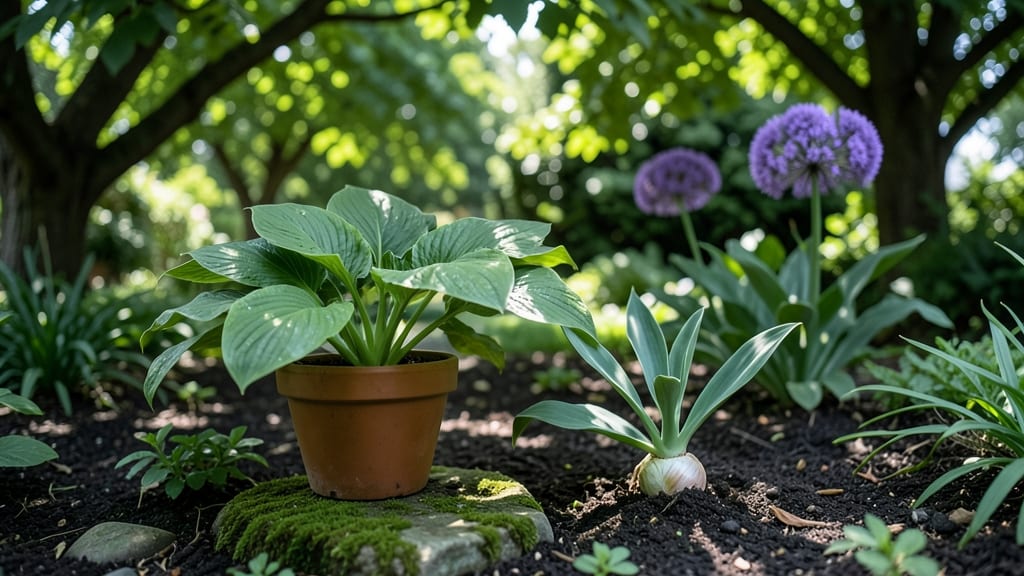
Alliums grow in shade, but they thrive best in full sun—partial shade works in hot climates or northern regions, though you’ll see fewer blooms. For shady spots, chives and garlic chives are your best shade-tolerant options.
While alliums can survive in partial shade, their growth and flowering depend heavily on sunlight. 🌱 In low-light conditions, plants may produce smaller bulbs and fewer flowers, but varieties like chives and garlic chives adapt well to dimmer spots.
These hardy options still deliver flavorful foliage and occasional blooms, making them perfect for shady garden corners or container growing. The key is balancing shade tolerance with soil quality—well-draining, nutrient-rich soil helps compensate for reduced light.
If you're working with other allium types, like onions or leeks, expect even more challenges in deep shade—they typically need at least 4-6 hours of sunlight daily. For best results, position shade-tolerant varieties near taller plants or under deciduous trees where they’ll catch dappled light during the growing season.
💡 In This Article
- How Light Affects Allium Growth and Flowering
- Best Shade-Tolerant Allium Varieties for Low-Light Gardens
How light affects allium growth and flowering
Sunlight drives allium growth through photosynthesis, where leaves convert light energy into sugars that fuel bulb development and flowering. Most alliums need 6-8 hours of direct sunlight daily to produce strong, flavorful bulbs and abundant blooms.
Without enough light, plants allocate energy to leafy growth instead of bulb expansion, resulting in smaller harvests. For example, onions grown in shade may produce 30-50% fewer bulbs compared to sun-exposed counterparts.
Partial shade—defined as 3-6 hours of sunlight—can work in hot climates where intense afternoon sun stresses plants. In these cases, morning sun and filtered afternoon light help maintain vigor. However, flowering suffers: alliums like garlic or shallots may skip blooming entirely in deep shade.
The trade-off is visible in leaf color—shady alliums develop paler, thinner foliage due to reduced chlorophyll production. 🌿 For reference, chives in full sun reach 12-18 inches tall, while shade-grown chives often max out at 6-10 inches.
Light quality matters too. Blue light wavelengths (400-500nm) promote compact growth, while red light (600-700nm) stimulates flowering. Shady spots lack these critical wavelengths, which explains why alliums in partial shade often produce fewer but larger individual blooms.
For instance, Allium 'Purple Sensation' may develop 20-30% more blooms per stem in full sun versus shade. This trade-off highlights why gardeners prioritize light exposure when planning allium varieties.
Temperature interacts with light availability. In cooler northern regions, alliums tolerate more shade because lower temperatures slow metabolic demands. Conversely, in hot climates, even partial shade helps prevent leaf scorch.
For example, garlic planted in 50°F zones thrives with 4-5 hours of light, while the same variety in 90°F zones needs 6+ hours to avoid stress. This geographic variation explains why shade tolerance differs across allium species.
Soil moisture also compensates for light limitations. Shady alliums require consistently moist but well-draining soil to prevent root rot, as reduced photosynthesis means less energy for water regulation. Mulching with 2-3 inches of organic matter helps retain moisture while improving soil structure.
The combination of proper moisture and partial shade creates optimal conditions for shade-tolerant varieties like garlic chives, which can flourish with just 3-4 hours of light daily.
What most gardeners overlook is the seasonal light cycle. Alliums planted in late summer or early fall benefit from shorter daylight periods, making them more shade-adaptable.
For example, fall-planted garlic often performs better in partial shade than spring-planted varieties, as cooler temperatures and reduced light stress align with their natural growth rhythms. This seasonal strategy can extend the growing window for shade-loving alliums by 4-6 weeks in temperate climates.