
Landscaping
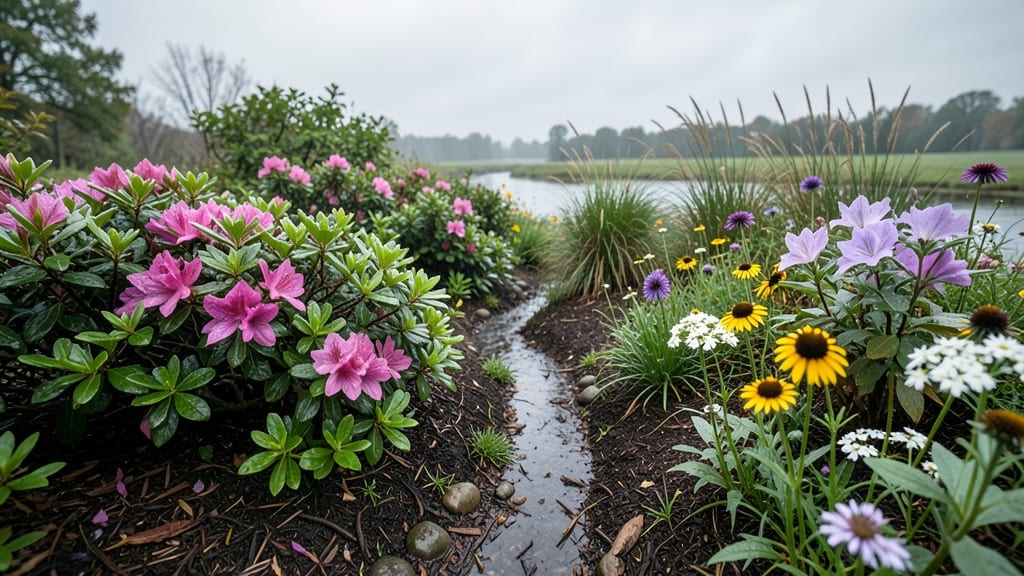
Azaleas bring vibrant color and effortless beauty to gardens, but pairing them with the right companions can transform your flower beds into stunning year-round displays. These 10 creative designs showcase how to combine azaleas with shade-loving perennials, sun-tolerant annuals, and seasonal bloomers for continuous interest.
Classic Azalea and Hydrangea Foundation Planting
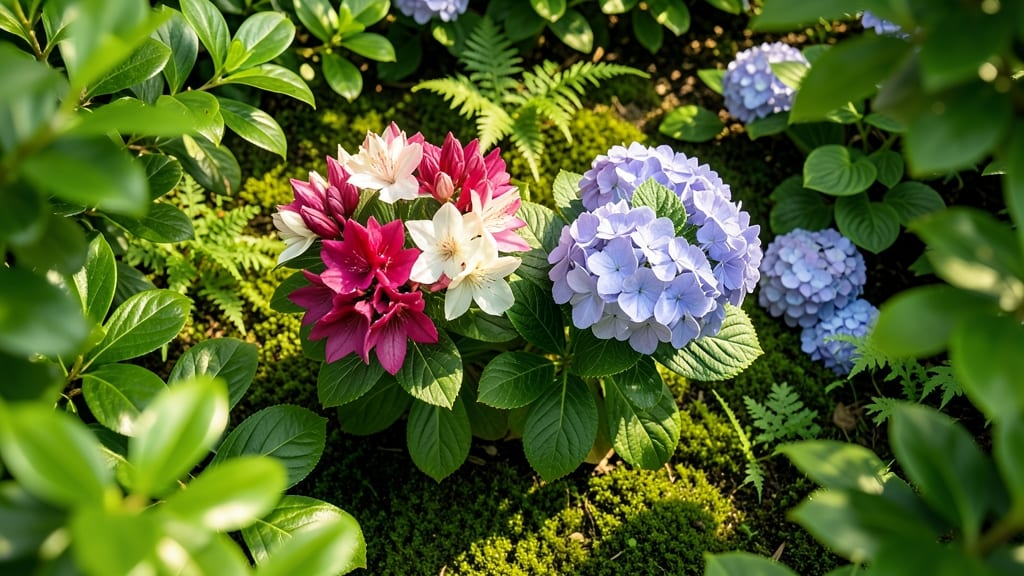
Want a flower bed that looks stunning from spring through fall with almost no maintenance? The azalea and hydrangea duo delivers a year-round color show while thriving in partial shade—perfect for gardeners who love low-light spaces but still crave bold blooms.
Start by planting azaleas (in shades like pink, white, or purple) as your foundation shrubs—they’ll burst into bloom in early spring, often before hydrangeas even wake up. Pair them with hydrangeas (blue, pink, or white) spaced 3-5 feet apart, creating a layered effect where azaleas frame the taller hydrangea clusters. For texture, tuck in hostas or foamflowers at the base—their lush foliage will fill gaps while keeping weeds at bay.
This combo is ideal for foundation plantings along fences, house edges, or under trees. Both plants love acidic, well-draining soil (pH 4.5-6.0), so amend clay soil with peat moss or pine needles. With minimal pruning (just shape after blooming), you’ll enjoy months of color with almost zero effort. ✨
Sunny Border with Azaleas and Black-Eyed Susans
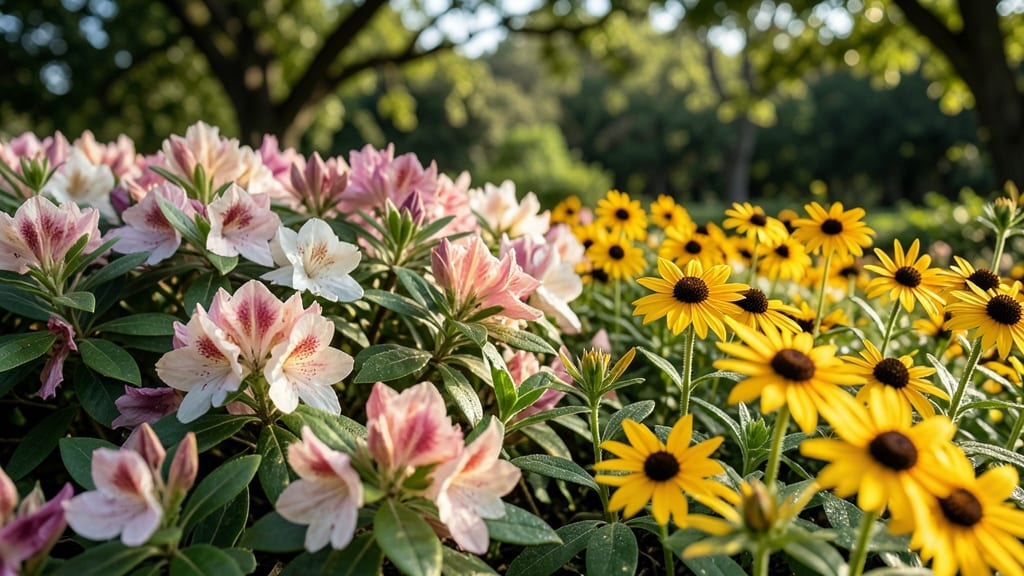
Turn your brightest garden space into a season-long color spectacle by pairing azaleas with black-eyed susans. While azaleas burst into bloom in spring with their delicate petals, these sun-loving perennials take over in late summer and fall with cheerful golden-yellow flowers that catch every ray of sunlight.
For this design, choose dwarf azalea varieties (like 'Girard's' or 'Southern Indica') that thrive in full sun and pair them with black-eyed susans (Rudbeckia hirta) for maximum contrast. Plant azaleas in the front for their lush foliage and early blooms, then mass black-eyed susans behind them—this creates a natural tiered effect that draws the eye. Both plants share similar care needs: well-draining soil, moderate watering, and occasional deadheading to prolong blooms.
This combination works especially well for gardeners in USDA zones 5-9 who want low-maintenance beds that pop with color from spring through fall. The rustic charm of black-eyed susans complements azaleas' refined blooms, making this perfect for cottage-style gardens or sunny borders. 🌻
Woodland Garden with Ferns and Azaleas
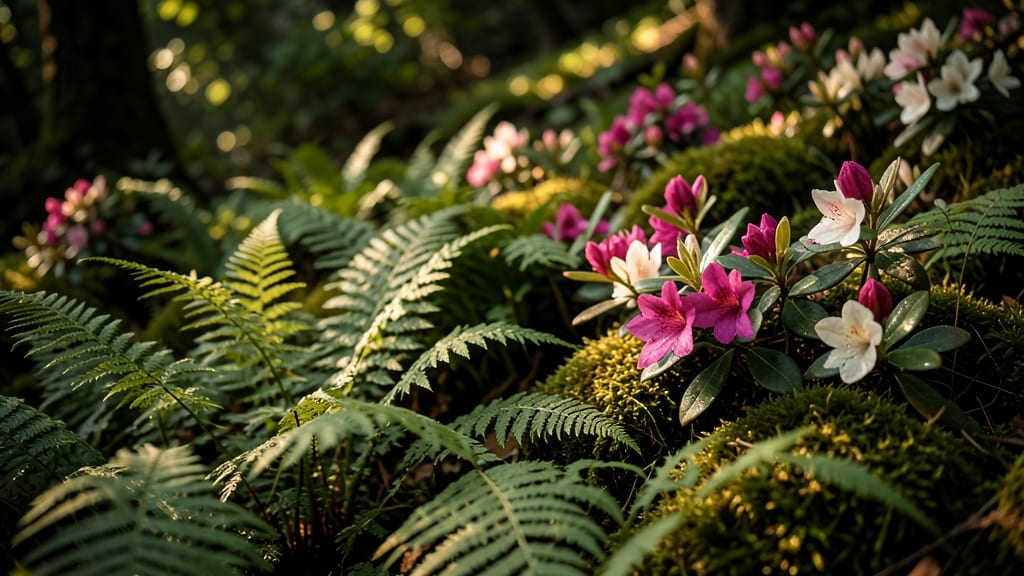
Step into a tranquil woodland retreat without the upkeep of a full forest—this fern and azalea combo creates a lush, low-maintenance understory that thrives in dappled shade. The secret lies in pairing evergreen ferns like maidenhair or ostrich fern with acid-loving azaleas, both of which adore moist, well-draining soil and filtered sunlight.
Start by planting azaleas as your mid-height anchors (3–6 feet tall), then tuck ferns around their bases to spill over edges naturally. Add moss-covered stones or leaf mulch to enhance the forest-floor feel while suppressing weeds. This design works beautifully in urban backyards, woodland edges, or even under large trees where other plants struggle.
Perfect for gardeners who crave serenity and texture over high-maintenance blooms, this combo stays vibrant year-round with minimal pruning. The ferns provide year-long greenery, while azaleas burst into spring color—ideal for those who want a "wild but controlled" look. 🌿
Seasonal Interest Beds with Azaleas and Tulips
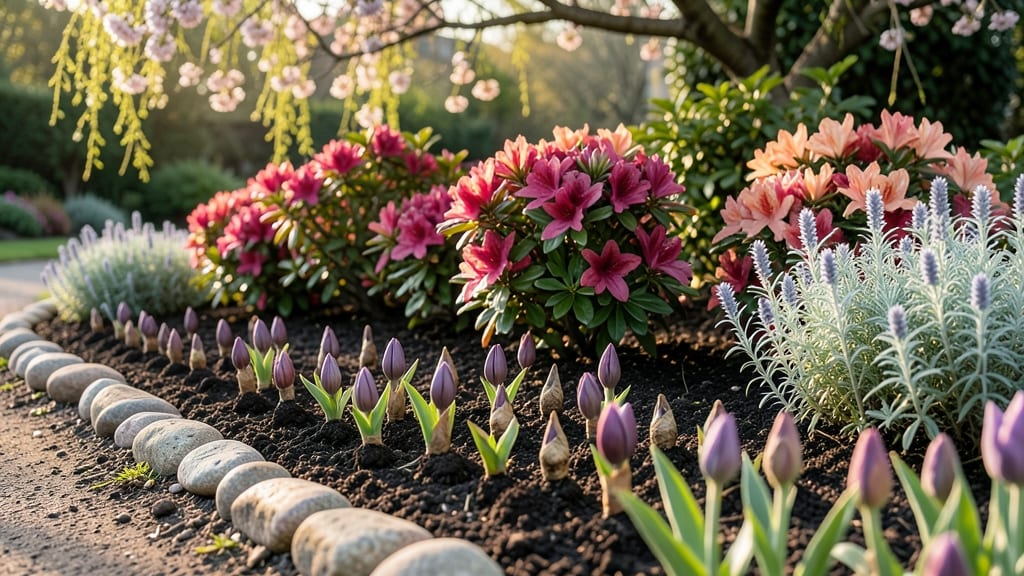
Want a flower bed that feels like a never-ending spring parade? This seasonal progression design starts with tulips in early March, hands off to azaleas by April, and finishes with catmint through summer—all while requiring minimal extra work from you.
Plant tulip bulbs in fall (6-8 inches deep) at the front of your bed, then add azalea shrubs (3-4 feet tall) behind them. By late spring, the azaleas will take center stage while the tulips fade, then catmint planted at the back will spill over edges with its silvery foliage and lavender blooms from June onward. This trio thrives in partial shade to full sun and handles most soil types as long as it's well-draining.
Perfect for gardeners who love low-maintenance beauty but hate bare beds—this combo gives you year-round visual interest with just three star players. 🌻
Modern Minimalist Azalea Grove with Boxwood
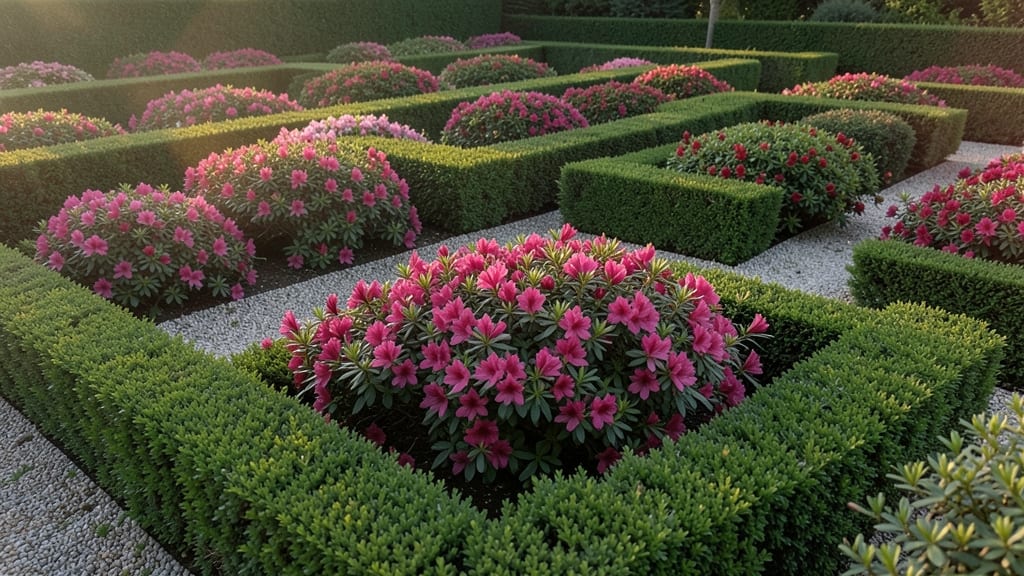
Tired of traditional garden beds that feel chaotic? A modern minimalist azalea grove with boxwood hedges offers the perfect blend of structured elegance and natural beauty—ideal for contemporary landscapes craving clean lines and bold visual impact.
Start by planting boxwood shrubs in precise geometric shapes—think squares, rectangles, or even abstract forms—to create a structured frame. Then, place azaleas at the center of each boxwood "box" to serve as vibrant focal points. Use gravel pathways or sleek metal edging to enhance the modern aesthetic while keeping maintenance simple. This design thrives in partial shade and requires minimal pruning once established, making it perfect for low-maintenance gardeners.
Urban gardeners and minimalist enthusiasts will love this design, as it delivers a polished look without sacrificing nature's charm. The contrast between the structured boxwood and the flowing azalea blooms creates a striking visual that elevates any outdoor space. ✨
Butterfly Magnet with Azaleas and Coneflowers
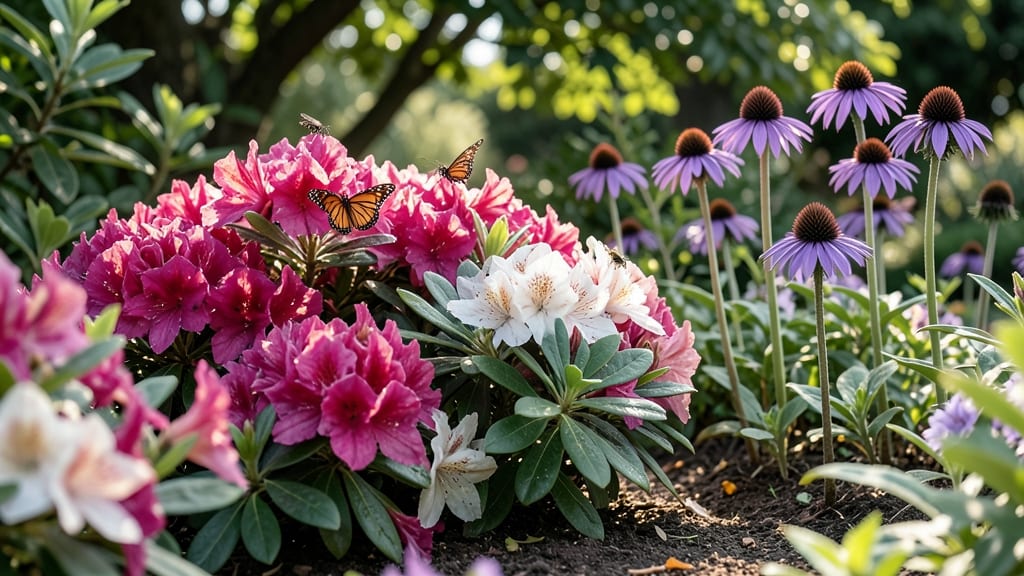
Turn your garden into a butterfly buffet with a dynamic duo that works year-round: azaleas and coneflowers. This pollinator powerhouse design leverages azaleas' early spring blooms to draw butterflies like the monarch, while purple coneflowers keep them fed through summer with their nectar-rich flowers.
Plant azaleas in clusters along the edges of your bed for early-season color, then fill the center with coneflowers for late-summer blooms. Add milkweed and goldenrod to complete the caterpillar-to-butterfly lifecycle. This combo thrives in full sun to part shade, making it perfect for almost any garden spot.
Perfect for eco-conscious gardeners, this design not only supports local wildlife but also reduces your maintenance workload. Watch your garden transform into a living ecosystem teeming with life! 🌻
Winter Interest with Azaleas and Ornamental Grasses
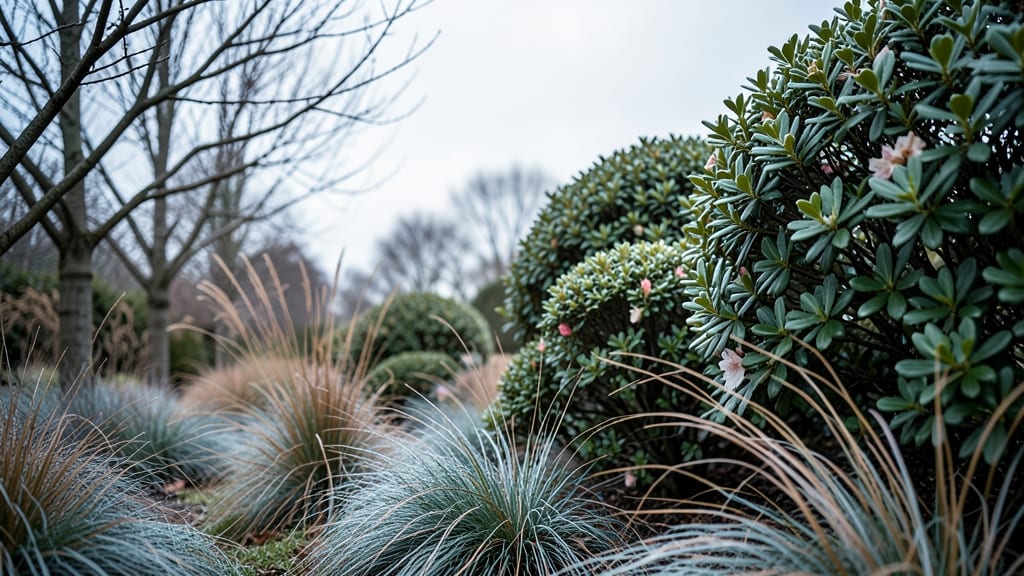
When winter winds strip gardens bare, evergreen azaleas and ornamental grasses create a striking contrast that keeps your landscape lively. Their combination transforms cold-season spaces into textured, rustling displays that dance with the breeze while maintaining structure.
Plant dwarf azaleas (like 'Girard's Pink' or 'Hino Crimson') alongside fountain grasses (such as Pennisetum or Miscanthus) for height variation. The azaleas' glossy leaves provide a rich green backdrop, while grasses add movement with their seed heads swaying in winter winds. For best results, ensure both thrive in partial shade and well-draining, acidic soil.
This low-maintenance duo is perfect for gardeners who love winter interest without sacrificing spring blooms. The azaleas will reward you with vibrant flowers next season, while the grasses keep the garden dynamic year-round. 🌻
Container Garden with Azaleas and Pansies
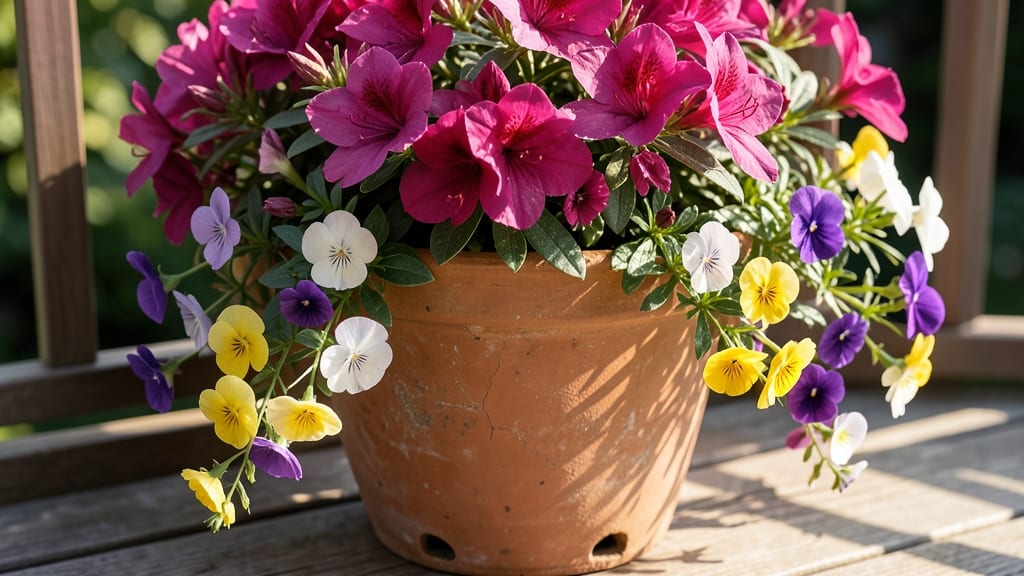
Small spaces don’t mean small gardens—this container combo brings big impact to patios and balconies. Pair azaleas (which thrive in large pots) with pansies that spill over edges, creating a cascading display that blooms from spring through fall.
Choose a 15-20 gallon container with drainage holes and fill with acidic, well-draining potting mix. Plant azaleas in the center and tuck pansies around the edges for a cool-season pop of color. Water deeply when the top inch of soil feels dry, and feed with an acid-loving plant fertilizer every 4-6 weeks. This pairing works in partial shade to morning sun, making it perfect for urban balconies.
Urban gardeners and renters will love this low-maintenance solution—no digging, no permanent planting, just year-round color that adapts to any space. 🌷
Fragrant Azalea Walkway with Lavender and Rosemary
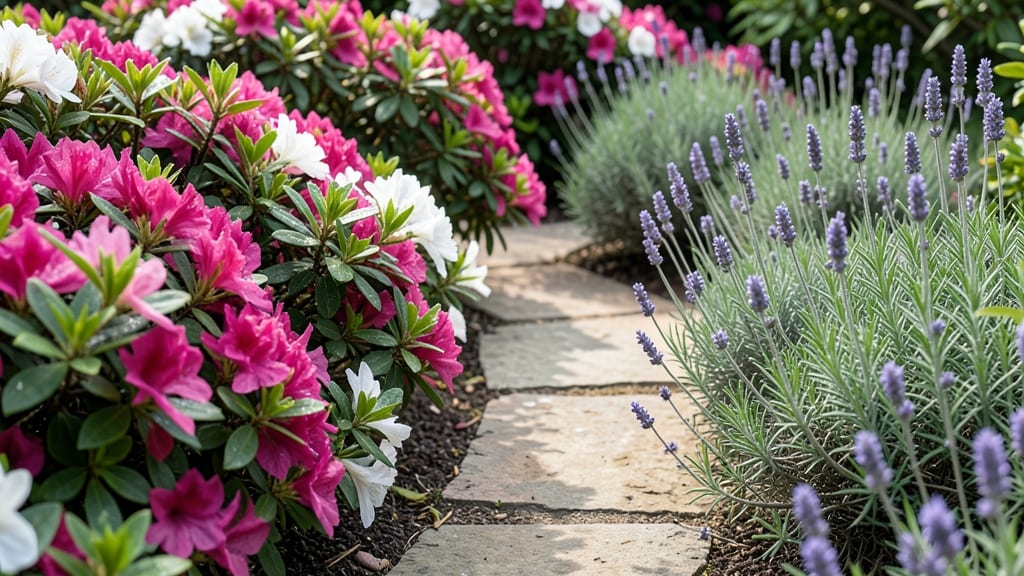
Transform your garden into a fragrant escape by creating a walkway lined with azaleas, where their sweet blossoms meet the calming scent of lavender and the earthy aroma of rosemary. This sensory path invites you to stroll while enjoying layered fragrances that change with the seasons.
Plant dwarf azaleas along both sides of a gravel or stepping-stone path, spacing them 3–4 feet apart for full coverage. Tuck lavender in clusters between azaleas for its drought-resistant charm and purple spikes, while rosemary spreads as a fragrant ground cover or edging. All three thrive in well-draining, acidic soil with morning sun and afternoon shade, making this design low-maintenance yet lush.
Perfect for small gardens or urban spaces, this walkway adds year-round interest—azaleas bloom in spring, lavender glows in summer, and rosemary’s pine-like scent lingers through winter. 🌿
Rain Garden with Azaleas and Native Wildflowers

Turn that soggy corner of your yard into a thriving eco-friendly rain garden where azaleas and native wildflowers work together to clean runoff while creating beauty. This design is perfect for areas that stay damp after rain or near natural water sources, where most plants struggle.
Start by planting acid-loving azaleas in clusters around the perimeter, their vibrant blooms providing structure. Fill the center with native wildflowers like blue flag iris or swamp milkweed, which thrive in seasonal wetness and attract pollinators. The key is to use organic mulch like pine straw to maintain acidity and prevent soil erosion.
This low-maintenance solution benefits both your garden and local wildlife, making it ideal for eco-conscious gardeners or those with challenging wet spots. Plus, it blooms from spring through summer! 🌷