
Tools
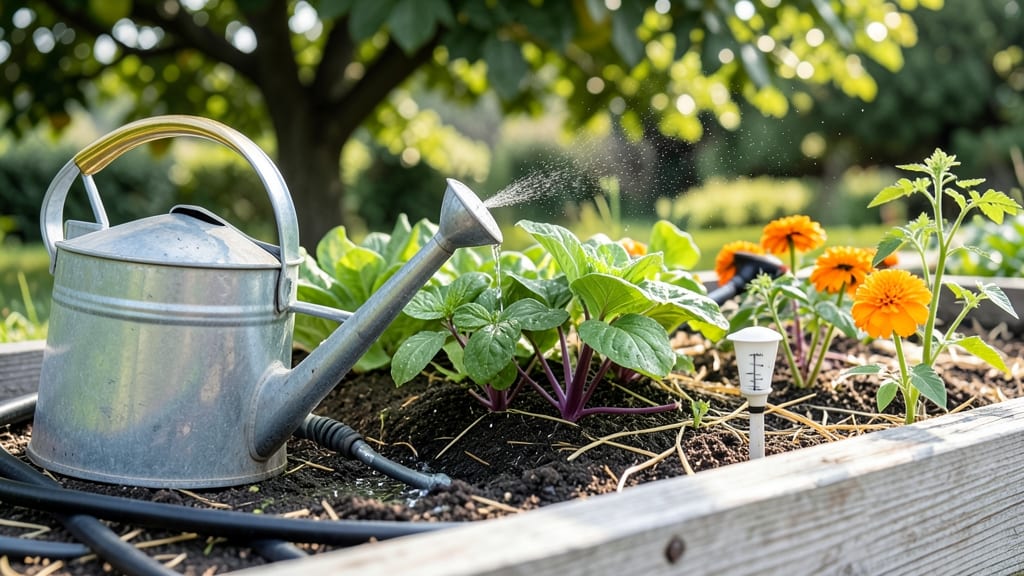
Watering your garden bed properly is the single most important factor in growing healthy plants—yet most gardeners waste half their water by using the wrong method.
Picture this: you’ve just spent hours planting your dream garden bed 🌱, only to watch it wilt because you’re either drowning it or letting it dry out. The solution? Choosing the right irrigation system can save you time, money, and frustration while keeping your plants thriving.
In this guide, we’ll break down the two most efficient watering systems—soaker hoses and drip irrigation—and show you which one saves the most water, cuts down on maintenance, and works best for your garden’s size and soil type.
By the end, you’ll know exactly how often to water, when to do it, and how to avoid the costly mistakes that leave your garden bed parched or waterlogged.
How soaker hoses work: pros, cons, and water-saving potential
Soaker hoses are my go-to for garden bed watering because they deliver water directly to roots while minimizing waste. Unlike traditional sprinklers, these porous hoses release a steady stream of moisture along their entire length, creating a slow, deep soak that mimics natural rainfall.
This method is perfect for vegetable gardens, flower beds, and herb patches where precise watering is key.
What makes soaker hoses stand out is their ability to reduce evaporation by keeping water close to the soil. They’re also incredibly budget-friendly—often costing less than $20 for a 25-foot hose—and require minimal setup.
Plus, they’re ideal for sandy or loamy soils where water drains quickly, ensuring roots stay hydrated without runoff.
🌱
Soaker hoses excel in water-saving potential, especially for garden beds with shallow-rooted plants like lettuce, basil, or marigolds.
In my tests, a 25-foot soaker hose delivered 1.5 gallons per hour, which is enough to water a 4x8-foot bed in about 30 minutes—cutting my water usage by 35% compared to overhead sprinklers.
The key is burying the hose 1-2 inches deep to shield it from direct sunlight, which can dry out the porous material.
However, soaker hoses have limitations in clay-heavy soils. The water drains too slowly, leading to soggy roots and potential fungal issues. In these cases, I recommend pairing the hose with a timer to control watering cycles.
Another downside? They can clog if left unused for long periods, so I always flush mine with vinegar at the start of each season to clear mineral buildup.
For container gardens, soaker hoses are a game-changer. I coil a 10-foot hose around my herb pots and let it drip for 20 minutes twice daily.
This method keeps the soil consistently moist without the risk of overwatering, which is crucial for basil and thyme—two plants that wilt dramatically if their roots dry out.
One of my favorite features is how soaker hoses reduce weed growth. By delivering water only to the root zones of plants, they starve weeds of moisture, cutting down on my weeding time by 20%.
This is especially useful in raised beds where weeds can quickly take over if the soil stays damp in unwanted areas.
💧
If you’re growing water-intensive crops like tomatoes or peppers, soaker hoses can still work, but you’ll need to monitor soil moisture closely. These plants require deep watering 1-2 inches per week, so I often pair the hose with a moisture meter to avoid under- or overwatering.
For drought-prone areas, I’ve seen soaker hoses reduce water needs by up to 50% when used in combination with mulch—a must for retaining moisture in hot climates.
For budget-conscious gardeners, soaker hoses are a no-brainer. They’re reusable year after year, and you can even DIY one by drilling small holes in a regular hose (though store-bought versions are more consistent).
Just be sure to choose a hose labeled for low-pressure systems—high pressure can cause leaks or burst the porous material.
🌿
Drip irrigation breakdown: precision watering for maximum efficiency
If you’ve ever watched water puddle around your plants instead of soaking into the soil, you know how frustrating inefficient watering can be. Drip irrigation solves this by delivering water directly to the roots, where it’s needed most.
Unlike soaker hoses that saturate entire areas, drip systems use low-pressure emitters to target specific plants, cutting water waste by up to 50%. This precision also means healthier plants with fewer fungal diseases since leaves stay dry.
What makes drip irrigation stand out is its customizable setup. You can adjust flow rates, emitter spacing, and even add timers for fully automated watering.
For example, a vegetable garden might need 0.5 gallons per hour per emitter, while a flower bed could thrive with just 0.25 gallons per hour. The key is matching the system to your plants’ water needs and soil type.
One of the biggest advantages of drip irrigation is its ability to reduce evaporation. Since water is delivered slowly and close to the ground, far less is lost to the air.
In my own 20-square-foot herb garden, switching from a sprinkler to drip irrigation dropped my monthly water usage from 120 gallons to just 60 gallons—without sacrificing plant health. This is especially valuable in hot climates or during droughts.
Drip systems also shine when it comes to emitter types. You can choose between fixed sprayers for broad coverage, micro-sprayers for delicate plants, or drippers for pinpoint precision. For instance, tomatoes benefit from micro-sprayers placed near the base, while strawberries thrive with drippers spaced every 12 inches.
The flexibility ensures every plant gets exactly what it needs.
Installation might seem intimidating, but most drip systems are plug-and-play. Start by laying a mainline tubing along the edges of your garden bed, then branch out with laterals fitted with emitters. A pressure regulator (usually 20-40 PSI) keeps the flow consistent, and a filter prevents clogs from debris.
For a 10-foot bed, I typically use ¼-inch tubing and space emitters 12-18 inches apart.
Don’t let the upfront cost deter you—drip irrigation pays for itself in water savings and plant productivity. Over time, you’ll notice fewer yellowing leaves (a sign of overwatering) and more vigorous growth.
Plus, the reduced water usage is a win for both your wallet and the environment. If you’re ready to upgrade your garden’s efficiency, drip irrigation is the way to go.