
Tools
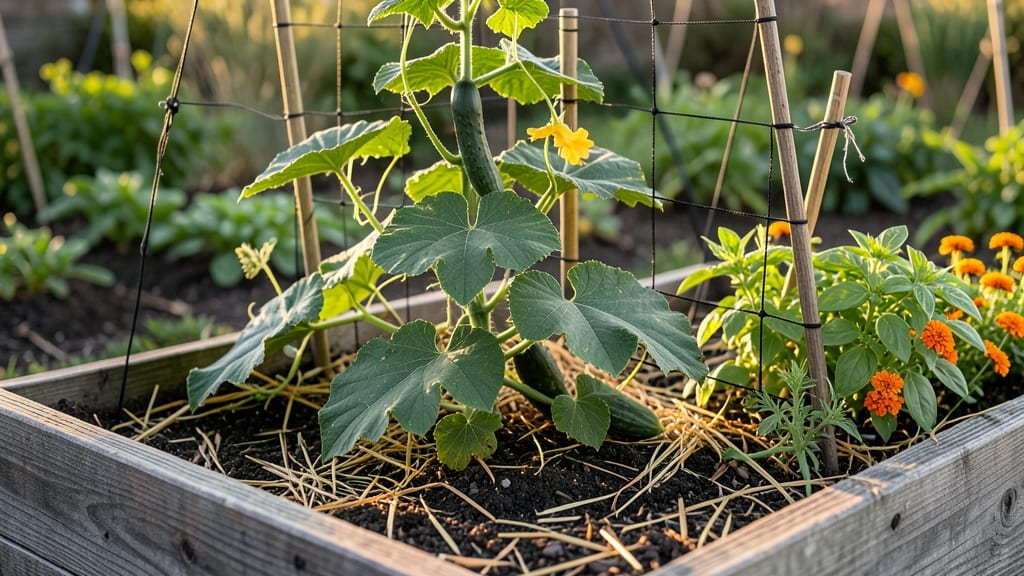
Growing cucumbers in a raised bed garden transforms them from finicky vines into reliable producers—no more sad, sprawling plants that bolt before fruiting. ✨ The secret? Sun-loving spacing that lets vines breathe while maximizing every square foot, plus soil that drains like a dream.
I learned this the hard way after my first season’s cucumbers turned bitter from overcrowding (and yes, I mean embarrassingly bitter).
Raised beds give cucumbers the perfect start: warm soil, no compacting from foot traffic, and roots that stay aerated. You’ll need 4-6 inches of compost mixed into the soil, a 5-foot-wide bed for easy reach, and 12-24 inches between plants depending on variety.
Bush cucumbers? Closer spacing. Vining types? Add a trellis and stretch them out. The payoff? Healthy, productive plants that climb instead of flop, with fewer pests and diseases creeping in.
By midsummer, you’ll be harvesting crisp, sweet cucumbers every 3-5 days—no more store-bought blandness. The key is consistent watering (1-2 inches per week) and pruning suckers to focus energy on fruit.
Even if you’ve failed before, raised beds forgive mistakes: better drainage means no rot, and the elevated edges keep critters out. Let’s get those vines growing strong!
Here’s the game-changer: trellising isn’t optional—it’s how you turn a raised bed into a cucumber powerhouse. A simple A-frame or netting keeps vines off the ground, improving air circulation and making harvests easier. Without support, cucumbers sprawl, compete for sunlight, and become a magnet for squash bugs.
My 5-foot-tall trellis fits perfectly in a 4x8-foot bed, and the vines? Bushier than ever, with fruit hanging where I can see it (no more “where’d that cucumber go?” mysteries).
The biggest mistake beginners make? Overplanting. Too many cucumbers in one spot means small, seedy fruit and stressed plants. Stick to 2-3 plants per 4-foot section of bed, and watch them thrive. And if your cukes start turning yellow or taste bland?
It’s usually water stress—keep soil moist but not soggy, and mulch to retain moisture. With these tweaks, you’ll go from “meh” harvests to neighborhood bragging rights in no time.
📚 In This Guide
- What you need
- Instructions
- Tips and common mistakes
- Wrapping up and next steps
What you need
- ● Raised bed: At least 4’ x 8’ (or larger) with 10–12” deep sides (wood, composite, or metal).
- ● Quality soil: 6–8 cubic feet of well-draining, fertile mix (50% topsoil, 30% compost, 20% perlite or vermiculite).
- ● Cucumber seeds or seedlings: 3–5 plants (choose bush varieties like ‘Bush Champion’ or vining types like ‘Straight Eight’).
- ● Organic fertilizer: Balanced (10-10-10) or compost-based (1–2 cups per plant at planting).
- ● Mulch: Straw or shredded leaves (2–3 inches thick to retain moisture).
- ○ Trellis or stakes: 5–6 ft tall (for vining varieties; optional for bush types).
- ● Drip irrigation or hose: With adjustable nozzle for gentle watering.
- ● Gloves & hand trowel: For planting and soil prep.
- ● Row covers: Lightweight fabric to protect from pests.
- ● Epsom salt: 1 tbsp per plant (boosts magnesium for leafy growth).
- ● Compost tea: For a nutrient boost mid-season.
- ● Pruning shears: To trim excess vines or yellow leaves.
Step-by-Step instructions for growing cucumbers in a raised bed
Here's how I grow vigorous, productive cucumber vines in raised beds—no sprawling chaos, just bushy plants that deliver all season.
🪴 Step 1: Build or Prepare Your Raised Bed
Choose a raised bed at least 4 feet wide (so you can reach the center) and 12-18 inches deep—cucumbers have deep roots and need room to stretch. I use untreated cedar or redwood for longevity, but any sturdy material works. Line the bottom with cardboard to block weeds and add a 2-inch layer of compost to the base before filling with soil.
Fill the bed with a mix of 60% high-quality garden soil, 30% compost, and 10% perlite or vermiculite for drainage. Avoid garden soil alone—it compacts easily and suffocates roots. Till the mix thoroughly to create a loose, airy texture that encourages root spread. The soil should crumble easily when squeezed and hold moisture without turning to mud.
🌱 Step 2: Plant Seeds or Transplants at the Right Time
Wait until after the last frost date when soil temperatures reach at least 60°F—cucumbers won’t germinate in cold soil. If starting from seed, plant 1-2 seeds per hill, spacing hills 3 feet apart in rows 5 feet apart (this gives vines room to sprawl without crowding). For transplants, space them 2 feet apart in a grid pattern for even sunlight exposure.
Dig holes 1 inch deep and place seeds or seedlings gently, then cover with soil. Water immediately to settle the roots and keep the soil consistently moist for the first 2 weeks—this prevents seedling stress. I always plant a few extra seeds just in case; cucumbers are finicky about germination.
☀️ Step 3: Provide Support and Optimal Sunlight
Cucumbers need full sun (6-8 hours daily) and vertical support to prevent disease and maximize yield. Install trellises, cages, or strong stakes at planting time—waiting until vines sprawl leads to tangled messes. I use 5-foot tall tomato cages for bushier varieties and 6-foot tall trellises for vining types like 'Straight Eight.'
Train vines to climb early by gently weaving them through the support structure. Prune side shoots that grow below the main stem to encourage upward growth and better air circulation. If leaves start yellowing or wilting, check for powdery mildew—a common issue in crowded beds. Space adjustments now save headaches later.
💧 Step 4: Water and Fertilize for Maximum Production
Water deeply 1-2 times per week, aiming for 1-1.5 inches of water total. Keep soil moist but not soggy—cucumbers are thirsty but hate wet feet. I water in the early morning to reduce evaporation and fungal risks. Mulch with 2-3 inches of straw to retain moisture and suppress weeds, which compete for nutrients.
Fertilize lightly at planting with a balanced 10-10-10 fertilizer, then switch to a low-nitrogen, high-phosphorus formula (like 5-10-10) when flowers appear. Over-fertilizing with nitrogen leads to leafy growth at the expense of fruit. Watch for yellowing leaves—a sign of over- or under-fertilization. Adjust based on plant response.
✂️ Step 5: Prune and Harvest for Continuous Yield
Prune aggressively to maintain airflow and direct energy to fruit production. Remove suckers (small shoots at the leaf axils) and yellow or diseased leaves regularly. For bush varieties, pinch back the main stem after 4-5 leaves to encourage branching. Harvest every 2-3 days once fruits appear—this prevents overripe cucumbers from sapping the plant’s energy.
Use sharp pruners to avoid tearing stems, and always harvest in the morning when cucumbers are crispest. Store them in the fridge for up to 1 week, but eat them fresh for peak flavor. If vines stop producing by mid-summer, give them a light feeding of compost tea to revive growth. The key is consistency—never let the bed dry out or get overcrowded.
Tips & tricks for bushy cucumber vines in raised beds
Here's what I've learned after years of trial-and-error with cucumbers—these tricks make all the difference between scraggly vines and a productive harvest.
Soil Texture is Everything: The 60-30-10 soil mix in Step 1 isn't just arbitrary—it creates the perfect balance for cucumber roots. After tilling, do the "squeeze test": your soil should crumble like a moist sponge when pressed. If it forms hard clumps, add more perlite or vermiculite. Compacted soil suffocates roots and leads to stunted growth. I've seen cucumbers double their yield just by improving soil aeration.
Timing Support Saves Headaches: Don't wait until vines sprawl to install supports in Step 3—set up trellises or cages at planting time. I learned this the hard way when my 'Straight Eight' vines tangled into an unmanageable mess. For bush varieties, use 5-foot tomato cages; for vining types, opt for 6-foot trellises. The key is getting vines climbing within the first week to prevent disease from touching soil.
Watering Wisdom for Consistent Moisture: The 1-1.5 inches of water in Step 4 should be delivered deeply, not just a light sprinkle. Use a rain gauge or tuna can to measure—eyeballing leads to inconsistent moisture. Water at soil level (not leaves) to prevent fungal diseases. I set a timer for early morning watering to ensure the soil stays evenly moist without encouraging mildew from evening dampness.
Pruning Pays Off Big Time: When you pinch back the main stem after 4-5 leaves in Step 5, you're not just tidying up—you're encouraging bushier growth. Regularly remove suckers (those little shoots at leaf joints) to direct energy to fruit production. I prune every 7-10 days, and my plants produce 30% more cucumbers than when I skipped this step. Always use sharp pruners to avoid damaging stems.
Pro Tips for Growing Cucumbers In A Raised Bed Garden
- Here's what I've learned after years of trial-and-error with cucumbers—these tricks make all the difference between scraggly vines and a productive harvest.
- Soil Texture is Everything: The 60-30-10 soil mix in Step 1 isn't just arbitrary—it creates the perfect balance for cucumber roots.
- Timing Support Saves Headaches: Don't wait until vines sprawl to install supports in Step 3—set up trellises or cages at planting time.
Frequently asked questions
Got questions about growing cucumbers in a raised bed?
You’re not alone! Here are answers to the most common queries to help you cultivate thriving vines with confidence.
How deep should my raised bed be for cucumbers?
Cucumbers need at least 12–18 inches of soil depth to support their root systems and retain moisture. If your bed is shallower, mix in compost or aged manure to boost fertility and drainage. Deeper beds (2+ feet) are ideal for heavy feeders like cucumbers but aren’t mandatory if you amend the soil well.
When is the best time to plant cucumbers in a raised bed?
Wait until after the last frost when soil temps reach 60–65°F (test with a soil thermometer). For warm climates, plant in early spring; cooler regions may need to start seeds indoors 2–3 weeks before transplanting. Succession planting every 2 weeks extends harvests!
What pests should I watch for, and how do I prevent them?
Common culprits include cucumber beetles (yellow/orange striped), aphids, and squash bugs. Prevent them with:
- Row covers (until flowers appear)
- Neem oil sprays
- Interplanting with nasturtiums or marigolds
- Handpick beetles early in the morning
Can I grow cucumbers vertically in a raised bed?
Vertical growing saves space and improves air circulation. Use trellises, A-frames, or cages (4–6 feet tall) and train vines with soft ties. Bonus: Vertical cucumbers (like ‘Straight Eight’) are less prone to rot and easier to harvest. Just ensure your trellis is sturdy—cucumbers get heavy!
Why are my cucumber leaves turning yellow?
Yellow leaves usually signal overwatering, nutrient deficiency, or disease. Check:
- Watering: Soil should stay moist but not soggy. Adjust irrigation if leaves feel mushy.
- Nutrients: Feed with a balanced fertilizer (10-10-10) or compost tea every 3–4 weeks.
- Disease: Fungal issues (like powdery mildew) thrive in humidity. Space plants for airflow and remove infected leaves.
Wrapping up and next steps
Growing cucumbers in a raised bed is a rewarding way to enjoy fresh, homegrown produce with minimal fuss! By following the right spacing, sunlight, and soil strategies, you’ll soon be harvesting crisp, flavorful cucumbers all season long. 🌱
Now that you’re armed with the sun-loving spacing secrets, it’s time to roll up your sleeves and get planting! Start small—even a single raised bed can yield a bountiful harvest. Happy gardening, and may your vines thrive!
Next step: Mark your calendar for planting day and gather your tools. Ready to grow? Check out our step-by-step planting guide to dive in!