
Landscaping
Transform your garden into a vibrant, year-round display with these 10 iris bed ideas. From bold color contrasts to layered planting schemes, these designs ensure your iris blooms steal the show in every season while requiring minimal maintenance.
Classic Blue Iris with Silver Foliage
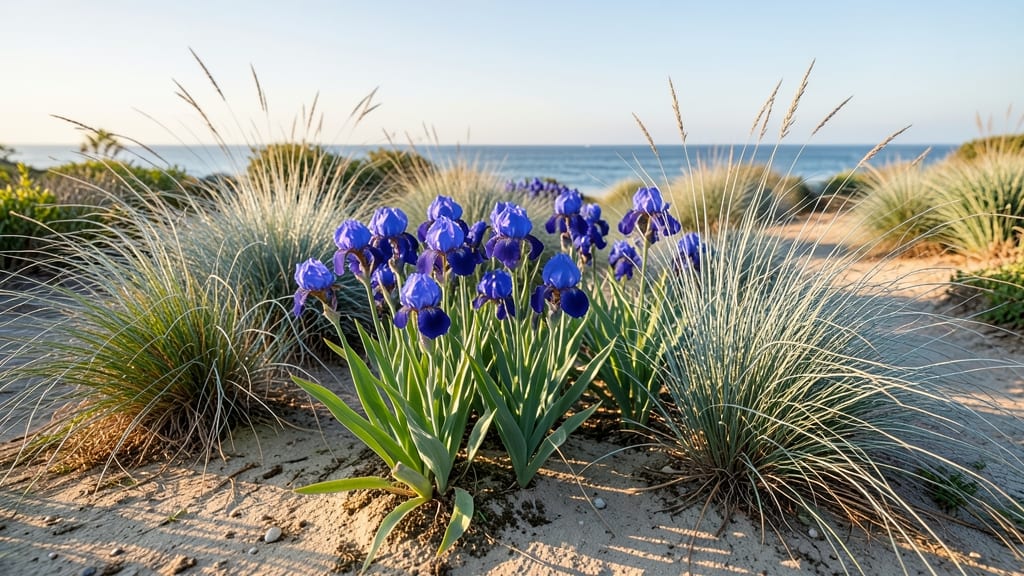
Craving a coastal garden escape that requires almost no effort? Pair deep blue irises with the airy, silvery-blue plumes of Stipa tenuissima (also called Mexican feather grass) for a dreamy, low-maintenance look. This duo thrives in full sun and well-drained soil—ideal for sandy or rocky areas where other plants struggle.
The secret to this combo’s success lies in their complementary textures: irises provide bold, vertical blooms, while Stipa tenuissima adds soft, wispy movement that sways in the breeze. Plant irises in clusters 12–18 inches apart, then scatter the ornamental grass around their bases. Both plants are drought-tolerant once established, making this the perfect bed for water-conscious gardeners.
This timeless pairing works especially well in small spaces or along pathways, where the grasses’ delicate foliage frames the irises like a natural border. Perfect for beginners or coastal gardeners, it’s a low-fuss way to create a serene, beachy vibe without the upkeep. 🌿
Purple Iris and Lavender Border
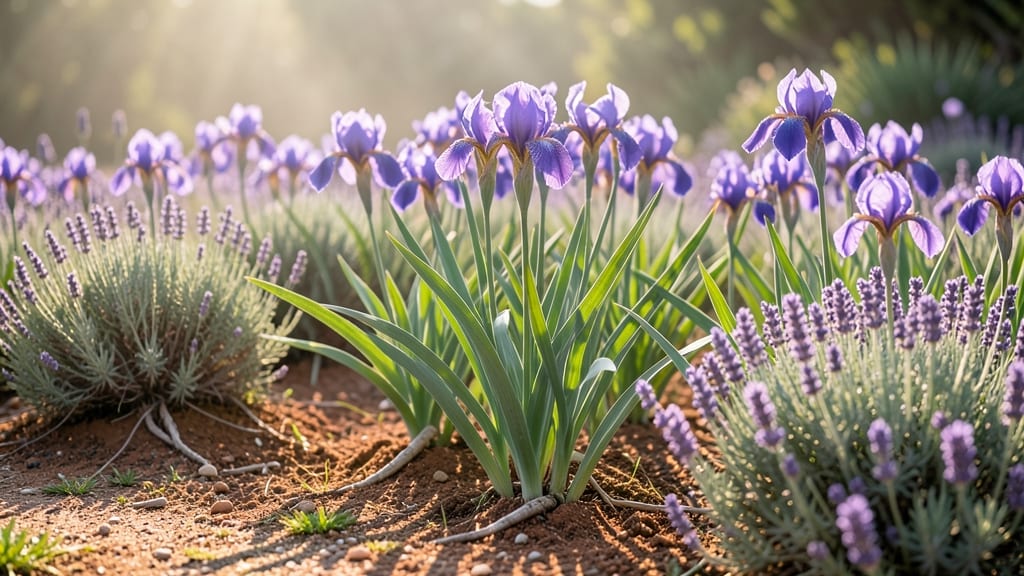
Create a soothing purple paradise that delights your senses with this fragrant duo: purple iris and lavender. This pairing isn’t just visually stunning—it’s a pollinator magnet that thrives on neglect, making it perfect for busy gardeners or those embracing a Mediterranean-style aesthetic.
Plant purple bearded irises in clusters with English lavender spaced 18-24 inches apart. Both love full sun and well-drained soil, and their complementary blooming times ensure color from early spring through summer. The lavender’s silvery foliage and fragrant blooms also deter pests naturally, reducing the need for chemicals. Mulch with gravel to improve drainage and suppress weeds—this border practically cares for itself.
This design is ideal for cottage gardens, Mediterranean courtyards, or even urban containers. The drought-resistant combo saves water while creating a serene, purple-hued escape that hums with bees and butterflies. 💚
White Iris with Yellow Coreopsis
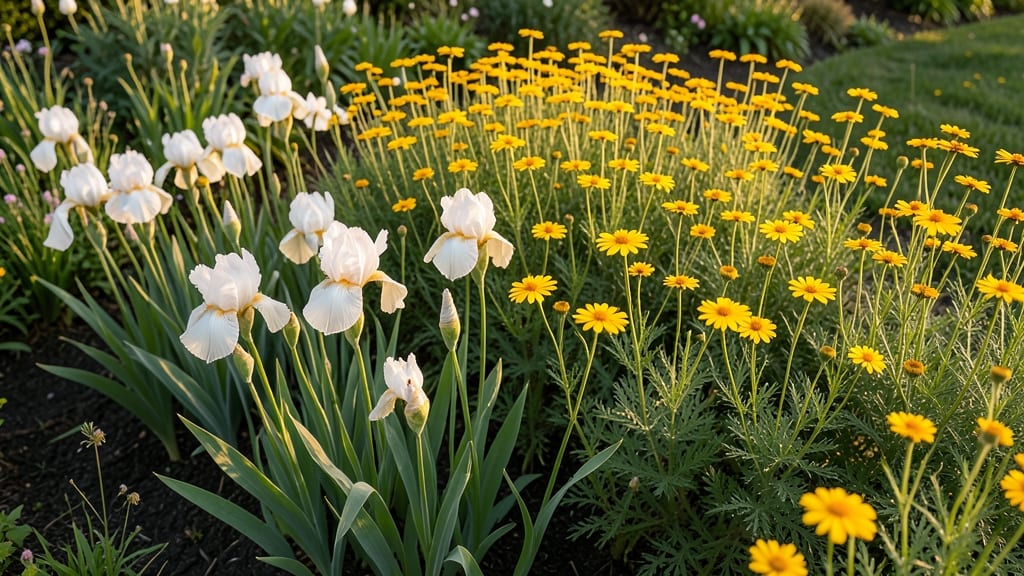
Want an iris bed that stays vibrant long after your irises finish blooming? Pair white irises with yellow coreopsis for a cheerful contrast that keeps your garden lively from spring through summer.
Plant coreopsis—a hardy perennial—around your irises to fill the gaps when they fade in early summer. These sun-loving companions thrive in the same well-drained soil and full sun conditions, making them effortless to maintain. The bright yellow blooms of coreopsis will attract pollinators like bees and butterflies, adding life to your garden while extending its visual appeal.
This combination is perfect for gardeners who love low-maintenance designs with high impact. The contrast of white irises against yellow coreopsis creates a fresh, airy look that brightens any landscape. 🌻
Rainbow Iris Mix with Black Mondo Grass
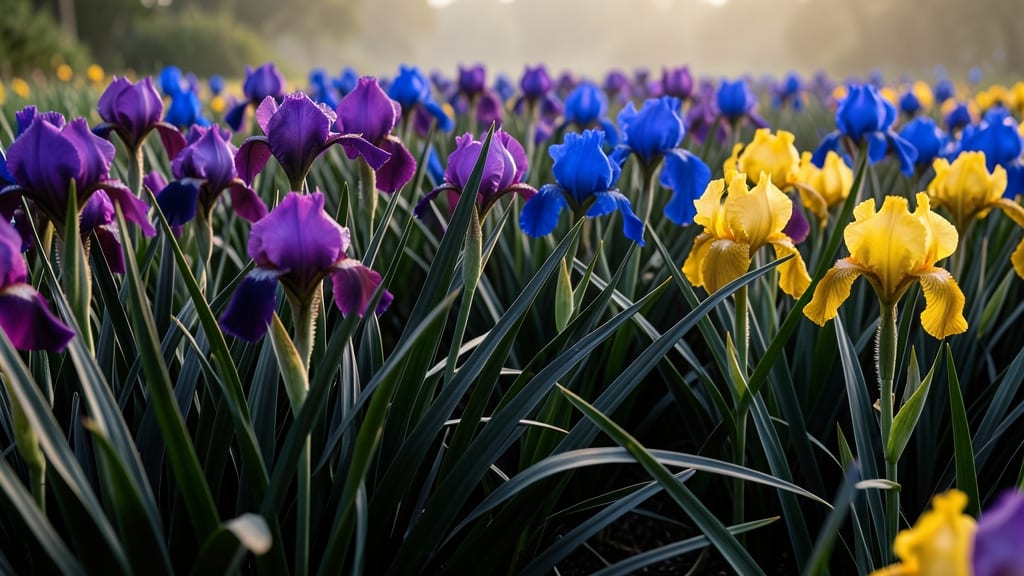
Skip the traditional iris bed and go for high-impact drama with a rainbow iris mix paired with black mondo grass (Ophiopogon planiscapus). This striking combo transforms modern landscapes into living art—think deep purple, blue, and yellow irises popping against glossy black foliage that stays vibrant all season.
Plant bearded iris rhizomes in clusters for maximum color impact, spacing them 12-18 inches apart in well-drained soil with 6 hours of sun. The black mondo grass thrives as a low-edging plant, spreading slowly to create sharp geometric lines or soft curves. For urban spaces, use 12-inch containers with a mix of potting soil and perlite to keep roots aerated.
This design is perfect for minimalist gardeners who want year-round structure and bold color without high maintenance. The contrast alone makes it a conversation starter. ✨
Iris and Daylily Undergrowth
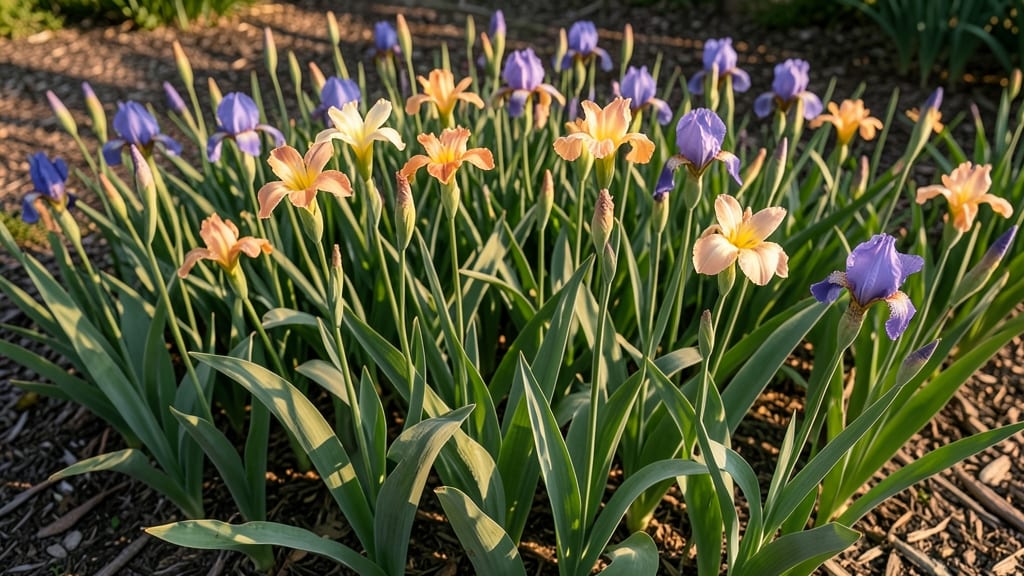
Tired of iris beds that look bare after their spring blooms fade? Daylilies (Hemerocallis) are the secret weapon for extending your bed’s visual appeal with minimal effort. Their arching foliage and secondary blooms create a lush understory that thrives in partial shade, where many other plants struggle.
Plant daylilies in clusters around your irises to fill gaps as iris blooms fade, and choose varieties like 'Stella de Oro' for compact growth or 'Happy Returns' for repeat blooming. They’re drought-tolerant once established and handle poor soil better than many perennials, making them perfect for understory support.
This pairing is ideal for gardeners with woodland or shaded beds who want year-round interest without high maintenance. The daylilies’ foliage also helps suppress weeds naturally. 💚
Iris and Roses in Tiered Beds
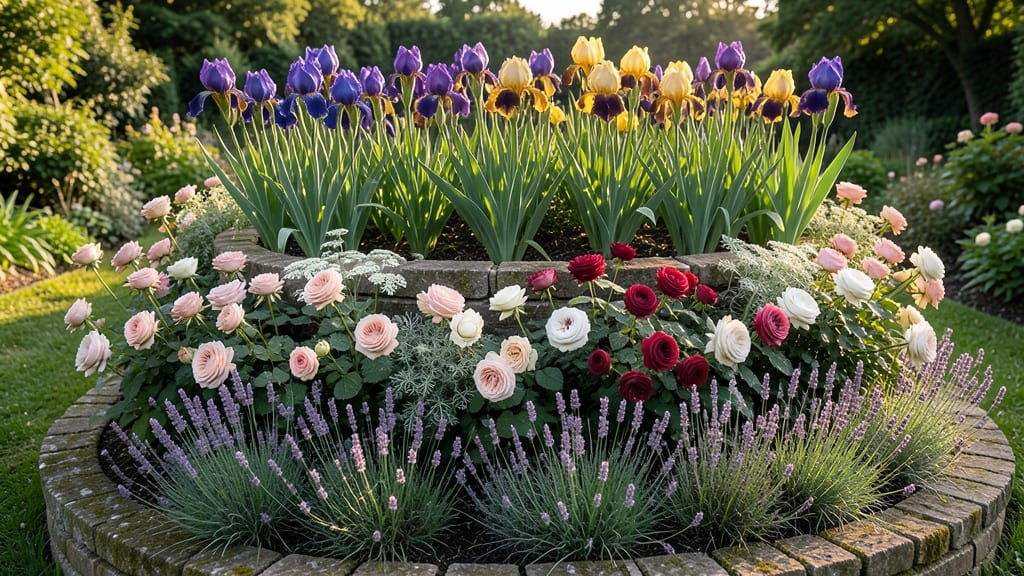
Craft a timeless English garden look with tiered beds that marry the bold structure of irises with the romantic allure of roses. This elevated pairing isn’t just pretty—it’s a strategic design that maximizes vertical space while ensuring year-round interest.
Plant bearded irises on the upper tiers (they thrive in full sun and well-drained soil) to create a striking focal point, then layer climbing roses below for lush, repeat-blooming foliage. Choose dwarf roses for lower tiers to keep the design proportionate, and space them to allow air circulation—critical for preventing black spot disease. The contrast of irises’ upright blooms against roses’ cascading petals creates a dynamic, three-dimensional effect that’s perfect for formal gardens or grand entryways.
This design is ideal for gardeners who love structured elegance but want to avoid the high-maintenance upkeep of traditional rose gardens. The tiered approach also works beautifully in urban courtyards or small spaces where vertical planting maximizes visual impact. 🌻
Bearded Iris with Dwarf Coneflowers
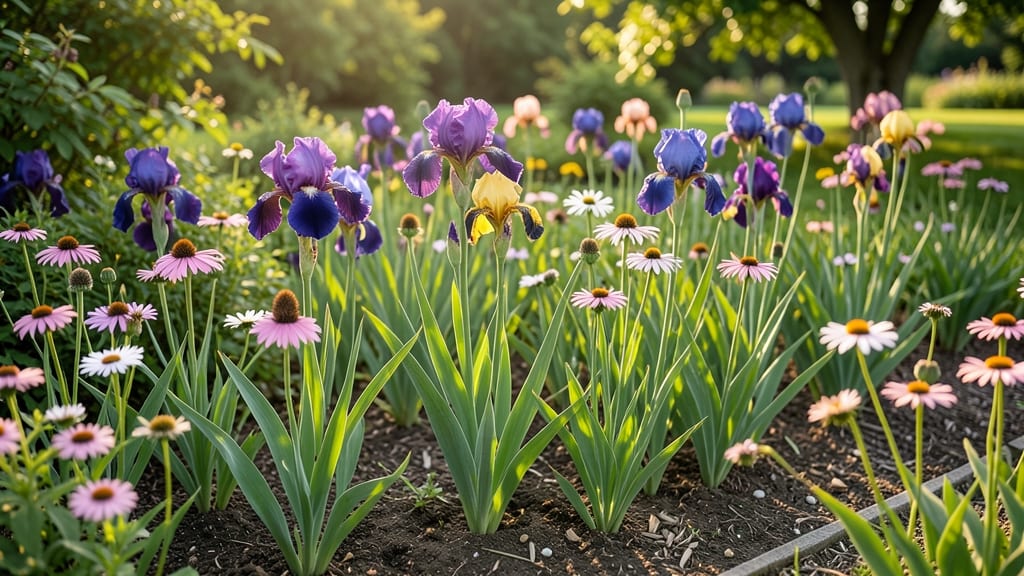
Want a pollinator paradise that thrives even in less-than-ideal soil? Pair bearded irises with dwarf coneflowers (Echinacea) for a low-maintenance, high-impact combination. This duo attracts bees, butterflies, and hummingbirds while adding texture and seasonal interest—iris blooms in spring, while coneflowers shine in late summer.
Plant dwarf coneflowers (like 'White Swan' or 'Hot Papaya') at the front of your bed, where their compact 12-18 inch height contrasts beautifully with iris stems. Both thrive in poor, rocky, or sandy soil with minimal fertilization, making them perfect for tough spots. Choose reblooming iris varieties (like 'Imagination' or 'Sheila') to extend the show from spring through summer.
This pairing is ideal for urban gardens, rain gardens, or pollinator-friendly landscapes—it’s as functional as it is beautiful. Plus, the late-summer coneflower blooms pick up where irises leave off, ensuring your bed stays lively all season. 🌻
Iris and Fern Shade Garden
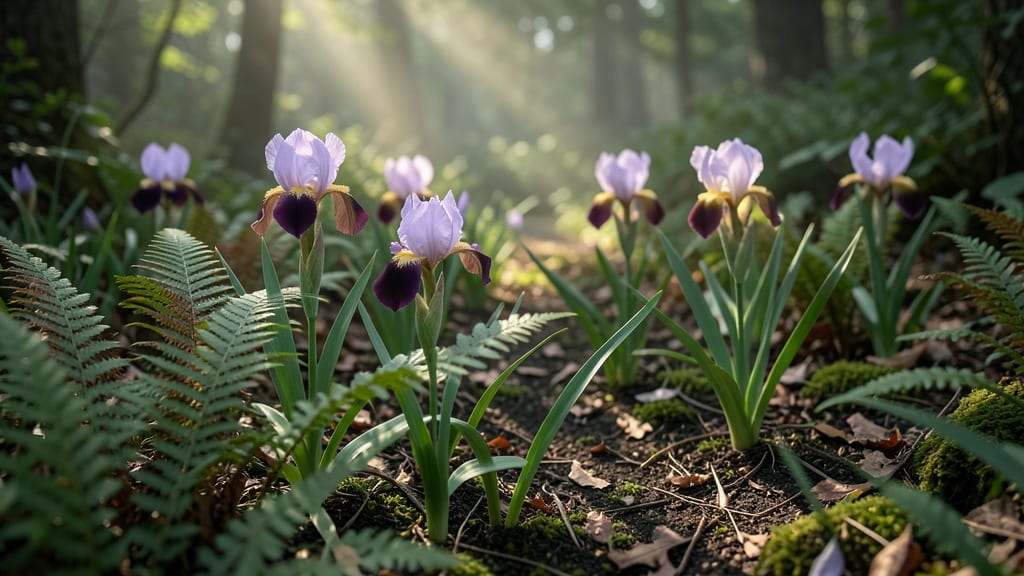
For gardeners with shady corners that feel forgotten, this iris and fern shade garden transforms dim spaces into lush, enchanting retreats. The secret lies in pairing woodland irises (Iris germanica or Iris pseudacorus) with Dryopteris ferns, which thrive in the same moist, dappled-light conditions—perfect for humid climates or north-facing beds.
Plant **ferns like Wood Fern (Dryopteris filix-mas) as a verdant backdrop to irises, creating a layered effect that mimics a natural forest understory. Both plants share similar soil preferences—rich, well-draining, and slightly acidic—while ferns add year-round texture even when irises fade. Mulch with leaf litter or shredded bark** to retain moisture and suppress weeds, ensuring your shade garden stays vibrant with minimal effort.
This design is ideal for beginners or those with limited sun—no fuss, no drama, just serene beauty that thrives where others fail. 🌿
Iris and Salvia for Drought Tolerance
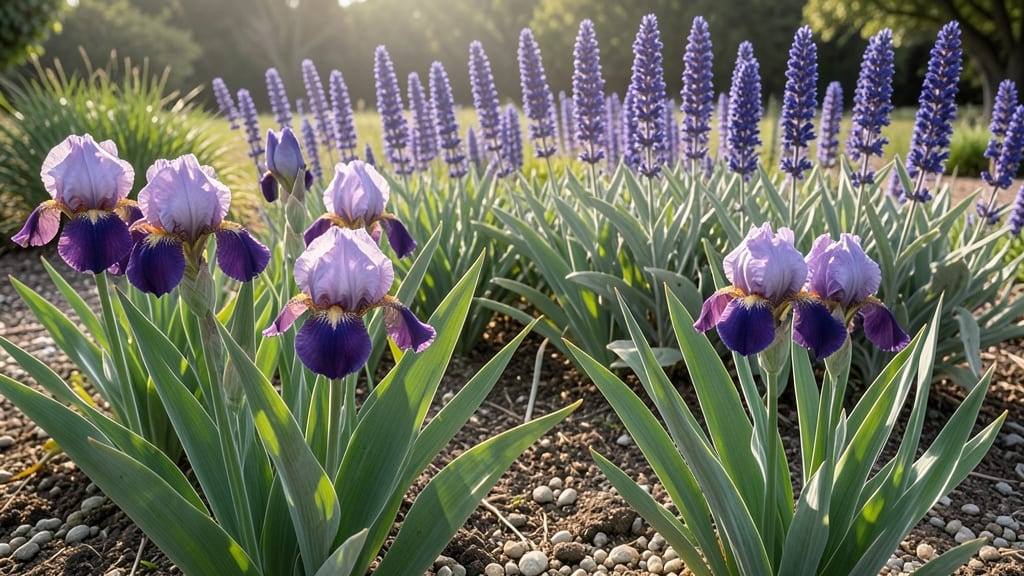
If you're dreaming of a low-water garden that still bursts with color, this drought-tolerant duo delivers year-round interest with almost no effort. Pair bearded irises—which bloom in early spring—with perennial salvia (Salvia nemorosa), whose tall spikes of blue or purple flowers take over in summer when irises fade.
Both plants thrive in full sun and well-drained soil, making them perfect for xeriscapes or Mediterranean-style gardens. Space salvias 18-24 inches apart for their upright habit, while irises can be planted 12-18 inches apart in clumps. Mulch with gravel or crushed stone to retain moisture and suppress weeds—no extra watering required after establishment.
This combination is ideal for urban gardeners, eco-conscious landscapers, or anyone tired of water bills. Plus, the vertical spikes of salvia add drama while irises provide that signature early-season pop—zero competition for resources, maximum visual impact. 💪
Iris and Allium for Dramatic Height

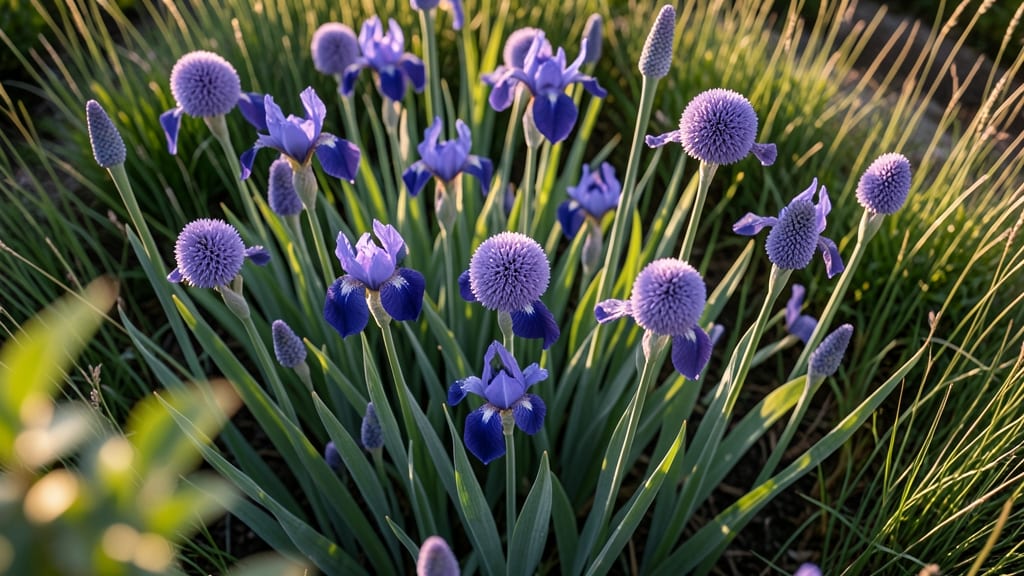
Want to add a whimsical, almost fairy-tale quality to your iris bed? Pairing irises with Allium sphaerocephalum (also called drumstick allium) creates a magical vertical dance of shapes and textures. The globe-shaped allium blooms mirror the elegant, sword-like forms of irises while adding unexpected spherical accents that catch the eye.
These alliums thrive in the same full sun to partial shade conditions as most irises and share similar soil preferences—well-drained, slightly alkaline soil. Plant them in clusters of 3-5 around your iris clumps for maximum impact, spacing them about 12-18 inches apart. The alliums will bloom slightly later in the season (June-July), extending your garden's visual interest when irises begin to fade.
This combination is perfect for cutting gardens—both plants hold well in vases, and their contrasting shapes create stunning bouquets. Gardeners with limited space will love how this pairing maximizes vertical interest without requiring extra width. 🌻