
Vegetables
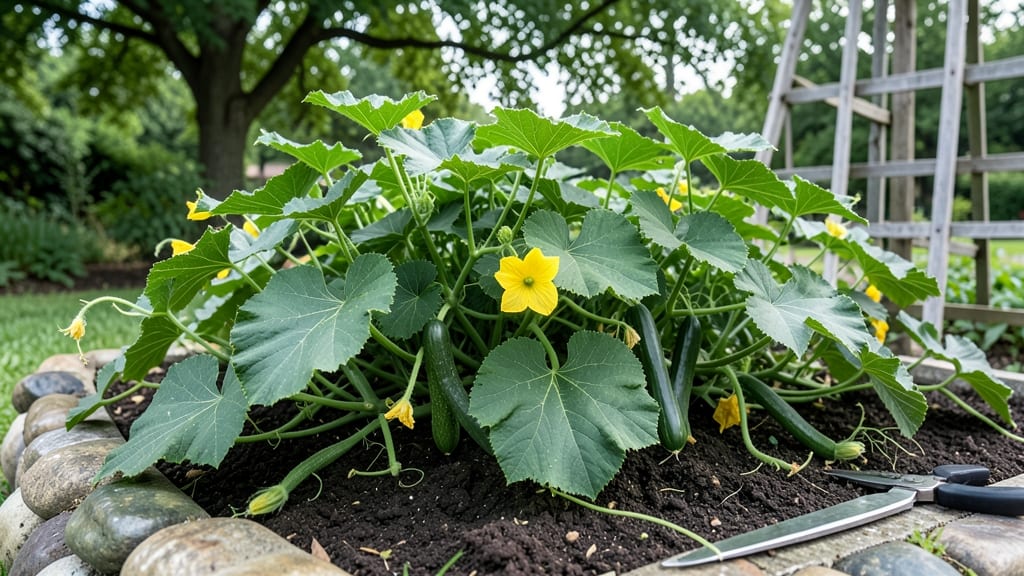
A cucumber is not a nightshade—it belongs to the Cucurbitaceae family, not the Solanaceae family where nightshades like tomatoes and peppers grow. Their botanical differences include fruit structure, growth habits, and edible parts.
A cucumber is actually part of the Cucurbitaceae family, which includes melons, squash, and pumpkins. This group is completely separate from the Solanaceae family—nightshades like tomatoes, eggplants, and peppers.
The key difference lies in their fruit structure: cucumbers develop from a single ovary with multiple seeds, while nightshades have berries with a different internal arrangement. 🌱 This matters if you're gardening or cooking, as their growing conditions and flavor profiles differ significantly.
For example, cucumbers thrive in warm soil and need consistent moisture, while many nightshades prefer slightly drier conditions. The confusion often comes from their similar appearances, but their botanical traits—like vine habits and leaf shapes—are distinct.
Understanding this helps when planning garden layouts or choosing companion plants to avoid cross-pollination issues.
💡 In This Article
- Botanical Families: Cucurbitaceae vs Solanaceae
- Garden Cross-Compatibility: Nightshades and Cucumbers Together
Botanical families: Cucurbitaceae vs Solanaceae
The distinction between cucumbers and nightshades starts with their fruit development. Cucumbers belong to the Cucurbitaceae family, where their fruits develop from a single ovary with multiple seeds arranged in a central cavity. This structure creates their characteristic hollow interior, visible when you slice one open.
In contrast, nightshades in the Solanaceae family produce berries with seeds embedded in a fleshy pulp—like the jelly-like center of a tomato.
Seed structure is another key difference. Cucumber seeds are large, flat, and surrounded by a white, gelatinous coating when fresh.
Nightshade seeds, however, are tiny and dispersed throughout the fruit's flesh. 🌱 The leaf shapes also differ: cucurbit leaves are broad and lobed, while nightshade leaves are often more delicate with serrated edges.
These botanical traits explain why cucumbers grow as vining plants with sprawling habits, while nightshades like tomatoes grow as bushes or compact plants.
Chemically, their compounds vary too. Cucumbers contain high levels of cucurbitacins—bitter compounds that give them their signature taste—while nightshades are rich in alkaloids like solanine (found in green tomato skins). This chemical difference affects how they interact with pests: cucumbers attract aphids, while nightshades often repel them.
Understanding these traits helps gardeners choose the right growing conditions—cucumbers need warm soil temperatures above 70°F to thrive, while nightshades tolerate cooler soils.
One surprising fact is their flower structure. Cucumber flowers are unisexual—meaning separate male and female blooms grow on the same plant—while nightshades typically have bisexual flowers.
This affects pollination strategies: cucumbers often rely on bees for cross-pollination, while nightshades can self-pollinate. 🌿 The edible parts also differ: cucumbers are eaten raw or cooked as fruit, while nightshades are often consumed as vegetables (like eggplant) or fruits (like tomatoes).
For those allergic to nightshades, this classification matters. Cucumber allergies are rare and unrelated to nightshade sensitivities, as their protein structures differ completely.
The confusion often arises from their similar appearances in salads or garden plots, but their botanical differences are clear when you examine their growth habits and internal structures.