
Shrubs
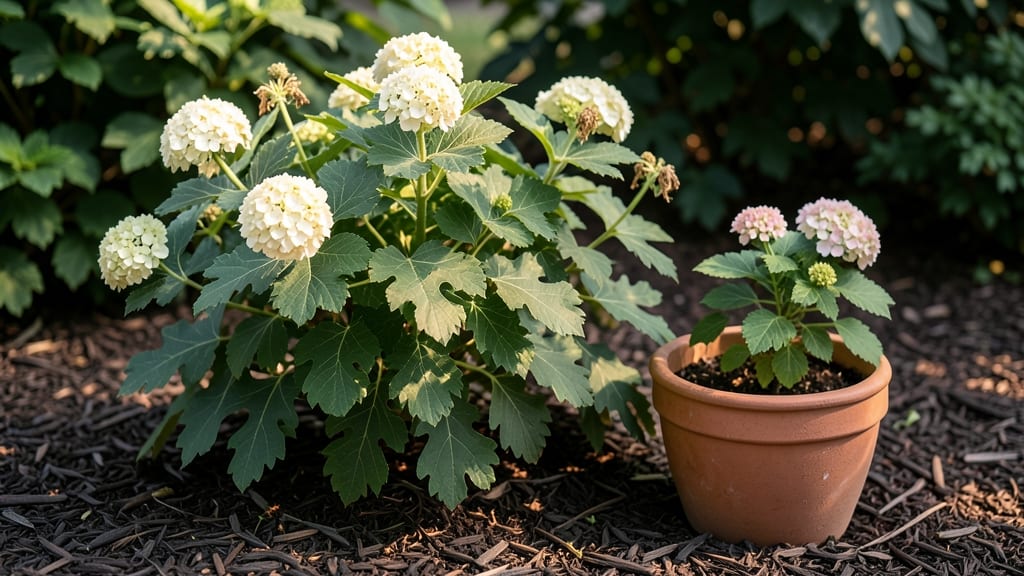
Oak Leaf Hydrangea thrives in partial shade 🌿, where morning sun and afternoon shade create the perfect balance for its stunning foliage year-round.
If you love the bold, oak-like leaves but struggle with sun vs. shade placement, this guide unlocks the secrets to keeping your Oak Leaf Hydrangea happy in any light condition. Too much sun can scorch those beautiful leaves, while too little shade might leave them pale and leggy.
From morning sun to afternoon shade, we’ll break down the ideal light exposure for different cultivars and how to adjust care based on your microclimate. Whether you’re in a sunny border or a shady corner, you’ll learn how to maximize foliage color and health.
Discover practical tips for watering, pruning, and companion planting to ensure your Oak Leaf Hydrangea stays vibrant, no matter where it grows. Let’s get started!
 Best Window Placement
How sunlight affects Oak Leaf hydrangea growth and foliage color
Oak Leaf Hydrangeas (Hydrangea quercifolia) are prized for their stunning oak-shaped leaves and vibrant fall foliage, but their light requirements can be confusing. Unlike other hydrangeas, they thrive in partial shade but tolerate a range of conditions—if you know the trade-offs.
Too much sun can scorch leaves, while too little shade may reduce flowering and weaken growth. Let’s break down how sunlight impacts your plant’s leaf size, color intensity, and flowering based on your local climate and microclimate.
The key to success lies in understanding morning sun vs. afternoon shade. Oak Leaf Hydrangeas love dappled sunlight—think of them as forest-floor plants that evolved under tall trees.
In full sun, their leaves may turn crispy by midday, while deep shade can lead to sparse blooms and leggy stems. The goal? Balance—usually 3-6 hours of morning sun with afternoon shade works best for most regions. But let’s dive into the specifics for your garden.
🌿
| Light Condition | Leaf Size & Shape | Foliage Color | Flowering Impact | Best For Cultivars |
|---|---|---|---|---|
| Full Sun (6+ hours direct) | Smaller, thicker leaves; risk of scorch | Duller green; yellow/brown edges in heat | Reduced blooms; flowers may scorch | 'Annabelle' (tolerates better than others) |
| Partial Sun (3-6 hours, morning preferred) | Large, oak-shaped leaves; healthy growth | Rich green; vibrant red/purple fall colors | Abundant, long-lasting blooms | 'Snow Queen', 'Pee Wee', 'Alice' |
| Partial Shade (3-6 hours filtered light) | Medium-sized leaves; slower growth | Lighter green; muted fall colors | Fewer flowers; leggy stems possible | 'Sike's Dwarf' (compact varieties) |
| Full Shade (<3 hours light) | Very small leaves; weak stems | Pale green; minimal fall color | Almost no flowers; sparse growth | Avoid for most cultivars |
As the table shows, partial sun (with morning light) is the sweet spot for Oak Leaf Hydrangeas, delivering bold foliage and prolonged blooms. Cultivars like 'Snow Queen' and 'Pee Wee' excel here, while 'Annabelle' can handle slightly more sun if given extra water.
If your garden gets intense afternoon sun, consider planting near a north-facing wall or under light trees like Japanese maples to filter harsh rays.
The foliage color is another game-changer. In partial shade, leaves develop deeper greens in summer and stunning reds/purples in fall due to increased anthocyanin production. But in full sun, leaves often turn yellow or brown from stress, especially in hot climates like USDA Zones 7-9.
Even in cooler zones (like Zone 5), afternoon shade is critical to prevent leaf burn during summer heatwaves.
🌳
For regional adjustments, gardeners in the South (e.g., Texas, Florida) should prioritize afternoon shade, while those in the North (e.g., New England) can push the limits with morning sun only.
In containers, Oak Leaf Hydrangeas need more frequent watering to compensate for sun exposure—potted plants in full sun can dry out 3x faster than in-ground plants. Pro tip: Use light-colored containers to reflect excess heat and reduce water loss.
Watch for signs of light stress: Crispy leaf edges mean too much sun, while long, sparse stems signal insufficient light. If your plant looks leggy, it’s begging for more sunlight (but not direct midday rays).
Conversely, if leaves are small and pale, it’s time to move it to a sunnier spot—just avoid sudden changes, which can shock the plant. Gradual adjustments over 2-3 weeks help them adapt.
💧
Let’s talk cultivar-specific needs. 'Snow Queen' is the most shade-tolerant, making it ideal for woodland gardens or understory plantings. 'Pee Wee' and 'Annabelle' handle partial sun better but still need protection from midday heat.
If you’re unsure about your site, start with 'Sike’s Dwarf'—it’s forgiving and thrives in partial shade to partial sun, perfect for small spaces or shaded borders.
Remember, Oak Leaf Hydrangeas are not one-size-fits-all. Experiment with placement in your garden, and don’t hesitate to use shade cloth (30-50% coverage) if your area gets brutal afternoon sun.
With the right light balance, you’ll enjoy year-round interest—from spring blooms to fall foliage that rivals maples. Now go test those microclimates in your yard!
Light-specific care tips to maximize Oak Leaf hydrangea health
Oak leaf hydrangeas (Hydrangea quercifolia) thrive with flexible light conditions, but their care needs shift dramatically between sun and shade. In full sun, their leaves can scorch, while too much shade leads to leggy growth and sparse blooms.
The key is adapting your watering, soil, and pruning routines to match their light exposure.
For sun-loving plants, focus on morning sun and afternoon shade to avoid leaf burn. In shadier spots, prioritize moisture retention and mulching to support slower growth. Let’s break down the light-specific adjustments that keep your hydrangea lush year-round.
- 💧 Watering Adjustments: Sun-exposure plants need deep watering 2x/week; shade plants 1x/week (check soil moisture).
- 🌱 Soil Amendments: Add compost for shade plants; sand for sun plants to improve drainage and prevent root rot.
- ✂️ Pruning Techniques: Prune sun plants in late winter to remove dead wood; shade plants in early spring to encourage bushiness.
- 🌿 Mulching Strategy: Use 3-inch mulch layer for shade plants; 2-inch layer for sun plants to retain moisture without suffocating roots.
- 🌡️ Seasonal Tweaks: Summer shade cloth for sun plants; winter protection (mulch) for shade plants to prevent frost damage.
If your hydrangea shows yellowing leaves in sun, it’s likely overwatered—reduce frequency and improve drainage. For leggy growth in shade, move it to a sunnier spot or supplement with a grow light for 4-6 hours daily. These adjustments ensure your plant stays compact, vibrant, and healthy.
Don’t forget to monitor your hydrangea’s foliage color as a barometer for light success. Deep green leaves with rich fall hues signal perfect conditions, while pale or crispy edges mean it’s time to tweak your care routine.
With these light-specific tips, your oak leaf hydrangea will reward you with year-round interest.
For container-grown hydrangeas, use self-watering pots in sun and terracotta pots in shade to balance moisture needs. Rotate pots every few weeks to ensure even light exposure and prevent lopsided growth. A little extra attention to light and care makes all the difference in keeping your hydrangea thriving!