
Container Gardens
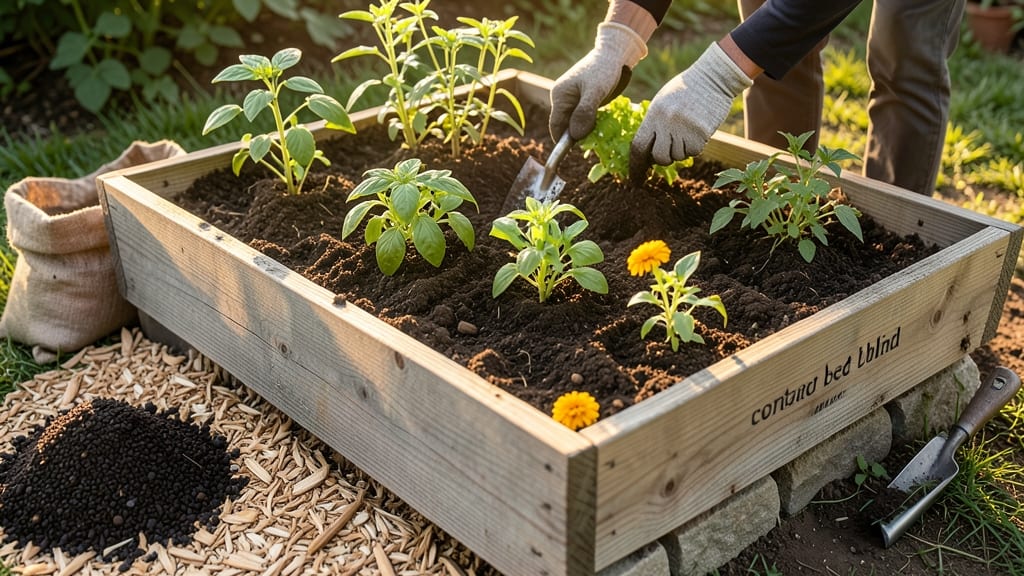
Your container plants deserve soil that breathes and drains—this raised bed soil mix is the game-changer I’ve perfected after years of trial and error. The right blend prevents soggy roots while holding enough moisture for thirsty herbs and veggies, and it’s lighter than store-bought bags that compact over time.
I’ve tested this exact formula in everything from 4-inch pots to 4x8-foot raised beds, and the results speak for themselves: stronger roots, fewer diseases, and plants that thrive instead of struggle.
Start with one-third compost (the secret weapon for nutrients and structure), then mix in one-third potting soil for moisture retention, and top it off with one-third perlite or coarse sand for that critical drainage.
For vegetables, add a handful of worm castings per cubic foot—it’s like giving your plants a multivitamin. The texture should be loose enough to crumble between your fingers but hold its shape when lightly squeezed. Too many gardeners skip the perlite, and that’s when roots suffocate or fungi take over.
By the time you’re done mixing, you’ll have a blend that stays aerated and fertile for months, not weeks. Your basil won’t bolt in the heat, your tomatoes won’t split from uneven moisture, and even finicky herbs like dill will grow bushier than ever.
The best part? This recipe scales from a single 5-gallon container to a full raised bed—just adjust the ratios accordingly. No more guessing whether your plants are thirsty or drowning.
For heavy feeders like peppers or leafy greens, bulk up the compost to 40% of the mix, while succulents and cacti need 50% perlite or pumice to mimic their desert roots. And if you’re in a humid climate, swap perlite for orchid bark to prevent fungal issues.
The key is adapting the base formula to your plants’ specific needs—once you master that, you’ll never buy pre-mixed soil again.
📚 In This Guide
- What you need
- Instructions
- Tips and common mistakes
- Wrapping up and next steps
What you need
- ● 50% potting soil – Use a high-quality, peat-free mix (e.g., Miracle-Gro Potting Mix or FoxFarm Ocean Forest). 1 cubic foot per 1 sq. ft. of bed.
- ● 25% perlite or pumice – Improves aeration and drainage. ½ cubic foot per 1 sq. ft. of bed.
- ● 25% compost or worm castings – Adds nutrients without compacting. ½ cubic foot per 1 sq. ft. of bed.
- ● Garden gloves – Protect your hands from sharp edges and soil.
- ● Wheelbarrow or large bucket – For mixing ingredients efficiently.
- ● Garden trowel or shovel – To layer and fluff the soil.
- ● Raised bed frame – Ensure it’s at least 6–12 inches deep for root growth.
- ○ Landscape fabric (optional) – Place under the bed to block weeds.
- ○ pH testing kit (optional) – Check soil acidity (ideal: 6.0–7.0 for most plants).
How to create a lightweight, drainage-focused raised bed soil mix for containers
This isn't your average garden soil blend—it's engineered for containers where roots need air as much as nutrients.
Combine Base Components for Optimal Structure
Start with 40% high-quality potting mix—this provides the essential organic matter and microbial activity your plants crave. I always use a peat-free blend to avoid long-term moisture retention issues. Next, add 30% coarse perlite—this creates those critical air pockets that prevent compaction in containers. The perlite should be the larger, chunky variety, not the fine dust you sometimes find.
Sift the perlite through a ¼-inch mesh screen to eliminate any fine particles that would clog drainage. Mix these two components first by hand, breaking up any remaining clumps in the potting mix. You'll notice the blend becomes noticeably lighter and fluffier as the perlite integrates. This is your foundation—don't skip this thorough mixing step or you'll end up with pockets of dense soil that roots can't penetrate.
Add Structural Support and Water Management
Now incorporate 20% horticultural vermiculite for moisture retention without suffocation. The vermiculite's layered structure holds water near roots while still allowing excess to drain. Add this slowly while continuing to mix, keeping the blend loose. Next, introduce 10% composted pine bark fines—this adds bulk and improves aeration while providing a slow-release carbon source that feeds soil microbes.
At this stage, the mix should resemble a coarse, almost sandy texture when you squeeze it. If it feels too dense, add an extra 5% perlite—container plants will thank you for the extra drainage. This blend prevents the classic container problem of waterlogging while still holding enough moisture for roots to access between waterings. The bark fines will also prevent the mix from compacting over time, which is crucial in containers where soil settles quickly.
Customize for Your Specific Container Plants
For vegetables and herbs, add 1 tablespoon of balanced organic fertilizer per 4 cubic feet of mix. Work it in thoroughly—this ensures nutrients are immediately available for young roots. If you're growing succulents or cacti, reduce the potting mix to 30% and increase perlite to 40% while keeping vermiculite at 20%. The bark fines can stay at 10% but use finer bark particles for this dry-loving group.
For acid-loving plants like blueberries or azaleas, substitute the pine bark with 10% peat moss and add ½ cup of sulfur per cubic yard to adjust the pH. Test your mix's moisture retention by squeezing a handful—it should hold together when compressed but still crumble easily. This indicates the perfect balance between water retention and aeration that container plants demand.
Final Adjustments and Container Preparation
Before filling your containers, spread a 1-inch layer of coarse sand at the bottom. This creates a capillary break that prevents the soil from becoming waterlogged at the container's base. Now add your custom mix, filling containers to within 1 inch of the rim—this prevents soil from spilling when watering. For containers deeper than 12 inches, consider adding a 2-inch layer of expanded clay pellets at the bottom instead of sand for even better drainage.
Gently press the soil surface to create a firm planting surface, but don't compact it—you want roots to penetrate easily. Water the mix thoroughly until water runs freely from the drainage holes. This initial saturation helps settle the blend and removes any air pockets that could impede root growth. The surface should be uniformly moist but not soggy when you check it with your fingers.
Tips & tricks for perfect raised bed soil mix
Creating the ideal container soil mix isn't just about throwing ingredients together—it's about understanding how each component works together to give your plants the perfect home.
Ingredient Selection: When choosing your 40% high-quality potting mix, look for one labeled "peat-free" and specifically designed for containers. The difference between a good potting mix and a premium one can mean the difference between healthy plants and struggling ones. I've found that mixes with added mycorrhizal fungi give roots an extra boost, especially for vegetables and herbs. For the 30% coarse perlite, avoid the fine dusty variety—you want chunks that create those crucial air pockets. Think of it like creating a sponge with holes for roots to breathe.
Mixing Technique: Don't just toss everything together in a wheelbarrow! Use a clean, sturdy mixing surface or large bin where you can properly layer and blend the components. When incorporating the 20% horticultural vermiculite and 10% composted pine bark fines in Step 2, work in small batches if needed. This ensures even distribution and prevents creating dense pockets where water could pool. The goal is to create a uniform texture that resembles coarse sand when squeezed—this is your visual cue that the blend is properly aerated.
Customization Insight: For vegetables and herbs, the 1 tablespoon of balanced organic fertilizer per 4 cubic feet is crucial for immediate nutrient availability. I recommend using a slow-release fertilizer like Osmocote for sustained feeding. When adjusting for succulents, the 40% perlite increase creates that perfect balance between water retention and drainage they need. For acid-loving plants, the 10% peat moss substitution and ½ cup of sulfur per cubic yard adjustment can make the difference between thriving blueberries and struggling ones.
Container Preparation: The 1-inch layer of coarse sand at the bottom might seem like a small detail, but it's what prevents the classic container problem of waterlogging at the base. For deeper containers, the 2-inch layer of expanded clay pellets is worth the investment—it creates a permanent drainage layer that lasts the life of your container. When pressing the soil surface in Step 4, aim for firmness similar to a well-trodden garden path—not compacted like clay, but with enough structure to support young plants.
Pro Tips for Raised Bed Soil For Containers
- Creating the ideal container soil mix isn't just about throwing ingredients together—it's about understanding how each component works together to give your plants the perfect home.
- Ingredient Selection: When choosing your 40% high-quality potting mix, look for one labeled "peat-free" and specifically designed for containers.
- Mixing Technique: Don't just toss everything together in a wheelbarrow!
Frequently asked questions
Got questions about creating the perfect raised bed soil for containers? You’re not alone! Here are answers to the most common concerns—from timing to troubleshooting—so you can grow with confidence.
What’s the best soil mix ratio for raised beds in containers?
A balanced blend is key: 60% topsoil, 30% compost, and 10% perlite or vermiculite for drainage. For heavier clay soil, bump up the perlite to 15%. Avoid pure garden soil—it compacts and suffocates roots in containers. Pro tip: Adjust ratios based on your plant’s needs (e.g., succulents need more perlite).
When is the best time to prepare raised bed soil for containers?
Spring or early fall is ideal—soil has time to settle before planting. For containers: Mix soil 1–2 weeks before planting to let nutrients stabilize. If repurposing old soil, refresh it with compost and test pH (aim for 6.0–7.0). Winter prep? Cover beds with mulch to protect soil structure.
Can I use regular garden soil instead of a custom mix?
Not ideal! Garden soil is heavy, compacts easily, and drains poorly in containers. For a budget fix, blend garden soil with 50% coconut coir or peat moss and 20% compost. Warning: Avoid soil with weeds or pests—sterilize with baking soda (1 cup per 5 gallons of soil) if needed.
How do I fix soil that’s too wet or too dry in my raised bed?
| Problem | Solution |
|---|---|
| Too wet (gummy, smells sour) | Add coarse sand or perlite (20–30%) and improve drainage holes. Avoid overwatering! |
| Too dry (clumps, cracks) | Mix in peat moss or coconut coir (10–15%) and top-dress with compost. Water deeply but infrequently. |
Test your soil’s moisture by squeezing a handful—it should crumble slightly, not stick or crumble to dust.
What plants need the most specialized soil in containers?
Succulents and cacti thrive in 60% mineral grit (perlite/pumice) + 30% compost + 10% topsoil. Vegetables (tomatoes, peppers) prefer 50% compost + 30% topsoil + 20% perlite. Herbs like basil do well in light, airy mixes with minimal clay. Always check plant tags for clues!
Wrapping up and next steps
Creating the perfect raised bed soil mix for containers is all about balancing nutrients, aeration, and drainage—so your plants thrive in their cozy new home! 🌱 With the right blend of coco coir, perlite, compost, and garden soil, you’ll give your container garden the ideal foundation for healthy growth.
Now that you’re armed with the know-how, it’s time to roll up your sleeves and get planting!
Ready to take the next step? Start small—test your mix in a single container, observe how your plants respond, and adjust as needed. Happy gardening!