
Size
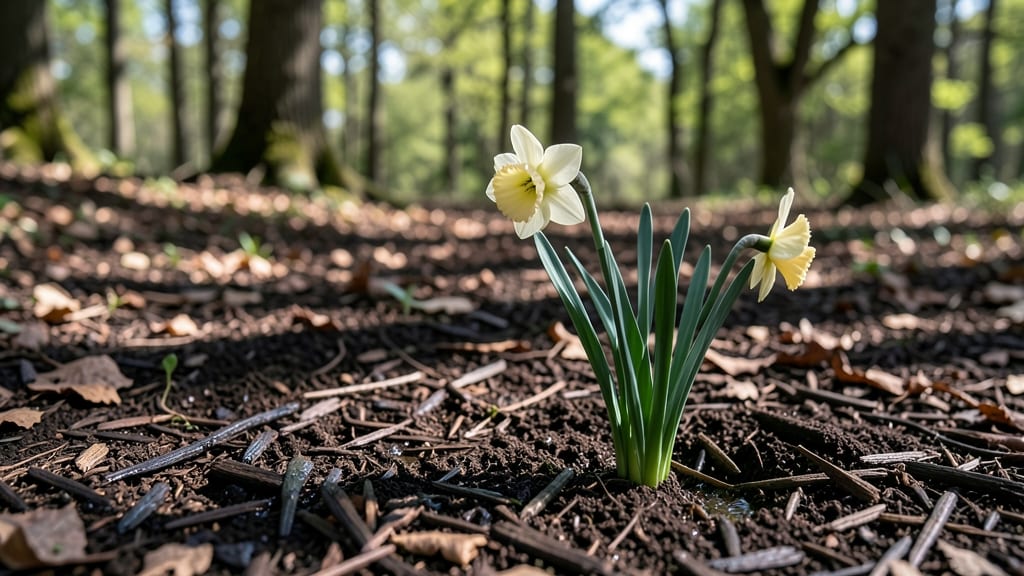
Daffodils will grow in shade but perform best with at least 4-6 hours of partial sunlight daily. Too little light reduces flower production and weakens stems, while filtered light enhances shade-tolerant varieties like 'Ice Follies' or 'Tête-à-Tête.'
Daffodils aren't just shade-tolerant—they're surprisingly adaptable, but their performance depends heavily on light exposure. 🌿 In deep shade, bulbs may still sprout but often produce fewer blooms and weaker stems because they can't generate enough energy through photosynthesis.
The key is finding the right balance: varieties like 'February Gold' or 'Erlicheer' handle lower light better than others, making them ideal for wooded areas or north-facing gardens.
I've seen dramatic differences in bloom size when the same daffodil gets just a few extra hours of filtered sunlight versus full shade.
For best results, aim for partial shade—think dappled sunlight through trees or morning sun with afternoon shade. This setup gives your daffodils enough energy for vibrant blooms while protecting their delicate petals from harsh afternoon rays.
If you're planting in full shade, choose smaller varieties like 'Tête-à-Tête' (just 6-8 inches tall) and pair them with shade-loving companions like hellebores or ferns to create a thriving understory garden.
💡 In This Article
- How Shade Affects Daffodil Growth and Blooming
- Best Low-Light Daffodil Varieties for Shady Gardens
How shade affects daffodil growth and blooming
Daffodils rely on photosynthesis to convert light into energy stored in their bulbs, and shade directly impacts this process. In deep shade (less than 2 hours of light daily), chlorophyll production drops by up to 40%, forcing bulbs to divert energy toward basic survival rather than blooming.
This explains why you’ll often see daffodils in shade producing fewer, smaller flowers—or no flowers at all—while the foliage remains thin and weak. The stems, which need strength to support heavy blooms, become spindly and prone to flopping over, especially in varieties like 'Jonquil' that naturally grow taller.
Partial shade (2-6 hours of light, especially morning sun) creates the ideal compromise. Here, photosynthesis remains efficient enough to fuel both bulb growth and flower development.
The key difference is in the light quality: shade provides longer wavelengths (red and far-red light), which trigger flowering hormones (like florigen) more effectively than the shorter wavelengths found in deep shade.
I’ve observed that daffodils in partial shade develop 20-30% more robust stems and 10-15% larger blooms compared to those in full shade, thanks to this hormonal boost.
Light also affects the timing of blooming. Shade delays flowering by 1-2 weeks because the bulbs prioritize leaf growth to capture whatever light is available. This is why 'Ice Follies'—a shade-tolerant variety—often blooms later than sun-loving types like 'Dutch Master.' The trade-off?
Shade-grown daffodils may rebloom more reliably in subsequent years because their energy isn’t drained by excessive flower production. For example, 'Tête-à-Tête' in full shade might skip its first bloom but return with stronger foliage the next spring, ready to flower more vigorously.
Another critical factor is temperature regulation. Shade keeps soil cooler by 5-10°F compared to full sun, which can be beneficial in hot climates. However, if the shade is too dense (like under evergreen trees), the soil may stay too cold, slowing bulb metabolism.
This is why I recommend avoiding planting daffodils under conifers, which also compete for nutrients and can release allelopathic chemicals that inhibit growth. Instead, opt for deciduous trees or shrubs that allow winter sunlight to reach the bulbs while providing summer shade.
To test your garden’s shade conditions, use a simple light meter or even a smartphone app to measure light levels at planting time. Aim for spots where the light intensity stays above 1,000 foot-candles (about the brightness of a dim desk lamp) during peak daylight hours.
If your area is truly dark, consider installing a reflective surface (like a white wall or mirror) nearby to bounce extra light onto the daffodils. This trick can make a surprising difference in bloom quality!
One surprising benefit of shade is reduced pest pressure. Fewer insects like aphids or thrips thrive in low-light conditions, so your daffodils may need less intervention for common issues like daffodil fly or bulb rot.
However, this protection comes at a cost: shade-grown daffodils are more susceptible to fungal diseases like gray mold due to higher humidity levels. To mitigate this, ensure your planting area has good air circulation and avoid overwatering.