
Container Gardens
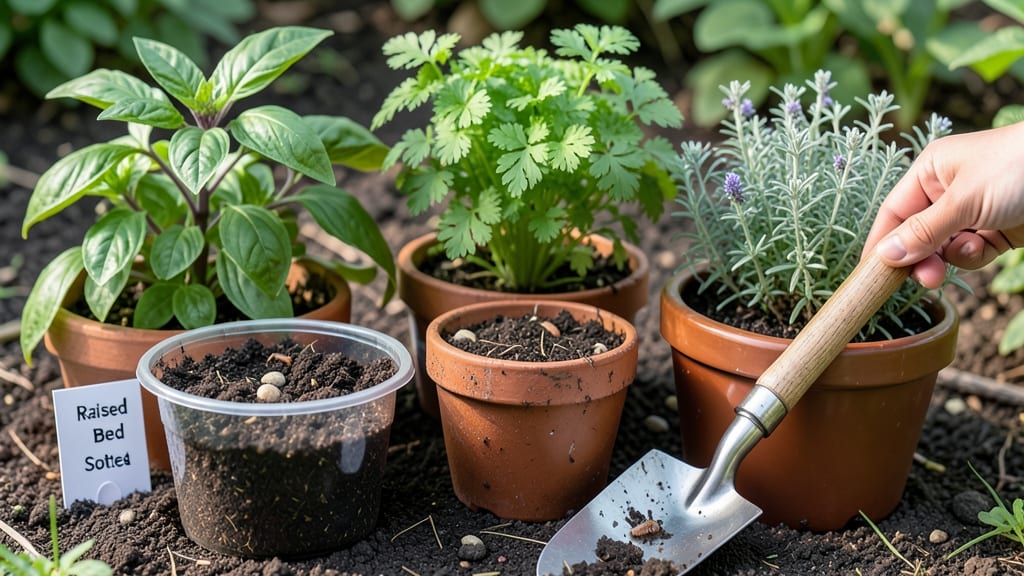
Yes, the soil from raised beds can be used in pots, but it must be amended first—potted plants need soil with improved drainage, higher organic content, and a looser structure to prevent root suffocation and waterlogging. Blending it with perlite, compost, or coconut coir creates an ideal growing medium.
Raised bed soil is heavier and more compact than potting mixes, which can suffocate roots in containers. 🌱 The key is balancing its nutrients with airy amendments like perlite or vermiculite to mimic the loose texture of commercial potting soil.
I’ve found that adding 20-30% compost by volume helps retain moisture while preventing compaction. For plants like herbs or succulents, this modified mix works beautifully, but heavy feeders (like tomatoes) may still need extra fertilizer.
Another critical factor is drainage—pots without drainage holes can trap excess moisture, turning amended soil into a soggy mess. Always pair repurposed soil with containers that allow water to escape freely.
If you’re unsure about your soil’s composition, a simple squeeze test (if it holds a tight ball, it’s too dense) can save you from root rot headaches.
💡 In This Article
- Why Raised Bed Soil Needs Modifications for Containers
- How to Repurpose Raised Bed Soil for Potted Plants
Why raised bed soil needs modifications for containers
Raised bed soil is designed for in-ground or deep container environments where roots can spread freely and excess water drains naturally through the soil profile. In pots, however, the confined space creates a completely different set of challenges.
The primary issue is compaction: garden soil naturally compresses over time from foot traffic, weather, and microbial activity, reducing pore space by 30-50% compared to loose potting mixes. This dense structure restricts root growth and oxygen flow, causing roots to suffocate and plants to struggle even when watered properly.
The ideal potting mix maintains 45-60% porosity—the space between particles that holds air and water—while garden soil typically sits at 20-35% porosity. This difference explains why plants in unamended raised bed soil often develop yellowing leaves or stunted growth.
For example, a 5-gallon pot filled with compacted garden soil can trap moisture like a sponge, creating anaerobic conditions that promote root rot within 3-5 days of overwatering. 🌱 The solution lies in adding bulking agents like perlite (which adds 80% air space) or coconut coir (which holds 10x its weight in water without compacting).
Nutrient availability also shifts dramatically in containers. Raised bed soil benefits from continuous organic matter input from decomposing leaves and roots, while potted soil depletes nutrients faster due to limited volume.
A 10-inch pot contains roughly 1/50th the soil volume of a raised bed, meaning nutrients like nitrogen and phosphorus get used up 5-10x faster. This is why amended potting mixes often include slow-release fertilizers or worm castings to extend nutrient availability.
For instance, a mix of 70% raised bed soil + 20% compost + 10% perlite can support herbs for 3-4 months without additional feeding, compared to 1-2 weeks in unamended soil.
Another critical factor is the water retention curve—how quickly soil releases moisture to roots. Garden soil holds water tightly due to clay particles, while potting mixes release water more freely. This mismatch leads to either dry pockets (where roots can't access moisture) or waterlogging (where roots drown).
For example, a tomato plant in unamended raised bed soil may show wilting within 24 hours of drying out, while the same plant in a 50/50 soil-perlite mix recovers within 6-8 hours when watered.
The key is achieving a balance where moisture is available but excess drains away within 2-4 hours.
Consider the texture differences too: garden soil feels dense and gritty when dry, while potting mixes have a fluffy, almost powdery consistency. This isn't just about feel—it's about root penetration.
A marigold seedling can push through a loose potting mix with minimal effort, but the same seedling struggles to emerge from compacted garden soil, often resulting in 20-40% lower germination rates.
The solution is simple: blend your raised bed soil with 30% by volume of coarse amendments like vermiculite or horticultural charcoal to recreate the ideal texture. 💫