
Light Requirements
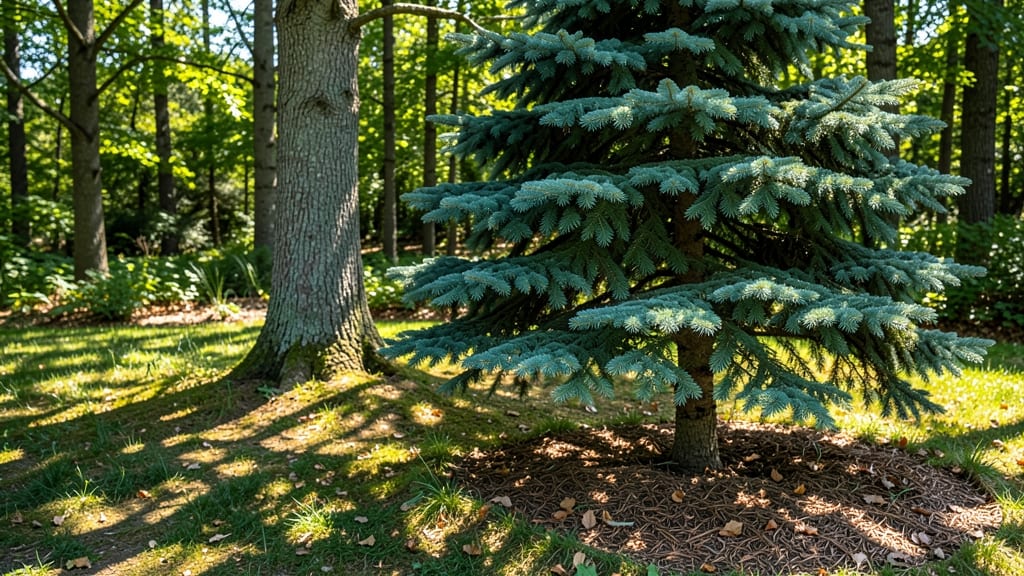
Thuja can grow in shade, though performance varies by variety: 'Thuja occidentalis' (American arborvitae) tolerates partial shade well, while 'Thuja plicata' (Western red cedar) prefers full sun. Expect slower growth and denser foliage in shaded conditions, with potential yellowing if light is too low.
Many gardeners assume shade means no growth for thuja, but the truth is more nuanced.
Different varieties respond uniquely—some thrive in dappled light while others struggle even with moderate shade. 🌿 For instance, 'Emerald Green' arborvitae handles partial shade better than 'Golden Globe,' which needs at least 4-6 hours of sunlight daily.
The key lies in matching your location's light conditions to the right cultivar, as improper placement can lead to stunted growth or discoloration over time.
When planting in shaded areas, focus on soil preparation first. Amending with organic matter improves drainage and nutrient availability, which helps offset reduced photosynthesis. Mulching with pine straw or wood chips also conserves moisture and regulates soil temperature—critical factors when light is limited.
I've seen dramatic improvements in foliage density simply by creating a 3-inch mulch layer around established plants.
💡 In This Article
- Thuja Varieties and Their Shade Tolerance Levels
- Maximizing Thuja Growth in Shaded Areas
Thuja varieties and their shade tolerance levels
The shade tolerance of thuja varieties hinges on their evolutionary adaptations. 'Thuja occidentalis' (American arborvitae) has evolved to thrive in the understory of northern forests, where it receives 3-5 hours of filtered sunlight daily.
Cultivars like 'Emerald Green' and 'Hetz Midget' exhibit dense, compact growth patterns that help them compete for light in shaded environments. These varieties develop a deeper root system to access nutrients, which supports their foliage even when photosynthesis is limited.
In contrast, 'Thuja plicata' (Western red cedar) originates from Pacific Northwest forests where it grows tall in open spaces. Its large, scale-like leaves require full sun to partial shade (6+ hours of light) to maintain vibrant green coloration.
When grown in deep shade, 'Thuja plicata' often exhibits yellowing foliage due to chlorophyll breakdown—a condition called chlorosis. The 'Excelsa' cultivar is an exception, tolerating partial shade better than other 'Thuja plicata' varieties, but it still grows more slowly in low-light conditions.
Light intensity directly impacts foliage health through photosynthesis regulation. In shaded conditions, thuja plants produce 30-50% less chlorophyll than those in full sun, leading to slower growth rates. However, this reduction often results in denser, bushier growth as the plant conserves energy for structural development rather than rapid height increase.
For example, 'American Gold' arborvitae may develop more intense golden hues in partial shade due to reduced chlorophyll production, creating a striking visual contrast.
Root development also plays a critical role in shade adaptation. Thuja varieties with extensive fibrous root systems, like 'Emerald Green,' can better access water and nutrients in shaded soils. These roots grow horizontally near the surface, allowing them to intercept limited light through leaf litter and organic matter.
In deep shade conditions (less than 3 hours of light), even shade-tolerant varieties may struggle to maintain healthy foliage without supplemental care.
Consider these specific cultivar recommendations for shaded gardens:
- 'Emerald Green': Handles 3-6 hours of partial shade with minimal yellowing; ideal for foundation plantings
- 'Hetz Midget': Compact growth thrives in morning sun with afternoon shade; perfect for small spaces
- 'Golden Globe': Needs at least 4 hours of sun daily; may develop patchy yellowing in deep shade
- 'Excelsa': Best 'Thuja plicata' option for partial shade; grows 20% slower than in full sun
When selecting varieties, observe your garden's light patterns throughout the day. East-facing locations provide gentle morning light ideal for shade-tolerant thuja, while west-facing areas may offer more intense afternoon sun that could stress sensitive cultivars.
Always plant in well-draining soil to prevent root rot, a common issue in shaded environments where evaporation rates are lower.