
Light Requirements
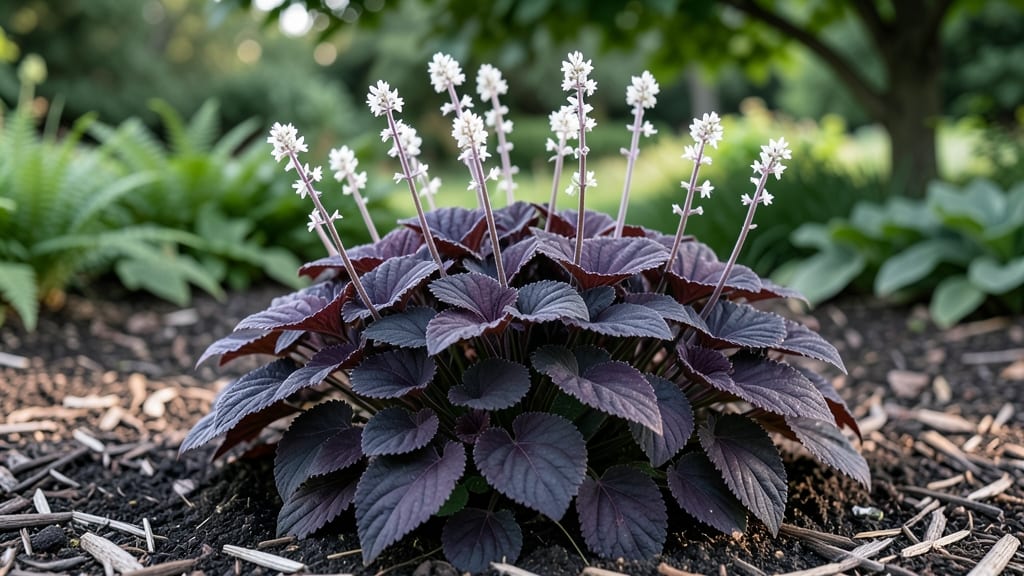
Growing coral bells in full shade transforms your darkest corners into a jewel-toned oasis. 💚 These hardy perennials don't just survive in deep shadows—they thrive, with foliage so vibrant it makes even the gloomiest spots feel alive.
The key lies in understanding their unique needs, from soil prep to watering, so you can coax out those stunning colors year after year.
Your coral bells need rich, well-draining soil that holds moisture but never stays soggy. Amend heavy clay with compost or peat moss to improve aeration, and consider adding a handful of organic fertilizer at planting time.
Spacing matters too—give each plant 12 to 18 inches of room so their leaves can breathe and show off their full glory. Once established, they're surprisingly low-maintenance, but that first year sets the foundation for everything that follows.
Watering becomes simpler once you know the rhythm: keep the soil consistently moist but never waterlogged, especially during those first few weeks after planting. Mulch with shredded bark or leaves to lock in moisture and suppress weeds, which means less work for you and happier plants.
The real magic happens when you see those deep purple, lime green, or fiery orange leaves unfurling—proof that even full shade can be spectacular.
Seasonal care keeps them looking their best. In spring, a light top-dressing of compost gives them a boost, while fall is the perfect time to divide crowded clumps. And if you notice leaves losing their vibrancy, it might be a sign they need more organic matter or better drainage.
With these simple adjustments, your coral bells will reward you with bold, healthy foliage that turns heads all season long.
📚 In This Guide
- What you need
- Instructions
- Tips and common mistakes
- Wrapping up and next steps
What you need
- ● Coral Bells Plants: 3–5 Heuchera plants (choose full-shade varieties like 'Palace Purple,' 'Lime Rickey,' or 'Berry Smoothie').
- ● Size: 4–6" pots or bare-root divisions for faster establishment.
- ● Soil Amendments: 2–3 gallons of well-draining potting mix or native soil blended with 1 part compost.
- ○ Optional: Perlite or sand (1 part) to improve drainage in heavy clay.
- ● Mulch: 2–3 inches of organic mulch (e.g., shredded bark, pine needles, or leaf mold).
- ● Gardening Tools: Trowel or hand shovel for planting.
- ○ Garden gloves (optional but recommended).
- ● Watering can or hose with a gentle spray nozzle.
- ● Location Prep: Full-shade spot (≤3 hours of direct sun) with moist, well-draining soil.
- ● Test soil pH (ideal: 6.0–7.0; coral bells tolerate slight acidity).
- ○ Optional Extras: Slow-release balanced fertilizer (5-10-5 or 10-10-10) for nutrient boost.
- ● Plant markers for variety tracking.
- ● Edging stones or decorative rocks for borders.
Step-by-Step guide to growing coral bells in full shade
Here's how to create a lush, vibrant display using this shade-loving perennial.
🌱 Step 1: Choose the Right Coral Bells Variety for Your Shade
Not all coral bells tolerate full shade equally. For deep shadows, select varieties like 'Black Scallop' or 'Moonlight'—both handle low light better than sun-loving types. I always check the plant tag for shade tolerance percentages before buying. These varieties thrive with less than 3 hours of direct sun daily.
Look for healthy young plants with firm stems and vibrant foliage (no brown edges or yellowing). Avoid plants with flower spikes already forming—they'll divert energy from root establishment. The best time to plant is in early spring or early fall, when temperatures are mild and moisture is consistent.
🪴 Step 2: Prepare the Planting Site
Coral bells in full shade need well-draining, slightly acidic soil (pH 6.0-7.0). Amend heavy clay soil with 2-3 inches of compost or peat moss to improve aeration. I dig a hole twice as wide as the root ball but only as deep as the container—planting too deep suffocates the crown.
Loosen the roots gently if they're circling the container. Place the plant so the top of the root ball sits 1 inch below soil level—this prevents crown rot from sitting water. Water thoroughly after planting to settle the soil and eliminate air pockets around the roots.
☀️ Step 3: Provide Optimal Light and Moisture
Full shade doesn't mean no light—coral bells still need bright, indirect light. If your site gets no direct sun, supplement with a grow light for 4-6 hours daily during winter months. You'll see leaves grow pale or sparse if light is insufficient.
Water 1-2 times weekly depending on rainfall, keeping soil consistently moist but not soggy. I check moisture by pressing my finger 1 inch into the soil—if it feels dry, it's time to water. Mulch with 2-3 inches of shredded bark to retain moisture and protect roots from temperature swings.
✂️ Step 4: Maintain Through the Growing Season
Deadhead spent flower spikes regularly throughout summer to encourage more blooms. I snip them back to the nearest leaf set with clean pruners. This prevents the plant from putting energy into seed production and keeps foliage looking fresh.
Fertilize once in early spring with a balanced 10-10-10 fertilizer at half strength. Too much nitrogen causes rapid leaf growth at the expense of flower production. Watch for powdery mildew in humid shade—if you see white dust on leaves, spray with neem oil immediately to prevent spread.
🌿 Step 5: Prepare for Winter Dormancy
In late fall, cut back foliage by one-third to reduce winter damage from snow or ice. I leave 3-4 inches of stem to protect the crown from temperature fluctuations. Coral bells are hardy in zones 3-9, but a 3-inch layer of mulch gives extra insulation.
Don't fertilize after mid-summer—new growth won't harden off before winter. You'll know your plants are ready for winter when they've stopped producing new leaves and the stems turn woody. In spring, you'll see fresh growth emerge from the base within 3-4 weeks of warm soil.
Tips & tricks for thriving coral bells in deep shadows
Here's what nobody tells you about keeping these shade stars looking their absolute best.
Variety Matters: The 3-hour daily sun limit in Step 1 is crucial—'Black Scallop' and 'Moonlight' varieties are your best bets for true full shade. I've learned this the hard way: cheaper, sun-loving varieties will just yellow and struggle. Look for tags that specifically mention "low light tolerance" or "deep shade" when shopping. This one detail makes all the difference between a thriving plant and one that just survives.
Root Care Secret: When loosening those circling roots in Step 2, don't just pull them apart—gently tease them outward with your fingers. This prevents root damage while encouraging outward growth. I also make it a habit to add a handful of mycorrhizal fungi granules to the planting hole (optional but game-changing). These beneficial fungi help roots absorb nutrients more efficiently in low-light conditions.
Light Supplement Strategy: That 4-6 hour grow light recommendation in Step 3 is your secret weapon for winter. I use LED grow lights on timers set for morning hours when natural light is weakest. Position them just 6-12 inches above the plants—closer than you'd think! You'll notice the leaves stay a vibrant green instead of turning pale and leggy during darker months.
Winter Prep Insight: The 3-4 inch stem recommendation in Step 5 is perfect for protecting the crown, but here's the extra tip: after cutting back, I sprinkle a thin layer of diatomaceous earth around the base. This prevents slugs and snails from finding the tender new growth in spring. The 3-inch mulch layer you add will keep everything insulated and moist through winter.
Pro Tips for Coral Bells Full Shade
- Here's what nobody tells you about keeping these shade stars looking their absolute best.
- Variety Matters: The 3-hour daily sun limit in Step 1 is crucial—'Black Scallop' and 'Moonlight' varieties are your best bets for true full shade.
- Root Care Secret: When loosening those circling roots in Step 2, don't just pull them apart—gently tease them outward with your fingers.
Frequently asked questions
Got questions about growing coral bells in full shade?
You’re not alone! Here are some of the most common concerns—and their answers—to help you cultivate thriving, vibrant foliage even in the darkest corners of your garden.
Can coral bells really grow in full shade, or will they struggle?
Coral bells (Heuchera) are perfect for full shade, especially varieties like ‘Palace Purple,’ ‘Lime Rickey,’ or ‘Berry Smoothie.’ While they prefer partial shade (4–6 hours of light), many cultivars thrive in deep shade (under 4 hours) as long as they get bright, indirect light or dappled sunlight. Just avoid dense, dark shade (like under thick trees with no light penetration), which can lead to leggy growth or pale leaves.
How do I know if my coral bells are getting enough shade?
Watch for these signs:
- Leggy stems or sprawling growth = too much light (even indirect sun can be too intense).
- Pale or washed-out leaves = insufficient light (but not always—check soil moisture too!).
- Compact, vibrant foliage = just right! Your coral bells are happy.
Pro tip: If leaves look yellowish, it might be overwatering or nutrient deficiency—not shade. Test your soil!
How long does it take for coral bells to adjust to full shade?
Most coral bells adapt within 4–6 weeks if gradually transitioned. Start by placing them in morning sun + afternoon shade, then slowly reduce light exposure. Hardy varieties (like ‘Black Beauty’ or ‘Plum Pudding’) handle shade better than delicate ones. If growth stalls after 2 months, they may need a spot with more indirect light or a reflective surface (like a white wall) to bounce light.
What are the best alternatives if coral bells don’t thrive in my shade?
If your shade is too dark or your coral bells refuse to cooperate, try these low-light lovers:
- Hostas – Classic shade plants with bold foliage (but watch for slugs!).
- Astilbes – Feather-like plumes and crispy texture; love moisture.
- Ferns (e.g., Japanese Painted Fern) – Lacy, architectural, and thrives in deep shade.
- Hellebores (Lenten Rose) – Nearly indestructible and blooms in winter.
- Caladiums – Stunning tropical leaves (great for woodland gardens).
Bonus: Mix coral bells with light-reflecting plants like ivy (Hedera) or Aluminum Plant (Pilea cadierei) to brighten their space naturally.
Why are my coral bells’ leaves turning brown or crispy in shade?
Brown edges or crispy leaves in shade usually signal one of three issues:
- Underwatering – Shade slows evaporation, but roots still need moisture. Water when the top 1–2 inches of soil are dry.
- Overwatering – Soggy soil = root rot. Ensure well-draining soil (amend with perlite or compost).
- Cold or wind exposure – Shady spots can be colder at night. Mulch with 3–4 inches of shredded bark to protect roots.
Fix it: Trim damaged leaves and adjust watering. If soil is compacted, loosen it gently to improve airflow.
Wrapping up and next steps
Coral bells in full shade are a game-changer for gardeners with shady spots—offering vibrant foliage, low maintenance, and year-round interest! 🌿 Whether you’re reviving a dim corner or adding bold texture, these plants prove that shade doesn’t mean boring. Now’s the time to act: pick your favorite variety, prep your soil, and watch your garden transform with effortless elegance.
Ready to dive in? Start small—try one pot or a single patch—and let your confidence (and foliage!) grow! 🌱