
Plants
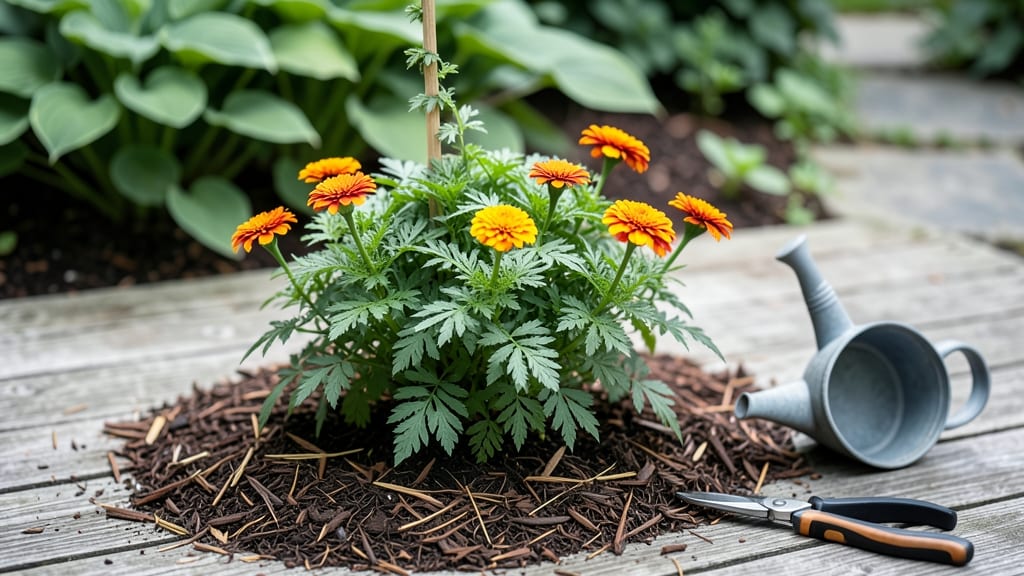
Marigolds do not like shade and need full sun to produce their brightest blooms and strongest stems. Too little light causes weak growth, sparse flowers, and leggy plants. For best results, give them 6-8 hours of direct sunlight daily.
Marigolds are sun-loving annuals that rely on strong light to fuel their vibrant blooms and sturdy growth. 🌞 When they don't get enough sunlight, their stems stretch out (a condition called "etiolation") while producing fewer flowers.
This happens because marigolds need plenty of light for photosynthesis—the process that creates energy for blooming. In partial shade, you might still get some flowers, but they'll be smaller and less frequent.
I've seen marigolds in east-facing garden beds produce decent blooms, but south-facing spots always yield the most dramatic results. If you're growing them in containers, place them where they'll get the most direct light possible—even a few hours of afternoon sun can make a big difference!
💡 In This Article
- How Sunlight Affects Marigold Growth and Flowering
- Best Light Conditions for Healthy Marigold Plants
How sunlight affects marigold growth and flowering
Marigolds rely on photosynthesis to convert sunlight into energy, and their bright orange and yellow blooms are a direct result of this process. The more light they receive, the more chlorophyll their leaves produce, which fuels both leaf and flower growth.
In full sun, marigolds develop compact stems and dense foliage, while shade triggers a survival response—stems elongate (etiolation) as they stretch toward any available light, leaving plants weak and prone to flopping over.
This is because shade reduces the plant's ability to produce carotenoids, the pigments responsible for their signature vibrant colors.
The intensity of light matters just as much as duration. Marigolds thrive in 6-8 hours of direct sunlight daily, but the quality of that light is critical too.
Morning sun provides gentle warmth, while afternoon sun delivers stronger UV rays that enhance pigment development—this is why marigolds grown in full sun have deeper, richer hues. 🌿 In partial shade (3-6 hours of light), you'll notice blooms that are paler and smaller, often with fewer petals.
Deep shade (less than 3 hours) can completely halt flowering, leaving you with just green foliage. Think of it like a battery: marigolds need a full charge to power their blooms.
UV light plays a surprising role in marigold health. These plants use UV rays to strengthen their cell walls, making them more resistant to pests and diseases. Without adequate UV exposure, marigolds become more susceptible to fungal infections and insect damage.
This is why marigolds grown under artificial grow lights (which often lack UV spectrum) may look healthy but produce fewer blooms. The good news? Even a few hours of direct afternoon sun can provide enough UV to make a difference in plant resilience and flower production.
Here's what happens at a cellular level: In low light, marigolds prioritize stem growth over flower buds because they're conserving energy. This is why you might see a marigold plant with long, spindly stems and just a few small blooms—it's literally stretching itself thin trying to reach the light.
The ideal scenario is 6+ hours of full sun, which triggers the plant's natural flowering hormones and results in those classic marigold clusters you love. Without enough light, the plant's energy goes into survival rather than reproduction.
Consider this comparison: A marigold in full sun might produce 50-100 flowers per season with stems just 12-18 inches tall, while one in deep shade may only yield 5-10 flowers on stems that reach 24+ inches—essentially a shadow of its sun-loving self.
The difference comes down to energy allocation: light equals power for blooming. 🌻
For gardeners in shaded areas, this means strategic placement is key. Even a few hours of morning sun can improve marigold health, but afternoon sun (when UV intensity peaks) is particularly valuable.
If you're growing marigolds in containers, rotate them periodically to ensure even light exposure on all sides—this prevents one-sided growth and keeps plants balanced.