
Light Requirements
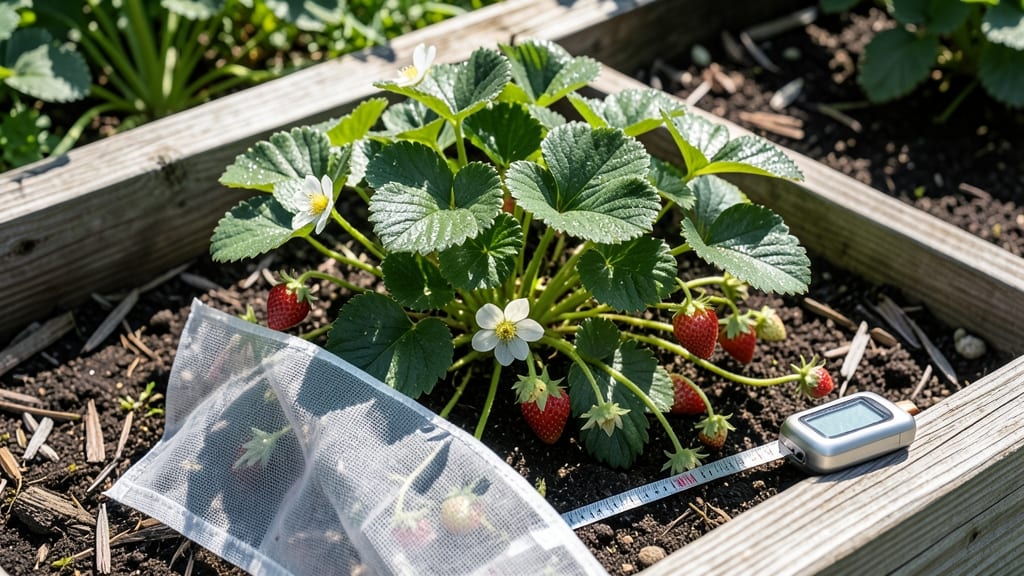
Strawberries thrive with full sun but need shade in extreme heat to avoid stress and scorched fruit—here’s how to strike the right balance for bigger, sweeter harvests.
Picture this: your 🍓 plants are lush, but by midday, the leaves look bleached, and the berries stay small and tart. That’s not just bad luck—it’s a light mismatch. Too much sun can fry tender strawberries, while too little shade means fewer fruits and weaker vines.
The key is understanding when to let them soak up rays and when to give them a break.
Most strawberry varieties crave 6 to 8 hours of sunlight daily, but in hot climates like Zone 6a, afternoon shade can double your yield. Everbearing types, in particular, benefit from partial shade during peak summer heat, while June-bearing plants might need full sun year-round.
The trick is adjusting without stunting growth—think dappled shade or strategic mulching.
In this guide, I’ll walk you through how much sun strawberries truly need, how to spot sunburn or shade stress, and the easiest shade solutions to protect your plants without sacrificing flavor. No more guesswork—just healthier plants and sweeter fruit.
 Best Window Placement
How much sunlight strawberries actually need (and when shade helps)
Strawberries thrive in sunlight, but too much can scorch their delicate leaves and fruit. The ideal balance depends on your strawberry variety and climate zone.
June-bearing types need the most sun, while everbearing and day-neutral varieties tolerate partial shade better. Understanding these needs ensures bigger, sweeter berries and healthier plants.
In hot climates like USDA Zones 8-10, afternoon shade becomes essential to prevent sunburn and fruit splitting. Even in cooler regions, morning sun with afternoon shade can improve flavor by slowing sugar development too quickly. Let’s break down the perfect light conditions for each strawberry type.
🌱 Key Insight: Strawberries need 6-10 hours of sunlight daily, but the exact amount varies by type. June-bearing varieties push the limit, while everbearing and day-neutral types adapt to partial shade in extreme heat.
| Strawberry Type | Ideal Sunlight | Shade Needs | Best For |
|---|---|---|---|
| June-bearing | 6-8 hours | Afternoon shade in hot zones | Cool climates, high yields |
| Everbearing | 6-10 hours | Partial shade in peak summer | Moderate climates, extended harvest |
| Day-neutral | 4-8 hours | Morning sun, afternoon shade | Hot climates, container growing |
🌡️ Note: Adjust shade based on temperature—30% shade cloth works well in 90°F+ heat.
June-bearing strawberries demand the most sunlight, typically 6-8 hours daily, to produce their signature large, sweet berries. These varieties thrive in cooler climates (Zones 3-7) where intense afternoon heat is rare. Plant them in a spot with morning sun and light afternoon shade if temperatures exceed 85°F.
Everbearing strawberries are more flexible, handling 6-10 hours of sun but benefiting from partial shade during peak summer. This adaptability makes them ideal for USDA Zones 5-9. In hot afternoons, 30-50% shade prevents leaf scorch while maintaining fruit production.
Day-neutral strawberries are the most shade-tolerant, thriving with 4-8 hours of sunlight. They’re perfect for containers, balconies, or hot climates (Zones 8-10). Morning sun followed by afternoon shade keeps fruit from splitting or becoming mealy.
Shade isn’t just about avoiding damage—it can enhance flavor. Partial shade slows sugar development, resulting in tart, complex berries instead of overly sweet, bland fruit. In arid regions, shade also reduces water loss, keeping plants healthier with less irrigation.
If you’re growing strawberries in containers or raised beds, prioritize morning sun exposure and move pots to shadier spots by midday. Use reflective mulch (like white gravel) to bounce light onto leaves without overheating the soil.
Common mistakes include placing strawberries in full afternoon sun without shade, leading to bleached leaves and sunburnt fruit. Another error is assuming all strawberries need full sun—day-neutral types often struggle in 10+ hours of direct light, producing smaller, less flavorful berries.
For urban gardeners, consider vertical growing systems with adjustable shade. Trellises or hanging baskets allow you to tilt plants away from the harshest midday sun while still capturing morning light. Pair this with drip irrigation to keep foliage cool.
💡 Pro Tip: Test your strawberries’ sunlight exposure by placing a whiteboard or ruler near the plants for a week. Mark sun/shade patterns to adjust shade cloth or prune nearby trees accordingly.
Signs your strawberries are getting too much sun (and how to fix it)
If your strawberry plants look stressed with bleached leaves or shriveled fruit, they might be getting too much sun. While strawberries love sunlight, intense midday heat can cause sunburn and reduce yields.
I’ve seen this happen in my own garden during scorching summers, and the results are disappointing—small, tough berries instead of juicy, sweet ones.
Overheating doesn’t just affect the fruit; it can also damage leaves and weaken roots. If you notice white or brown patches on leaves or fruit turning pale, your plants are crying out for relief.
The good news? Simple fixes like shade cloth or companion planting can save your harvest before it’s too late.
⚠️ Warning: Too Much Sun = Lost Harvest
Strawberries thrive in 6-10 hours of sunlight, but peak afternoon sun (12 PM - 4 PM) can scorch leaves and fruit. If your plants show these signs, act fast:
- Bleached or crispy leaves (like paper burning)
- White/yellow patches on fruit (sunburn)
- Stunted growth or small berries
- Wilting despite regular watering
Fix it now: Use 30-50% shade cloth or drip irrigation to cool roots. Prune crowded foliage to improve airflow.
One of the first steps I take is installing shade cloth. A 30-50% shade cloth blocks harmful UV rays while still allowing light for photosynthesis.
For my June-bearing varieties, I use a 40% cloth during peak summer months. It’s a game-changer—my berries stay plump, and the leaves stay green.
Another trick I swear by is pruning. Overcrowded plants struggle to regulate temperature. I remove old leaves and weak runners to improve airflow and reduce heat stress. This also helps prevent fungal diseases, which thrive in hot, humid conditions.
For a natural solution, try companion planting. Tall plants like sunflowers or corn can provide shade during the hottest part of the day. I’ve had great success with basil too—it repels pests and adds a little shade at the base of the plant.
Don’t forget about watering. Deep, morning watering keeps roots cool and prevents soil from drying out too quickly. I water my strawberries for 10-15 minutes daily during heatwaves, focusing on the soil rather than the leaves to avoid fungal issues.
With these adjustments, your strawberries will bounce back in no time. The key is acting quickly—once the damage sets in, recovery can be slow. Try one or two of these fixes, and you’ll be on your way to a bountiful, sun-safe harvest!