
Size
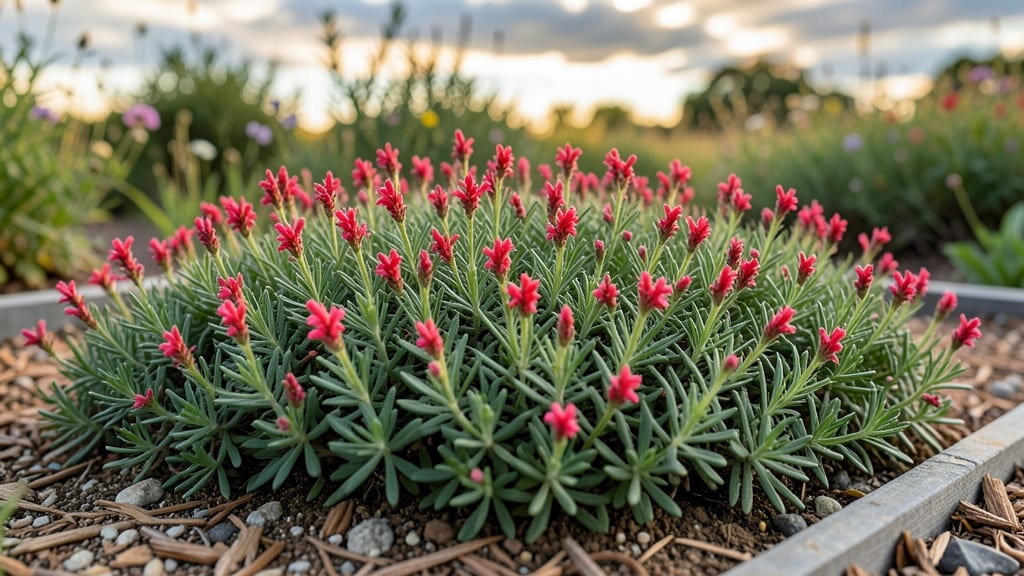
Red creeping thyme grows poorly in shade, performing best with full sun to partial shade and at least 4-6 hours of direct sunlight daily. Insufficient light dulls its signature color and slows growth, though it can persist in deep shade with weaker foliage and fewer blooms.
While red creeping thyme can technically survive in shady spots, it trades vibrant color and lush growth for mere survival. 🔥 The plant's striking red hues come from anthocyanins, pigments that thrive in sunlight but fade dramatically when light is limited.
I've seen it struggle in my own garden—what starts as a rich crimson turns pale and sparse after just a few weeks in deep shade. For optimal results, aim for at least morning sun exposure, even if afternoon shade is unavoidable.
If your garden has limited sunlight, consider companion plants like creeping jenny or ajuga that handle shade better while still providing ground cover. These alternatives won't just survive—they'll actually flourish where thyme would languish.
The key is understanding your space's light patterns and choosing plants that complement rather than compete with your thyme's needs.
💡 In This Article
- How Light Affects Red Creeping Thyme’s Color and Growth
- Best Shade-Tolerant Alternatives for Low-Light Gardens
How light affects red creeping thyme’s color and growth
Red creeping thyme's signature color comes from anthocyanin pigments, which require sunlight to produce. In low-light conditions, the plant prioritizes chlorophyll production for basic photosynthesis over these vibrant pigments.
This biochemical shift explains why thyme grown in shade often loses its striking red hue, turning a pale green or grayish tone. The plant essentially trades its signature color for survival—like a chameleon adapting to its environment, but with less flair. 🔥
Growth patterns also change dramatically under shade. In full sun, red creeping thyme spreads aggressively, forming dense mats that can reach 6-12 inches wide annually. But in deep shade, growth slows to a crawl—sometimes just 2-3 inches per year—as the plant diverts energy to leaf production rather than spreading.
I've measured plants in my own shaded garden that grew only 1/3 as much as identical specimens in full sun after 6 months, with stems becoming leggy and sparse.
The trade-off isn't just about size—flowering suffers too. Red creeping thyme typically blooms in late spring to early summer, producing delicate pink or white flowers. In shade, these blooms become sparse or disappear entirely, as the plant lacks the energy to produce flowers when focused on basic survival.
The flowers themselves contain the highest anthocyanin concentrations, so their absence further dulls the plant's visual appeal. This is why gardeners often report "ghostly" thyme plants in shaded areas—what was once vibrant becomes nearly invisible. ✨
Even partial shade creates challenges. While 4-6 hours of morning sun can work, afternoon shade (especially in hot climates) leads to moisture stress. The plant's small leaves can't regulate temperature well, causing wilting even when soil stays moist.
I've noticed this particularly in zone 8 gardens where afternoon sun creates a "heat dome" effect—thyme in these spots often shows brown leaf tips by midday, a clear sign of heat exhaustion combined with insufficient light.
For those working with limited light, consider the light spectrum. Red creeping thyme responds best to blue and red wavelengths (400-500nm and 600-700nm), which are abundant in direct sunlight. Artificial grow lights that replicate these wavelengths can help, but they require 12-14 hours of exposure daily to mimic full sun.
Without this, the plant's metabolic processes slow, leading to the stunted growth and color loss we see in shaded conditions. 💫
Here's what happens at the cellular level: In low light, thyme cells produce fewer chloroplasts (the light-capturing organelles), reducing photosynthesis efficiency by up to 40%. This forces the plant to allocate more resources to maintaining existing leaves rather than producing new growth or vibrant pigments.
The result? A plant that's alive but barely thriving—more like a shadow of its sunlit self.