
Tools
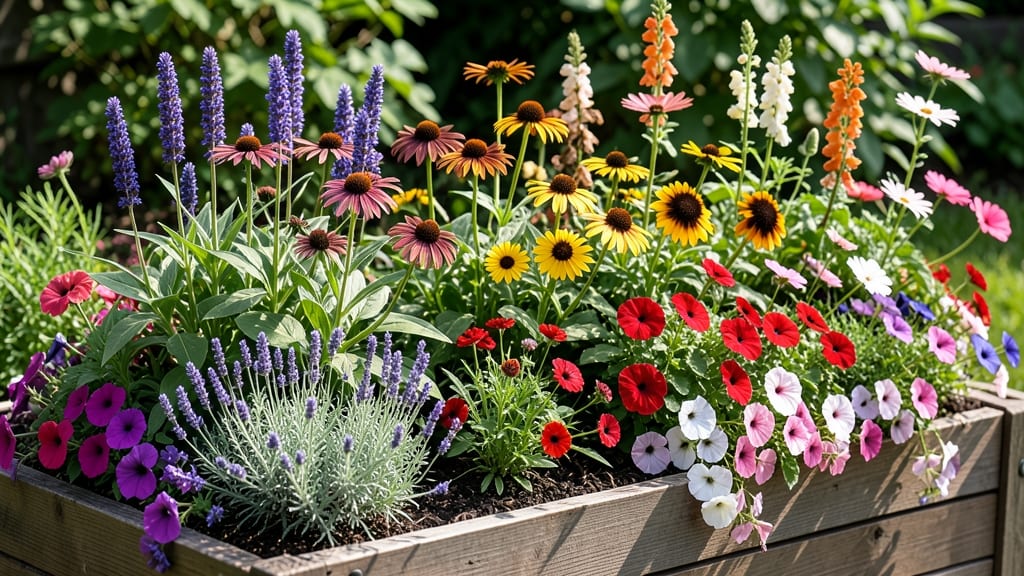
A raised bed flower garden layout organizes your planting by vertical layers, sunlight zones, and bloom timing—tall perennials like delphiniums go at the back, mid-height annuals such as zinnias fill the middle, and creeping thyme or ajuga covers the front. This creates airflow, prevents disease, and ensures every plant gets the light it needs while maximizing visual impact.
A strategic raised bed layout isn't just about looks—it's about creating a thriving ecosystem. 🌸 By grouping plants with similar sunlight needs together, you avoid overcrowding and ensure each flower gets the energy it craves.
For example, sun-loving lavender belongs in the back row near the bed's edge, while shade-tolerant impatiens thrive in the front. I've found that layering early bloomers like tulips with mid-season peonies and late-season asters keeps your garden vibrant from spring to frost.
Don't forget the pollinator bonus! A well-planned layout attracts bees, butterflies, and hummingbirds by providing continuous nectar sources. Pairing bee-friendly borage with butterfly-magnet milkweed creates a dynamic food chain while keeping pests in check through natural predation.
The key is to rotate seasonal varieties—think daffodils in spring, black-eyed Susans in summer, and chrysanthemums in fall—to maintain year-round interest and activity.
💡 In This Article
- Designing Zones for Sunlight and Plant Height in Raised Beds
- Best Flower Combinations for Raised Bed Pollinator Gardens
Designing zones for sunlight and plant height in raised beds
Sunlight is the lifeblood of your raised bed garden, and categorizing flowers by their light requirements creates microclimates where each plant thrives. 🌞 Start by dividing your bed into three zones: full sun (6+ hours of direct light), partial shade (3-6 hours), and full shade (less than 3 hours).
For example, sun-loving perennials like black-eyed Susans or daylilies belong in the back row where they won't be shaded by taller plants, while shade-tolerant impatiens or ferns can grace the front.
The key is to measure sunlight exposure in each zone—use a sunlight meter or observe patterns over a week to map your bed accurately.
Height matters just as much as sunlight because proper spacing prevents disease and improves visibility.
Arrange plants in ascending tiers: tall perennials (4-6 feet) like delphiniums or hollyhocks go at the back, mid-height annuals (1-3 feet) such as zinnias or cosmos fill the middle, and low-spreading flowers (under 1 foot) like ajuga or creeping thyme cover the front.
This vertical layering creates a natural airflow system—warm air rises, reducing humidity and fungal risks. For instance, placing lavender (2-3 feet) behind salvia (1-2 feet) ensures both get full sun while maintaining airflow between their woody stems.
Year-round blooms rely on strategic layering of bloom times. Start with early spring bloomers like tulips or bleeding heart in the front, followed by mid-season stars such as peonies or coneflowers in the middle, and late-season performers like astors or chrysanthemums at the back.
This creates a cascading effect where one flower fades just as another bursts into color. For example, pairing daffodils (spring) with black-eyed Susans (summer) and mums (fall) ensures your bed never looks bare. Pro tip: Use a bloom chart to visualize seasonal transitions before planting.
Don't overlook the science of plant spacing—crowding stresses plants and invites pests. Leave 12-18 inches between mid-height plants and 24-36 inches for tall perennials to prevent competition for nutrients.
For example, zinnias (which spread 1-2 feet) need 12 inches between plants, while delphiniums (which reach 4-6 feet) require 24 inches of space. This spacing also makes maintenance easier—you can weed and water without disturbing neighboring plants.
Consider the texture contrast too—mixing fine foliage (like heuchera) with bold blooms (like canna lilies) adds visual interest. For instance, the velvety leaves of lamb's ear pair beautifully with the spiky stems of snapdragons, creating a dynamic tapestry.
This texture play extends the visual appeal beyond just color, making your garden feel lush and intentional.
Finally, observe your bed's natural light shifts throughout the day. Morning sun hits the east side, while afternoon sun warms the west—place heat-sensitive plants like roses on the east side to avoid afternoon wilting.
By combining these sunlight zones, height tiers, and bloom timing strategies, you'll create a raised bed that's both beautiful and functional year-round. 🌿