
Light Requirements
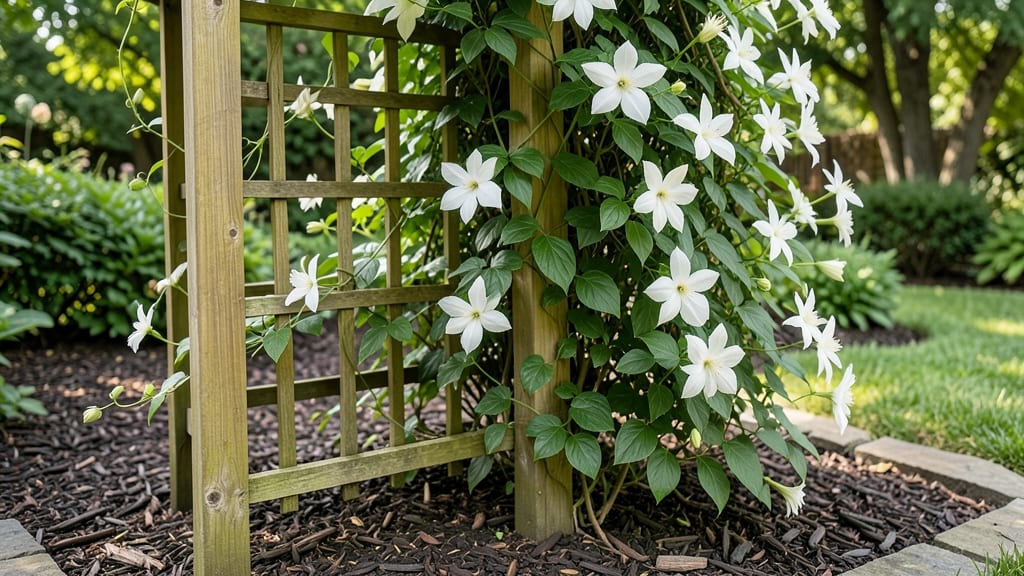
North-facing walls don’t have to stay bare—shade-loving climbing flowering vines turn them into fragrant, blooming canopies. 🌿 I’ve covered dull brick and chain-link with vines that thrive where sunlight struggles, creating living tapestries that change with the seasons.
The right vine transforms a shady corner into a lush vertical garden, adding color and texture without stealing light from sun-loving plants below.
Think beyond ivy: clematis with delicate blooms, honeysuckle for sweet summer fragrance, or star jasmine that glows at dusk. These vines climb trellises, pergolas, or even fences, their flowers cascading like nature’s curtains.
Pair them with hostas or ferns at their base for a layered, cohesive look—no green thumb required, just strategic placement. The key is matching vine habits to your structure: twining types for trellises, clinging varieties for smooth walls.
By mid-summer, you’ll have a living wall that blooms in waves—spring’s clematis, summer’s honeysuckle, and fall’s star jasmine—all while keeping your space cool and shaded. The fragrance alone makes it worth it: imagine stepping into a garden where every breeze carries a hint of sweetness.
These vines also play well with containers, making them perfect for small patios or balconies where vertical space is your only option.
For best results, choose vines that match your wall’s height and your patience level—some grow aggressively, while others take their time. A little pruning in early spring keeps them tidy, and mulching at the base protects roots in winter.
The payoff? A garden feature that’s as functional as it is beautiful, proving shade can be just as vibrant as sun.
📚 In This Guide
- What you need
- Instructions
- Tips and common mistakes
- Wrapping up and next steps
What you need
- ● Shade-loving climbing vines: 3–5 plants (e.g., Clematis, Hoya, or Actinidia—choose based on your climate).
- ● Trellis or support structure: 1–2 sturdy wooden lattice panels (4’x8’ or custom size)
- ● OR metal/vinyl trellis (corrosion-resistant)
- ● 10–15 galvanized screws or brackets (for secure mounting)
- ● Potting soil: 1–2 bags (50 lbs each) of well-draining, organic-rich mix (add perlite for aeration).
- ● Containers or garden bed: 1–2 large pots (15+ gallons each) with drainage holes, OR
- ● A pre-dug garden bed (12” deep, amended with compost)
- ● Mulch: 1 bag of shredded bark or wood chips (to retain moisture).
- ● Garden gloves & trowel: 1 pair each (for planting ease).
- ● Slow-release fertilizer: 1–2 tablets or granules (for nutrient boost).
- ● Drip irrigation kit: 1–2 emitters + tubing (for consistent watering).
- ● Plant ties: 3–5 soft fabric ties (to guide vines gently).
- ● Pruning shears: 1 pair (for shaping and maintenance).
- ● Shade cloth (30–50% coverage): 1 roll (if your wall gets partial sun).
Step-by-Step guide to planting shade-loving climbing flowering vines
Here's how to create a fragrant, lush vertical garden even in low-light spaces.
🌱 Step 1: Select the Right Vine Varieties for Your Space
Start with vines that thrive in partial to full shade, like clematis, climbing hydrangea, or Japanese honeysuckle. These varieties produce stunning blooms without needing direct sunlight. I always check the mature height of each vine—some like clematis can reach 10-15 feet, while others like climbing fuchsia stay compact at 3-5 feet.
Choose plants with tendrils or adhesive pads for natural climbing, which means less work for you. Avoid heavy vines like wisteria, which need strong support and full sun. Look for nursery-grown plants with healthy stems and buds—this ensures they'll establish quickly in your shade garden.
🪴 Step 2: Prepare the Planting Site and Support Structure
Pick a location with dappled shade or filtered light, where vines get 3-6 hours of indirect sunlight daily. Dig a hole twice as wide and deep as the root ball to encourage root spread. Amend the soil with compost or well-rotted manure to improve drainage and fertility—shade-loving vines often struggle in dense, compacted soil.
Install a sturdy trellis, arbor, or wire mesh before planting. I prefer metal or wooden trellises for durability, especially for heavier vines. Position the support within 6 inches of the planting hole so vines can reach it immediately. For climbing hydrangea, I add a lightweight netting system to help the stems find purchase early.
💧 Step 3: Plant and Water for Immediate Establishment
Place the vine in the hole, ensuring the top of the root ball sits 1 inch below soil level—this prevents root exposure and encourages stability. Backfill with native soil mixed with peat moss or coconut coir to retain moisture without suffocating roots. Water deeply right after planting to settle the soil and eliminate air pockets.
Keep the soil consistently moist for the first 4-6 weeks, which is critical for root development. I water in the early morning to reduce evaporation and fungal risks. Mulch around the base with 2-3 inches of shredded bark or leaves to retain moisture and regulate temperature. Avoid piling mulch against the stem—this can cause rot.
☀️ Step 4: Train Vines and Provide Gentle Support
As new growth appears, gently tie the vines to the trellis with soft plant ties or twine. Never use wire or tight bindings, which can strangle stems as they thicken. I start training vines upward in a spiral pattern to encourage even growth and prevent tangling. For clematis, I focus on the strongest stems first, letting weaker ones develop later.
Prune lightly in early spring to remove dead or crossing branches. This opens the canopy for better airflow and light penetration. Watch for new shoots emerging from the base—these are your vine's way of thickening its structure. If your vine struggles to climb, add a soft brush or netting strip to create friction for tendrils.
✂️ Step 5: Maintain Through the Growing Season
Fertilize in early spring with a balanced, slow-release fertilizer (10-10-10) to support blooming. I avoid high-nitrogen feeds, which encourage leafy growth at the expense of flowers. Water deeply once weekly during dry spells, checking that the soil stays evenly moist but not soggy. Shade-loving vines often suffer from root rot if overwatered.
Deadhead spent blooms regularly to encourage continuous flowering. For clematis, I remove faded flowers up to the first set of healthy leaves. In late fall, cut back half the stems to ground level while leaving some for next year's growth. This prevents overcrowding and rejuvenates the plant. Mulch again in winter to protect roots from freezing temperatures.
Tips & tricks for thriving shade-loving climbing vines
Between us, these little details make the difference between a struggling vine and a lush, fragrant canopy. Here's what nobody tells you about creating that perfect vertical garden.
Location Intelligence: That 3-6 hours of indirect sunlight is non-negotiable, but here's the secret: position your trellis to catch morning sun if possible. Eastern exposures provide gentler light that's perfect for shade-loving varieties. I've seen climbing hydrangea thrive with just 3 hours of morning sun when planted against north-facing walls—just avoid harsh afternoon rays that can scorch tender leaves.
Support System Strategy: Don't wait until after planting to install your trellis! Set up your support structure first and position it within those crucial 6 inches of the planting hole. For heavier vines like clematis, I recommend installing a secondary support system halfway up the trellis—this prevents the weight from toppling your structure as the vine matures. Think of it like building a scaffold for your climbing stars.
Watering Wisdom: The 4-6 week critical period for consistent moisture is when most gardeners fail. Here's my trick: use a soaker hose buried 2 inches deep around the root zone. Set it on a timer for 15 minutes every morning—this mimics natural rainfall patterns while preventing surface evaporation. And remember, early morning watering isn't just about evaporation; it gives foliage time to dry before nightfall, reducing fungal risks.
Pruning Precision: When those new shoots emerge from the base in Step 4, don't automatically prune them all! Leave 2-3 of the strongest shoots to thicken your vine's structure. I've learned this the hard way—removing too many early shoots can weaken the plant's foundation. For clematis specifically, focus on removing only the weakest shoots in early spring, letting the others establish before you do any serious pruning later in the season.
Pro Tips for Shade Loving Climbing Flowering Vines
- Between us, these little details make the difference between a struggling vine and a lush, fragrant canopy.
- Location Intelligence: That 3-6 hours of indirect sunlight is non-negotiable, but here's the secret: position your trellis to catch morning sun if possible.
- Support System Strategy: Don't wait until after planting to install your trellis!
Frequently asked questions
Got questions about shade-loving climbing flowering vines?
You’re not alone! Here are some of the most common queries—plus quick, practical answers to help you create a fragrant, lush canopy without the fuss.
What are the best shade-tolerant vines for flowering in low-light areas?
Top picks include Clematis (especially varieties like ‘Jackmanii’ or ‘Nelly Moser’), Honeysuckle (e.g., ‘Lemoinei’), Climbing Hydrangea (Petiole Hydrangea), and Star Jasmine. These thrive in dappled shade or north-facing walls with morning sun. Avoid full sun-lovers like Passionflower or Wisteria—they’ll struggle and may not bloom.
How long does it take for these vines to flower after planting?
Patience is key! Most shade-tolerant vines take 1–3 years to establish and flower. Clematis and Hydrangea often bloom in their second year, while Star Jasmine may take longer (up to 3 years) but rewards you with years of fragrant blooms. Prune lightly in early spring to encourage growth and flowering.
Do I need a trellis, or can these vines climb on walls/fences without support?
While some vines like Ivy or Virginia Creeper cling aggressively, most flowering vines need support to thrive. Install a trellis, arbor, or wire mesh to guide growth and prevent damage to walls or siding. For delicate vines like Clematis, use a non-metallic trellis (metal can burn leaves in hot sun).
How much water do shade-loving vines need, and how often should I fertilize?
Keep soil consistently moist but not soggy—especially in the first year. Water deeply 1–2 times per week (more in extreme heat). Fertilize lightly in spring with a balanced, slow-release fertilizer (10-10-10) or one high in phosphorus for blooms. Avoid over-fertilizing; shade vines are sensitive to salt buildup.
What pests or diseases should I watch for, and how do I prevent them?
Common issues include:
- Aphids (sap-sucking insects): Spray with water or use neem oil.
- Powdery mildew (white fungal coating): Improve airflow, avoid overhead watering, and treat with baking soda spray (1 tsp baking soda + 1 quart water + drop of soap).
- Root rot (from overwatering): Ensure well-draining soil and avoid waterlogging.
Inspect leaves regularly and act fast—shade-loving vines recover poorly from stress!
Wrapping up and next steps
Transforming your north-facing walls into a fragrant, lush canopy is easier—and more rewarding—than you think! Shade-loving climbing vines like Clematis, Honeysuckle, and Jasmine bring beauty and life to low-light spaces with minimal effort.
Whether you’re a seasoned gardener or a beginner, these vines offer low-maintenance elegance and a burst of color where others might struggle.
Ready to get started? Pick your favorite vine, gather your supplies, and let nature do the rest! Plant today—your future shaded oasis awaits. 🌿✨