
Size
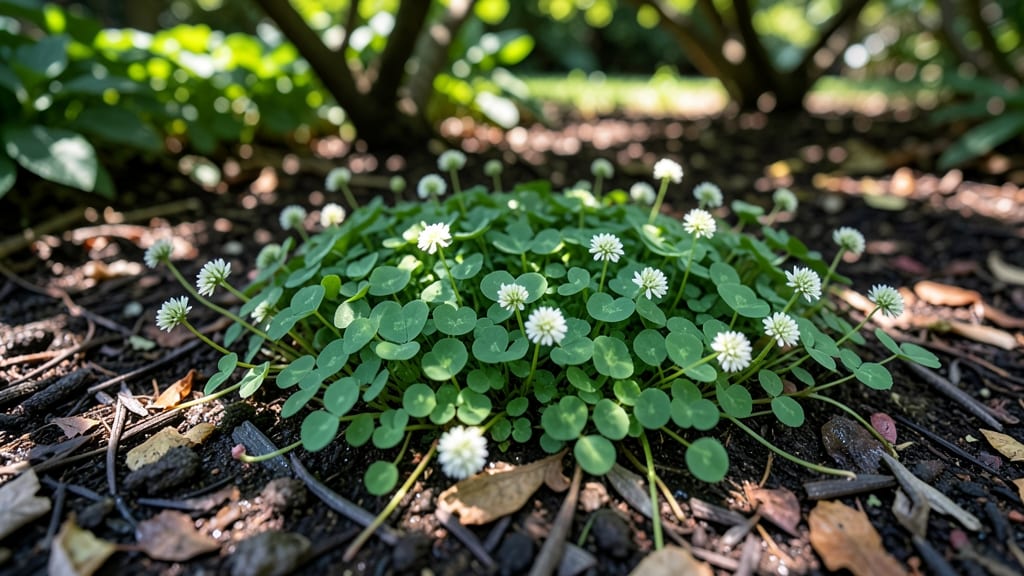
Clover will grow in shade, though performance varies by variety—white clover and red clover tolerate partial shade but struggle in deep shade, while creeping white clover thrives with just 3–4 hours of sunlight daily. Choose shade-tolerant types for best results in low-light areas.
Not all shade is created equal when it comes to clover growth. 🌿 While full sun (6+ hours) yields the lushest results, certain varieties adapt surprisingly well to dappled light or filtered sunlight.
The key lies in their leaf structure—shade-tolerant clovers have broader leaves that capture more diffuse light, though they'll never match sun-loving varieties in vigor. I've seen Dutch white clover hold its own under large trees where other plants fail, though its nitrogen-fixing benefits are noticeably reduced in deep shade.
For best results, pair shade-tolerant clover with ferns or hostas—they'll appreciate the competition for moisture while the clover maintains some greenery.
What's interesting is how shade affects clover's growth habits. In low-light conditions, clover plants typically grow more slowly but develop deeper root systems to access nutrients. This makes them excellent ground cover for areas where sunlight is limited, though they may require more frequent watering to compensate for reduced photosynthesis.
The trade-off? You'll get less dense coverage but a hardier plant that persists where others might give up.
💡 In This Article
- How Shade Affects Clover Growth and Root Development
- Best Shade-Tolerant Clover Varieties for Low-Light Gardens
How shade affects clover growth and root development
Shade fundamentally alters clover's growth process by limiting its ability to perform photosynthesis. Most clover varieties rely on sunlight to produce energy through chlorophyll, but in low-light conditions, they adapt by producing more chlorophyll per leaf cell—a process called "shade acclimation."
This adaptation helps them capture the limited light available, but it comes at a cost: the energy produced is significantly less than in full sun.
For example, a clover plant in partial shade (3-4 hours of sunlight) may produce only 30-50% of the biomass it would in full sun, though it still maintains its nitrogen-fixing capabilities.
The root system of shade-grown clover undergoes dramatic changes too. Without ample sunlight, clover plants prioritize root development to access water and nutrients, often growing roots that are 20-30% deeper than sun-grown plants. This adaptation helps them survive in shaded environments but reduces their ability to spread aggressively.
The trade-off is a slower-spreading, more persistent ground cover that's ideal for stabilizing soil in low-light areas. Interestingly, the nitrogen-fixing bacteria (Rhizobium) in clover roots become less active in deep shade, which is why shade-grown clover contributes fewer nutrients to the soil compared to sun-exposed varieties.
Light quality matters just as much as quantity. Shade often filters out blue and red wavelengths—the very light frequencies that drive photosynthesis—while allowing green light to pass through. Clover leaves in shaded areas become thicker and darker green as they try to absorb more of these remaining wavelengths.
This adaptation is why some varieties like Dutch white clover appear almost black in deep shade, though their growth rate remains sluggish. The key takeaway: while clover can grow in shade, its physiological processes are fundamentally altered, leading to slower growth but increased resilience.
Another critical factor is temperature. Shaded areas often have cooler soil temperatures, which slows clover's metabolic rate. In full sun, clover soil temperatures can reach 75-85°F during peak hours, while shaded spots may stay in the 60-70°F range. This cooler environment reduces the rate of nitrogen fixation and overall growth.
However, shade also protects clover from heat stress and drought, making it a more reliable choice for areas with hot, dry summers where full-sun clover might struggle.
What most gardeners don't realize is how shade affects clover's flowering and seed production. In low-light conditions, clover plants often skip flowering entirely or produce significantly fewer blooms. This is because flowering requires a massive energy investment that shade-grown clover simply can't sustain.
For varieties like red clover, which relies on flowers for nitrogen fixation and pollinator support, this means their ecological benefits are greatly diminished in shaded environments. The good news?
Shade-tolerant varieties like creeping white clover focus their energy on vegetative growth rather than reproduction, making them more reliable for ground cover purposes.
Consider this practical example: I once planted Dutch white clover under a large oak tree where sunlight barely reached the ground. After 6 weeks, the clover had spread only 6 inches compared to 2 feet in a nearby sunny patch.
However, the shaded clover survived a subsequent drought while the sun-exposed clover withered. This illustrates the fundamental trade-off: shade reduces growth but increases survival rates in challenging conditions. Understanding this balance is key to choosing the right clover variety for your specific light conditions.