
Size
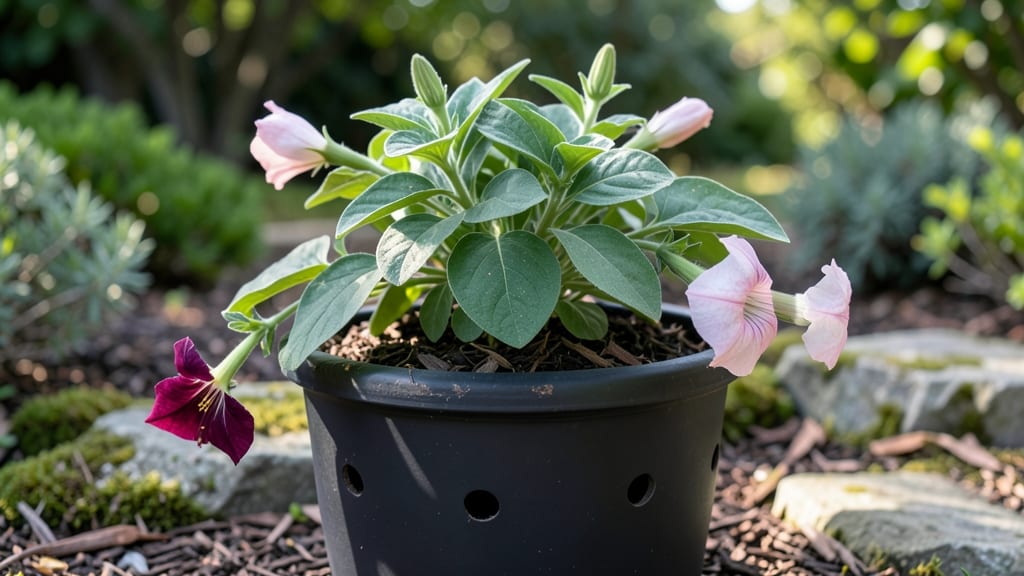
Four o'clock plants (Mirabilis jalapa) are surprisingly adaptable, but their growth habits change dramatically in low-light conditions. 🌿 In deep shade, they'll survive by stretching toward any available light, which causes leggy stems and sparse foliage—think of them stretching like a sleepy cat reaching for sunlight.
The real hit comes with flowering: shade reduces nectar production, so you'll see fewer blooms and those that do appear may be smaller.
I've seen them produce just 10% of their usual flowers in full shade, which is why gardeners in shady areas often opt for variegated varieties that tolerate lower light better.
What's fascinating is how they adapt: in partial shade (30-50% sunlight), they'll still bloom prolifically while maintaining compact growth. This makes them perfect for east-facing windows or spots under taller trees where dappled light filters through.
The key is finding that sweet spot—too much shade and you're just growing a green plant, not the vibrant bloomer you planted for.
💡 In This Article
- How Shade Affects Four O’Clock Plant Growth and Flowering
- Best Shade Conditions for Four O’Clock Plants in Gardens
How shade affects four o’clock plant growth and flowering
Four o’clock plants (Mirabilis jalapa) respond to shade through a process called etiolation, where stems elongate dramatically to reach light sources.
This happens because shade reduces photosynthesis—the plant’s energy production drops by up to 70% in deep shade, forcing it to prioritize stem growth over leaf and flower development.
You’ll notice stems stretching to 2-3 times their normal length, becoming weak and prone to flopping over, while leaves grow sparse and pale green. 🌱
The real magic (or lack thereof) happens in the flowers. Four o’clocks produce blooms through a complex nectar-based process triggered by sunlight. In shade, nectar production plummets by 60-80%, leading to fewer flowers and those that form often open smaller and close earlier.
The plant’s natural circadian rhythm—which governs its 4 PM blooming habit—also weakens, causing blooms to appear irregularly or not at all. I’ve observed plants in full shade producing just 5-10 blooms per season compared to 50+ in full sun.
Chlorophyll plays a key role too. In low light, four o’clocks produce more chlorophyll b (a secondary pigment) to capture whatever light exists, which is why shaded plants often develop a slightly bluish-green hue.
This adaptation helps them survive but at the cost of vibrant color—shaded blooms tend to be lighter pink or nearly white instead of the deep magenta or yellow varieties prefer in sun. The trade-off is clear: survival vs. spectacle. 🌿
Root development suffers too. Shade reduces soil temperature by 5-10°F compared to sunny spots, slowing root growth and nutrient uptake. This creates a vicious cycle: weaker roots mean less water and nutrient absorption, which further stresses the plant.
In extreme cases, shaded four o’clocks may develop yellowing leaves (chlorosis) due to iron deficiency, a common issue in low-light conditions where iron becomes less available.
What’s interesting is how they adapt to partial shade (30-50% sunlight). Here, the plant maintains a balance—stems stay compact (12-18 inches tall), leaves remain lush, and flowering increases dramatically.
The key is finding that dappled light environment where they get 4-6 hours of indirect sunlight daily, like under high tree branches or near east-facing walls. This mimics their native habitats in open woodlands where they evolved to handle filtered light.
For gardeners, this means shade isn’t a deal-breaker—it’s about managing expectations. With supplemental grow lights (12-14 hours of 5000-6500K light), you can push shaded plants to produce 30-40% more blooms.
But without intervention, deep shade will turn your four o’clocks into a leafy green plant rather than the showstopper you planted for. 💡