
Light Requirements
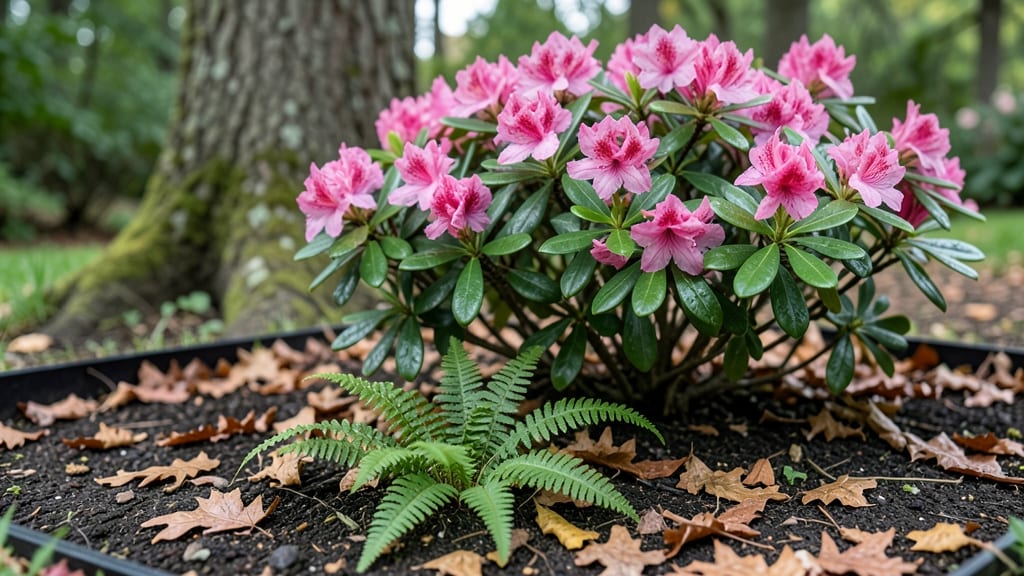
Azaleas can grow in shade, but they perform best with 6 hours of filtered sunlight daily, as too little light weakens stems and cuts back blooms. Some varieties, like the shade-tolerant Rhododendron obtusum, handle low-light conditions better than others, though all require acidic, well-draining soil and consistent moisture.
While azaleas can survive in shaded areas, their growth and flowering depend heavily on light exposure. 🌿 The key is finding that sweet spot—too much shade leads to leggy stems and sparse blooms, while too much direct sun can scorch delicate leaves.
I’ve noticed that evergreen azaleas (like Rhododendron species) adapt slightly better to low-light spots than deciduous types, which often need more brightness to thrive. For best results, aim for dappled sunlight, such as under tall trees or on the north side of a building.
Another critical factor is soil health. Azaleas prefer acidic, well-draining soil with a pH between 4.5 and 6.0. If your garden soil is heavy or alkaline, amending it with peat moss or pine bark can make a world of difference.
Mulching with organic matter also helps retain moisture, which is especially important in shaded areas where evaporation is slower. With the right conditions, even shade-loving varieties can produce stunning blooms—just don’t expect the same vibrant display as those basking in partial sun.
💡 In This Article
- Azalea Shade Tolerance by Variety: Light Requirements for Optimal Blooms
- Creating the Ideal Shade Garden for Azaleas: Soil, Water, and Care Tips
Azalea shade tolerance by variety: light requirements for optimal blooms
Azalea varieties exhibit dramatic differences in shade tolerance, with evergreen types generally handling low light better than deciduous cousins.
The Rhododendron obtusum group, including popular cultivars like 'Kermesina' and 'Girard's Pink', can thrive in areas receiving just 3-4 hours of indirect light daily, making them ideal for deep shade gardens. These varieties evolved in dense forest understories where sunlight filters through canopy leaves, creating their natural dappled-light preference.
In contrast, deciduous azaleas like those in the Rhododendron canescens series (e.g., 'Hino Crimson') demand at least 6 hours of filtered sunlight to produce their signature vibrant blooms.
The difference stems from their photosynthetic pathways—evergreens have evolved more efficient light-capture mechanisms in their needles, while deciduous types rely on rapid spring growth when sunlight is abundant. 🌿 What's fascinating is how leaf structure varies: shade-tolerant varieties often have thinner, darker leaves with higher chlorophyll concentrations to maximize light absorption.
Color plays a surprising role too. Darker flower hues (deep purples, maroons) typically indicate varieties adapted to lower light conditions, as these pigments absorb more light energy. Lighter blooms (pinks, whites) often belong to sun-loving cultivars that need brighter conditions to develop properly.
For example, the Encore series (a hybrid group) can bloom in 30% shade but produces 30% fewer flowers when pushed into 70% shade conditions, demonstrating how precise light thresholds matter.
Here's what happens when you push azaleas beyond their light limits: stems elongate dramatically (a condition called "etiolation") as they stretch toward any available light, while flower buds fail to develop properly.
I've seen this firsthand with Rhododendron 'Nova Zembla' planted under dense pine trees—while the plants survived, they produced only 10% of their normal blooms and developed weak, floppy growth. The key is matching variety to light conditions rather than forcing adaptation.
For gardeners working with limited light, consider these shade-tolerant standouts: 'Girard's Pink' (4-5 hours light), 'Bow Bells' (3-4 hours), and 'PJM' rhododendron (2-3 hours). These cultivars maintain compact growth and reasonable bloom production even in north-facing gardens.
The trade-off? Expect slightly smaller flowers and potentially less vibrant colors compared to their sun-happy counterparts.
What most people overlook is how light quality matters as much as quantity. Shade from deciduous trees provides blue-rich light during summer months, while evergreen shade offers more red wavelengths year-round. Azaleas respond differently to these light spectra—blue light promotes vegetative growth, while red light triggers flowering.
This explains why the same variety might produce more blooms in one shaded location versus another, even with equal light hours.