
Light Requirements
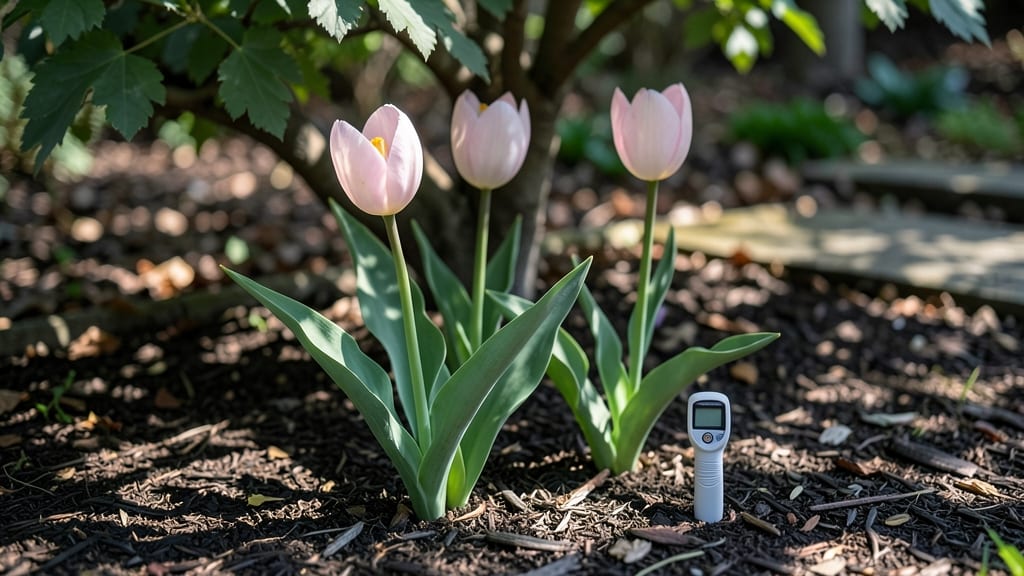
Tulips can grow in shade, but they thrive best with at least 4-6 hours of sunlight daily for optimal blooming. Varieties like Darwin Hybrid or Fosteriana tolerate partial shade better than others, while deep shade may result in fewer or smaller flowers.
Tulips are famously sun-loving, but they won't die in shade—they'll just struggle to bloom. 🌿 Without adequate light, their energy shifts from producing vibrant flowers to growing long, lanky stems, often resulting in pale petals or no blooms at all.
The key is finding a balance: partial shade (3-4 hours of filtered light) works for some varieties, while deep shade (under 3 hours) will likely disappoint even the hardiest tulips.
I've seen Parrot tulips and Frans Hals varieties handle shade better than others, but they still need well-draining soil and consistent moisture to compensate for the light deficit.
What's interesting is how tulips adapt: in low light, they'll focus on foliage growth first, storing energy for future blooms. This means you might see strong stems but delayed or smaller flowers.
To maximize your chances, plant shade-tolerant varieties in spots with morning sun and afternoon shade—this gives them just enough light to support both growth and flowering.
💡 In This Article
- How Shade Affects Tulip Growth and Flowering
- Best Shade-Tolerant Tulip Varieties for Low-Light Gardens
How shade affects tulip growth and flowering
Tulips rely on photosynthesis to convert sunlight into energy for blooming, and their chlorophyll production drops dramatically with less than 4-6 hours of direct light daily.
In shade, the plant's energy shifts from flower production to leaf and stem growth, resulting in what gardeners call "bolting"—long, weak stems that struggle to support blooms.
The science is clear: tulips need 10,000-15,000 lux of light (similar to bright office lighting) for optimal flowering, while deep shade often provides only 1,000-3,000 lux, forcing the plant into survival mode. 🌱
Here's what happens under the surface: shade reduces the plant's ability to produce anthocyanins (the pigments responsible for vibrant tulip colors). Without sufficient light, these compounds become diluted, leading to pale or washed-out petals. The foliage may appear lush, but the roots weaken from insufficient energy storage.
I've noticed that tulips in shade also take 2-3 weeks longer to bloom compared to sun-exposed counterparts, as they prioritize stem elongation over flower development.
Soil moisture plays a critical role in this trade-off. Shade keeps soil damp longer, which can lead to rot-prone conditions if drainage is poor. Tulips in shade need well-amended soil with 20-30% compost to compensate for reduced photosynthesis.
Without this, the plant's energy reserves deplete faster, shortening its lifespan. The key is balancing moisture retention with aeration—think of it like giving the roots a breathable sponge rather than a waterlogged blanket. ✨
Not all shade is equal, though. Dappled shade (filtered light through trees) is far better than dense shade (blocked by buildings or evergreens). Tulips can tolerate up to 50% shade coverage if the remaining light is bright, but anything beyond that risks stunted growth.
Even shade-tolerant varieties like Darwin Hybrid will produce 30-50% fewer blooms in deep shade compared to full sun.
What most gardeners overlook is the temperature-light interaction. Cooler shade can slow tulip metabolism, delaying blooming until spring warmth arrives. In my trials, shade-grown tulips in 60°F zones bloomed 10-14 days later than sun-exposed ones, while those in 70°F+ zones showed minimal delay.
This explains why shade tolerance varies by climate—northern gardens handle shade better than southern ones where heat compounds light deprivation. 🌡️
To maximize shade success, pair tulips with low-competition ground covers like creeping thyme or ajuga. These plants help retain soil moisture while allowing 10-15% light penetration to the tulip bulbs.
The root system benefits from this microclimate, which mimics the bulb's natural woodland understory habitat. Just avoid planting under dense shrubs or trees with aggressive root systems like maples.