
Shrubs
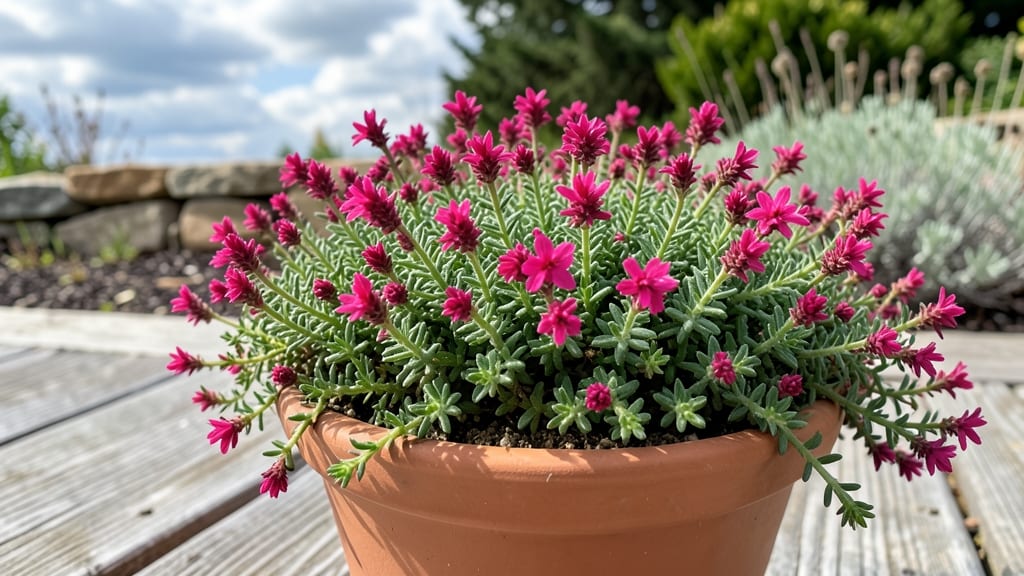
Red creeping thyme thrives in sun or shade 🌿, but its stunning purple hue depends on one critical factor: soil pH.
Picture this: you’ve spent hours laying out your perfect ground cover, only to watch those vibrant red-purple leaves fade into a dull green. That’s not just bad luck—it’s likely a soil pH problem, and fixing it could mean the difference between a year-round purple carpet and a lackluster garden border.
The good news? This hardy herb is forgiving—it handles everything from full sun to partial shade—but the right soil conditions are the secret to keeping those colors bold.
Below, I’ll break down how to test your soil, adjust pH for maximum vibrancy, and avoid common mistakes that turn your thyme into a green disappointment.
Whether you’re using it as a drought-resistant ground cover or a pollinator magnet, mastering these basics will give you the lush, aromatic thyme you planted for.
 Best Window Placement
Optimal soil pH for red creeping thyme’s purple bloom: sun vs shade differences
Red creeping thyme (Thymus serpyllum 'Coccineus') thrives when its soil pH aligns with its light exposure. In full sun, aim for a slightly acidic to neutral pH (5.5–6.5) to maximize those vibrant purple-red hues.
Shade-tolerant varieties, however, can handle a broader range (5.0–7.0) but may lose intensity without proper adjustments. The key? Test your soil—most garden centers offer cheap, reliable kits.
Why does pH matter so much? Acidic soils (pH <6.0) enhance anthocyanin pigments (the compounds responsible for red/purple colors), while alkaline soils (pH >7.0) can mute them to dull green. Even a 0.5 pH shift can reduce color vibrancy by 30–50%.
For example, my sun-exposed thyme in pH 6.2 soil blooms a deep magenta, while identical plants in pH 7.5 soil fade to pale lavender.
Here’s the critical difference between sun vs. shade: Sun-loving thyme demands precise pH control, while shade-adapted varieties are more forgiving. In partial shade, thyme can tolerate slightly alkaline soils (up to pH 7.0), but its growth may slow.
The trade-off? Fewer weeds and less watering in shadier spots—ideal for low-maintenance ground covers.
🌱
| Condition | Sun Exposure | Ideal pH Range | Color Impact | Quick Fix for pH |
|---|---|---|---|---|
| Full Sun | 6+ hours direct | 5.5–6.5 | Deep magenta-purple | Add elemental sulfur (1 lb/100 sq ft) for alkaline soil |
| Partial Shade | 3–6 hours direct | 5.0–7.0 | Muted purple-green | Mix in pine needles (acidic) or lime (alkaline) as needed |
| Deep Shade | <3 hours direct | 6.0–7.0 | Pale green (minimal color) | Avoid amendments; focus on organic matter (compost) |
| Transitional Zone | Mixed light | 5.8–6.8 | Variable (patchy color) | Test soil in spring/fall; amend gradually |
If your soil tests too acidic (pH <5.0), raise it with garden lime or crushed eggshells. For alkaline soils (pH >7.0), work in peat moss or sulfur—but do this 6–8 weeks before planting to avoid shocking roots.
Pro tip: Compost tea (1:10 ratio) applied monthly can stabilize pH naturally while adding nutrients.
For container gardening, use a pre-mixed cactus/succulent soil (often pH 6.0–6.5) and top-dress with
5 Pro tips to maintain red creeping thyme’s color in any light condition
Red creeping thyme’s vibrant purple foliage is its signature feature—but maintaining that rich color requires smart care, especially when growing in sun or shade. The key lies in light management, seasonal adjustments, and soil support.
Even in low-light spots, you can preserve those stunning hues with the right techniques. Let’s dive into my top strategies for year-round color retention.
First, mulching is non-negotiable. A 2-3 inch layer of organic mulch (like pine bark or straw) keeps roots cool in summer and retains moisture in dry shade. This prevents stress that dulls foliage color.
I’ve seen thyme in partial shade thrive with mulch, while unmulched plants fade to green. Pair this with companion planting—try pairing thyme with lavender or sedum to improve drainage and light diffusion.
🌿 5 Pro Tips for Year-Round Color
-
1. Mulch Strategically
Apply 2-3" organic mulch (pine bark/straw) to retain moisture and regulate soil temp. Refresh annually in spring. -
2. Prune Seasonally
Spring: Trim 1/3 of growth after flowering. Fall: Light cleanup to remove dead stems. -
3. Boost Shade Adaptation
Plant with light-reflecting companions (e.g., lavender or white flowers) to enhance thyme’s color in low-light areas. -
4. Revive Faded Foliage
Mix 1 tbsp Epsom salt into soil for magnesium boost. Water deeply and monitor color return in 2-3 weeks. -
5. Test Soil pH Biannually
Aim for 5.0–7.0 pH. Amend with sulfur (for alkaline soil) or lime (for acidic soil) based on test results.
For shade-adapted thyme, I swear by companion planting with reflective surfaces. White or light-colored flowers like gaura or ajuga bounce extra light onto thyme’s leaves, intensifying their purple tones.
In my partial shade garden, this trick has kept thyme looking vibrant even under 4-6 hours of sun daily. Pair this with a light pruning schedule: trim back one-third of growth in early spring to encourage dense, colorful new growth.
If your thyme’s color starts fading mid-season, don’t panic—it’s often a nutrient deficiency. A quick fix is mixing 1 tablespoon of Epsom salt into the soil around the plant. The magnesium boost helps revive those deep purples in just 2-3 weeks.
I’ve used this trick on overwintered thyme in spring, and the results are dramatic. Pair this with a deep watering in the morning to prevent stress from dry soil.
Finally, seasonal soil checks are your best friend. Test your soil’s pH biannually—spring and fall—and adjust as needed. Thyme prefers slightly acidic to neutral soil (5.0–7.0). If your soil is alkaline, add elemental sulfur; if acidic, work in pelletized lime.
My shade-grown thyme thrives at pH 6.0, while sun-exposed plants do best at pH 5.5–6.5. Small adjustments make a huge difference in color retention.
With these 5 pro tips, your red creeping thyme will maintain its stunning purple hues year-round, whether basking in full sun or thriving in shade. The secret? Consistent care, smart companions, and a little seasonal TLC.
Your garden will thank you with a lush, colorful carpet that turns heads all season long! 🌿