
Light Requirements
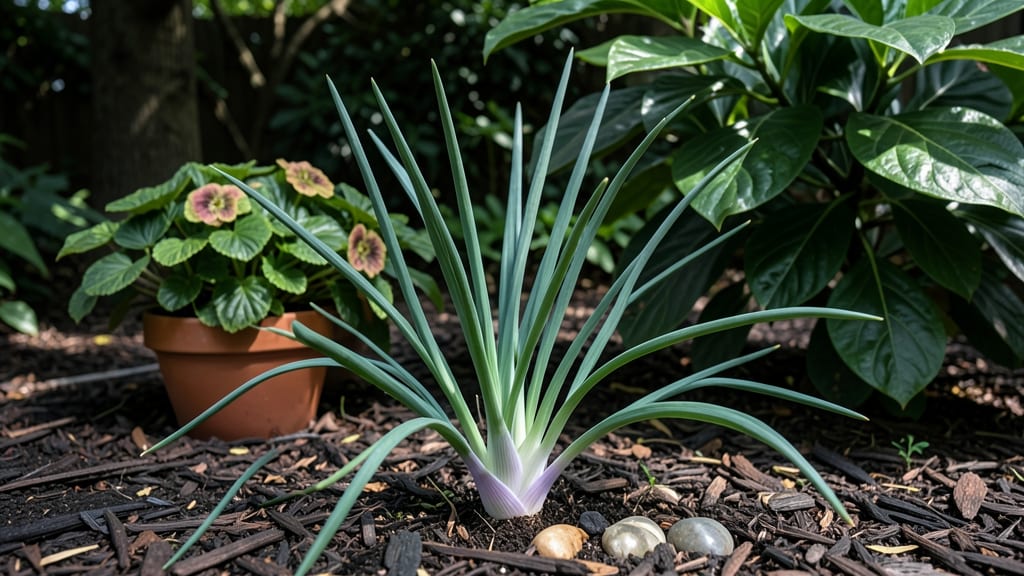
Green onions can grow in shade, but their success depends on the type and intensity of shade you’re working with — and a few smart tweaks to compensate.
You might assume these quick-growing greens need full sun to thrive, but the truth is, they’ll adapt to partial shade with patience and the right approach.
While they won’t reach their full potential in deep shade, even 3–6 hours of indirect light can yield a decent harvest if you optimize soil and spacing.
Here’s the key: full shade (like under a dense tree canopy) slows growth and weakens flavor, but partial shade — especially in hot climates — can actually protect them from bolting.
I’ll walk you through how to maximize your yield, whether you’re planting in containers or in-ground, and which varieties handle shade best.
You’ll also discover how to spot the signs of underlighted green onions, how often to harvest for regrowth, and why a little extra nitrogen in the soil makes all the difference in shady spots.


How green onions adapt to shade: light requirements explained
Green onions are one of the most adaptable herbs in your garden, and they can indeed thrive in shade—though their performance depends heavily on the type of shade and how you optimize their growing conditions.
Unlike sun-loving plants, green onions don’t require full sun to produce edible greens, but their growth habits and bulb development will shift when grown in partial or full shade. Understanding these adaptations is key to maximizing your harvest, even in low-light spots.
The key to growing green onions in shade lies in their ability to perform photosynthesis efficiently under bright indirect light. While they prefer 3–6 hours of direct sunlight for ideal growth, they can tolerate as little as 2–3 hours daily in partial shade.
This flexibility makes them perfect for shady garden beds, containers near north-facing walls, or even indoor windowsills with sufficient light. The trade-off? Slower growth and smaller bulbs, but still usable greens.
Here’s how shade affects their growth: in partial shade, green onions will focus energy on leaf production rather than bulb development. This means you’ll get more tender green tops but fewer mature bulbs. In full shade, growth slows dramatically, and leaves may become pale or leggy.
The good news? With proper care, you can still enjoy a steady supply of fresh green onions, even in the shadiest corners of your garden.
🌱
| Light Condition | Growth Impact | Bulb Development | Leaf Production | Harvest Notes |
|---|---|---|---|---|
| Full Sun (6+ hrs) | Fastest growth | Large, mature bulbs | Moderate leaf yield | Best flavor and texture |
| Partial Shade (3–6 hrs) | Slower growth | Smaller bulbs | High leaf production | Tender greens, frequent harvests |
| Full Shade (<2 hrs) | Very slow growth | Minimal bulb formation | Leggy, pale leaves | Use for microgreens only |
| Indoor Light (Grow Lights) | Controlled growth | Small bulbs possible | Consistent leaf yield | Ideal for year-round harvests |
Green onions adapt to shade by prioritizing leaf production over bulb development due to photosynthesis efficiency. In low-light conditions, their cells allocate more energy to producing chlorophyll-rich leaves, which helps them capture whatever light is available.
This is why you’ll notice longer, thinner leaves in shade-grown green onions—they’re essentially stretching toward light sources. The trade-off is that their bulb bases (the white part you eat) will be smaller and less flavorful compared to sun-grown varieties.
If you’re growing green onions in shade, focus on leaf harvests rather than bulb development. You can cut the green tops repeatedly, and the plant will regrow new leaves, providing a steady supply of fresh greens.
For bulbs, consider supplementing with a grow light (12–14 hours daily) or choosing shade-tolerant varieties like 'Evergreen Hardy White', which performs better in low light than standard types.
One critical factor in shade-grown green onions is soil fertility. Since they’re not getting as much energy from sunlight, they rely more on nutrients in the soil. Amend your planting area with compost or organic matter before sowing to ensure they have access to nitrogen, phosphorus, and potassium.
A light application of fish emulsion or seaweed extract can also boost growth in shady conditions.
For container growers, choose shallow but wide pots (at least 6 inches deep) to accommodate their shallow root systems. Place containers near an east-facing window or under a grow light to maximize light exposure.
If using grow lights, position them 6–12 inches above the plants and use a 12-hour light cycle to mimic natural daylight. This setup can significantly improve growth and bulb development, even in full shade.
🌿
Monitor your green onions for signs of nutrient deficiencies or pests, which can become more apparent in shade. Yellowing leaves may indicate a need for more nitrogen, while soft stems could signal overwatering or fungal issues.
In shade, green onions are also more susceptible to aphids and slugs, so keep an eye out for these pests and address them promptly with neem oil or manual removal.
In summary, green onions can absolutely grow in shade, but their performance will vary based on light intensity and care.
By understanding how shade affects their growth—prioritizing leaf production, optimizing soil fertility, and supplementing light when possible—you can enjoy a bountiful harvest of fresh green onions, even in the shadiest spots of your garden.
5 Proven tips to grow green onions successfully in shade
Growing green onions in shade isn’t just possible—it can yield delicious, crisp harvests if you follow these key strategies. The secret lies in optimizing their environment since shade reduces photosynthesis. With the right approach, you can enjoy fresh green onions year-round, even in low-light areas.
Start by choosing the right varieties for shade. Some, like 'Evergreen Hardy White', tolerate low light better than others. Others, such as 'Tokyo Long White', may struggle but can still produce edible greens. Pairing variety selection with smart soil prep sets the stage for success.
- 1 Enrich your soil with compost or aged manure to boost nutrient density. Shade-grown plants rely on rich soil for energy, so aim for 2-3 inches of compost mixed into the top 6 inches of soil.
- 2 Plant in containers for better control. Use 5-gallon pots with drainage holes and fill with lightweight potting mix. This prevents soil compaction and allows roots to access moisture efficiently.
- 3 Water consistently in the morning to prevent fungal issues. Shade slows evaporation, so check soil moisture daily—aim for 1 inch of water per week. Mulch with straw to retain moisture.
- 4 Use companion plants like lettuce or spinach to improve growth. These plants create a microclimate that retains humidity and nutrients, benefiting your green onions.
- 5 Harvest strategically to encourage regrowth. Cut leaves at 6 inches tall, leaving the white bulb intact. This method yields multiple harvests per plant over 3-4 months.
One of the biggest mistakes in shade gardening is overcrowding plants. Space green onions 2-3 inches apart to allow airflow, reducing the risk of rot or disease. In containers, limit to 9 plants per 5-gallon pot to avoid competition for nutrients.
For extra shade tolerance, try succession planting every 2 weeks. This ensures a continuous harvest and prevents nutrient depletion in the soil. Pair this with a balanced fertilizer (like 10-10-10) applied every 4-6 weeks during the growing season.
With these tips, your shade garden can become a green onion powerhouse. Remember, patience is key—shade-grown onions may take 10-15% longer to mature, but the flavor and texture make it worth the wait! 🌱