
Tools
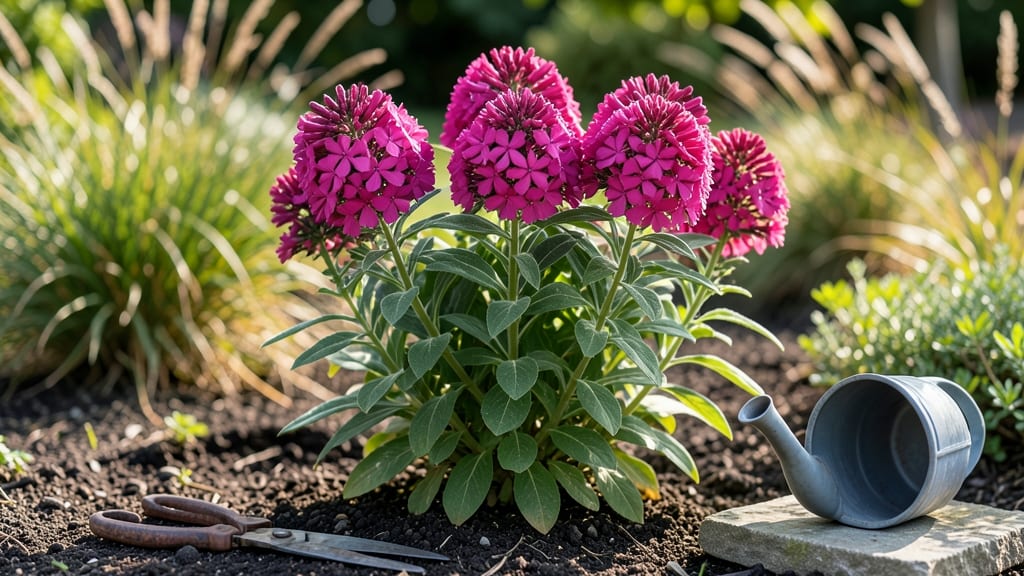
Garden phlox thrives in either sun or shade, but the right variety makes all the difference for those nonstop blooms you dream of. 🌸 I’ve grown phlox in full sun, partial shade, and even dappled woodland edges—each spot rewards you with different colors and bloom times, but only if you pick the right cultivar.
The secret isn’t complicated: tall, classic phlox like ‘David’ or ‘Jeana’ beg for morning sun and afternoon shade, while shorter varieties such as ‘Lipstick’ or ‘Blue Paradise’ handle shade better.
Most gardeners overlook soil prep, but phlox demands rich, well-draining soil with plenty of organic matter—think compost mixed into the top 12 inches. Water consistently (about 1 inch per week) to keep those stems sturdy, but avoid soggy roots.
By midsummer, your phlox will be a fragrant cloud of blooms, attracting bees and butterflies while filling your garden with color. The key is spacing—plant them 2-3 feet apart so air circulates, preventing mildew. In hot climates, mulch heavily to retain moisture; in cooler zones, a light mulch suffices.
What surprises most gardeners? Phlox’s second flush of blooms in late summer if you deadhead spent flowers. Whether you’re in a sunny border or a shady woodland, these tips ensure your phlox puts on a show from July through September.
📚 In This Guide
- What you need
- Instructions
- Tips and common mistakes
- Wrapping up and next steps
What you need
- ● Garden phlox plants (choose sun or shade varieties like 'David' for sun or 'Jeana' for shade): 10–20 plants (depending on garden size; space 12–18 inches apart)
- ● Well-draining potting mix (for containers) or native soil amended with compost (for in-ground planting): 2–3 cubic yards (for in-ground beds) or 1–2 bags (for containers)
- ○ Optional: Perlite or sand (for improving drainage in heavy clay soil)
- ● Organic mulch (e.g., shredded bark or straw): 2–3 inches (to retain moisture and suppress weeds)
- ● Garden trowel or hand shovel (for transplanting)
- ● Pruning shears (for deadheading and shaping)
- ● Garden gloves (to protect your hands)
- ● Watering can or hose with a gentle spray nozzle
- ● Measuring tape (for spacing plants correctly)
- ○ Optional: Soil pH test kit (ideal range: 6.0–7.0)
- ● Slow-release fertilizer (10-10-10 or balanced blend)
- ● Container pots (12–14 inches deep for potted phlox)
- ● Sun or shade location (match variety to light conditions—check plant tags!)
- ● Well-draining soil (phlox hates soggy roots!)
- ● Regular watering (keep soil evenly moist, especially in hot weather)
- ● Pro tip: 💡 Deadhead spent blooms to encourage nonstop flowers!
How to select and plant garden phlox for your light conditions
Here’s how to choose and grow phlox for your garden’s sun or shade—with varieties that thrive in either spot.
🌿 Step 1: Identify Your Garden’s Light Conditions
Phlox varieties fall into two main light categories: sun-loving and shade-tolerant. Sun phlox (like Phlox paniculata) thrives in full sun to partial shade, needing at least 6 hours of direct light daily. Shade phlox (such as Phlox divaricata or woodland phlox) does best in partial to full shade, tolerating 2-4 hours of morning sun or dappled light.
Check your garden’s light patterns—sun phlox wilts in deep shade, while shade phlox scorch in scorching afternoon rays. I test spots by marking them in early morning and tracking sunlight throughout the day. A simple trick: If your hand’s shadow is shorter than your arm at noon, it’s full sun.
☀️ Step 2: Choose the Right Phlox Variety
For sun-loving phlox, opt for Phlox paniculata (garden phlox) or Phlox carolina (wild blue phlox). These varieties bloom prolifically in full sun to light shade and handle heat better than their shade counterparts. For shade-tolerant phlox, Phlox divaricata (woodland phlox) or Phlox subulata (moss phlox) are ideal—they thrive in woodland gardens or under tall trees where light is filtered.
I always match phlox to the garden’s microclimate. For example, Phlox paniculata ‘David’ handles partial shade but flops in deep shade, while Phlox divaricata ‘Little Beauty’ stays vibrant even under dense canopy. Check seed packets or plant tags for light requirements—this ensures blooms all season.
🪴 Step 3: Prepare the Planting Site
Sun phlox needs well-draining soil with organic matter (compost or aged manure) mixed in to retain moisture without sogginess. Amend heavy clay by digging in 2-3 inches of compost per square foot. Shade phlox, meanwhile, prefers moist, humus-rich soil—add peat moss or leaf mold to improve drainage and fertility.
Test soil moisture by squeezing a handful—sun phlox likes soil that’s damp but not wet, while shade phlox thrives in consistently moist conditions. I dig a hole twice as wide as the root ball and loosen the sides to encourage root spread. For containers, use well-draining potting mix with perlite to prevent root rot.
🌱 Step 4: Plant for Optimal Growth
Space sun phlox 18-24 inches apart in rows or clusters, while shade phlox can be planted 12-18 inches apart—their compact growth habits save space. Dig a hole, place the plant so the top of the root ball sits level with the soil surface, then backfill with native soil mixed with compost. Water deeply to settle roots and eliminate air pockets.
Mulch sun phlox with 2 inches of shredded bark to retain moisture and suppress weeds, but keep mulch 6 inches away from stems to prevent rot. For shade phlox, use 3 inches of wood chips or pine needles—this mimics forest-floor conditions. Water newly planted phlox once a week for the first month, ensuring soil stays evenly moist but not soggy.
✂️ Step 5: Maintain for Nonstop Blooms
Deadhead spent blooms every 2-3 weeks to encourage reblooming—pinch off flowers just above the next set of leaves. Fertilize sun phlox once in early spring with a balanced 10-10-10 fertilizer, while shade phlox benefits from low-phosphorus fertilizer (like 5-5-5) to prevent leggy growth. Both varieties appreciate a light pruning in late winter to remove dead stems and shape the plant.
Watch for powdery mildew in humid conditions—space plants for airflow and avoid overhead watering. I spray a baking soda solution (1 tsp baking soda + 1 quart water + a drop of dish soap) preventatively if mildew appears. With proper care, phlox rewards you with continuous blooms from early summer to fall.
Tips & tricks for perfect garden phlox planting
These practical insights will help you maximize blooms and avoid common pitfalls when planting phlox in sun or shade.
Light Condition Verification: Don't guess about sunlight—use a simple solar tracker. Place a white piece of paper in potential planting spots at noon and mark the shadow's edge with a pencil every hour. If the shadow disappears completely by 4 PM, it's full sun. For partial shade, shadows should persist for 4-6 hours. This method is far more accurate than relying on memory or general garden descriptions.
Soil Preparation Secret: For sun phlox, mix in 2-3 inches of compost per square foot to improve drainage while retaining moisture. The key is creating a sponge-like texture that holds water but drains excess. For shade phlox, incorporate peat moss or leaf mold—this mimics woodland conditions and prevents compaction. I always test soil moisture by squeezing a handful: sun phlox soil should feel like a damp sponge, while shade phlox soil should stay consistently moist like a wrung-out washcloth.
Planting Depth Cue: When placing phlox in the hole, the top of the root ball should sit level with the soil surface—never buried or exposed. I use a small stick as a reference marker to ensure perfect positioning. This prevents stem rot from burial while allowing roots to establish properly. After backfilling, press gently around the base to eliminate air pockets without compacting the soil.
Mulching Technique: Apply mulch in a doughnut shape—2 inches thick for sun phlox and 3 inches for shade phlox—keeping it 6 inches away from stems. This creates a moisture barrier while preventing rot at the crown. For shade phlox, I use pine needles which slowly release nutrients as they decompose, mimicking natural forest conditions. Always water thoroughly after mulching to help it settle properly.
Pro Tips for Garden Phlox Sun Or Shade
- These practical insights will help you maximize blooms and avoid common pitfalls when planting phlox in sun or shade.
- Light Condition Verification: Don't guess about sunlight—use a simple solar tracker.
- Soil Preparation Secret: For sun phlox, mix in 2-3 inches of compost per square foot to improve drainage while retaining moisture.
Frequently asked questions
Got questions about growing garden phlox in sun or shade? You’re not alone! Here are answers to the most common queries to help you cultivate stunning blooms with confidence.
Can garden phlox grow in full sun?
Yes, but with caution! Most phlox varieties thrive in partial shade (4–6 hours of sunlight), especially in hot climates. In full sun, they may need extra water and mulch to prevent wilting. Sun-loving varieties like Phlox paniculata (sum phlox) handle more light but still appreciate afternoon shade in scorching regions.
What’s the best shade level for garden phlox?
Ideal conditions include morning sun + afternoon shade (e.g., dappled light under trees). Avoid deep shade—phlox needs at least 4–5 hours of indirect light daily to bloom well. Test your spot: If you can read a newspaper comfortably under it, it’s likely too shady!
When is the best time to plant phlox for sun/shade?
Plant in early spring or fall (4–6 weeks before frost) for the best root establishment. Spring planting gives blooms a head start, while fall roots settle before winter. Avoid transplanting in peak summer heat—phlox hates stress!
What if my phlox isn’t blooming well in my garden?
Check these fixes:
- Light: Too much shade? Move to a sunnier spot.
- Water: Drought stress = fewer blooms. Keep soil evenly moist.
- Fertilizer: Feed with low-nitrogen, high-phosphorus fertilizer in early spring.
- Deadheading: Snip spent blooms to encourage reblooming.
Are there shade-tolerant phlox alternatives?
For low-light gardens, try:
Variety
Shade Tolerance
Bloom Time
Phlox subulata (Moss Phlox)
(Thrives in shade)
Spring
Phlox divaricata (Wild Blue Phlox)
(Handles partial shade)
Early spring
Phlox stolonifera (Creeping Phlox)
(Tolerates light shade)
Spring
Wrapping up and next steps
Whether you’re basking in full sun or nestled in dappled shade, garden phlox has the perfect variety to transform your garden into a vibrant, blooming paradise. 🌸 From bold Phlox paniculata soaking up sunlight to delicate Phlox subulata thriving in cooler, shadier spots, these plants offer year-round color with minimal fuss. Start small—pick one variety to test, then expand your floral family as you discover what flourishes best in your space!
Ready to dive in? Grab your gardening gloves, sketch a quick layout, and let your green thumb guide you—your future blooms will thank you! 🌱✨