
Shrubs
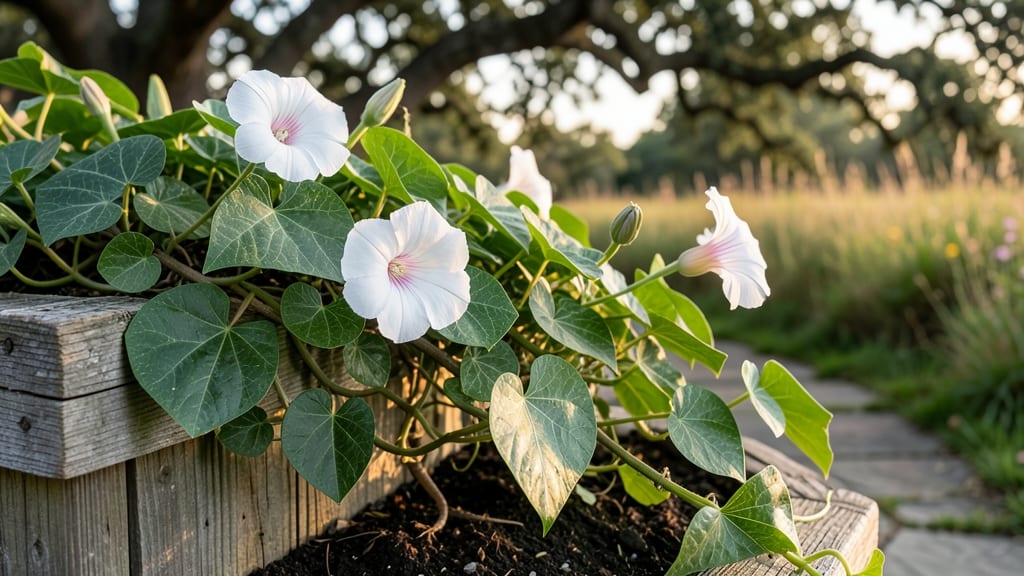
Growing a moonflower in sun or shade 🌙 is all about finding that perfect balance—too much shade and you’ll get lush vines but no blooms, while scorching sun can fry those delicate nighttime flowers before they even open.
Picture this: you’ve waited all spring for those silvery-white blooms to unfurl after dark, only to wake up to wilted petals because the light was just off. Moonflowers (Ipomoea alba) are finicky about sunlight, but the good news? They’re more adaptable than you’d think.
In 6a zones, they’ll handle 4–6 hours of sun with ease, but push them into full sun past noon, and you’ll risk heat stress. Meanwhile, partial shade (especially morning sun + afternoon shade) can actually boost blooming in hot climates.
Below, I’ll break down the exact light conditions your moonflower craves—and how to tweak your garden to get those magical nighttime displays every time.
You’ll also discover how to spot light-starved vines, the best varieties for shady spots, and a 3-step soil prep trick that makes all the difference when sunlight is limited. Let’s get those moonflowers thriving!
 Best Window Placement
Moonflower sunlight requirements: full sun vs. partial shade explained
Moonflowers (Ipomoea alba) are nighttime stars that need the right daytime conditions to shine. These vines thrive with 4-6 hours of sunlight but can tolerate up to 8 hours in cooler climates.
The key lies in balancing light exposure to trigger their photoperiodism—the biological response to daylight length that controls blooming. Too little sun stunts growth, while too much can scorch delicate leaves in hot zones.
In USDA Zones 9-11, moonflowers handle full sun exposure (6+ hours) but may need afternoon shade to prevent leaf burn. Gardeners in Zones 6-8 should aim for partial shade (3-6 hours), especially during peak summer heat.
Microclimates—like sunny patios or shaded corners—can dramatically alter their performance, so always observe your garden’s unique light patterns.
Here’s how sunlight directly impacts moonflower growth and blooming:
| Light Condition | Sunlight Hours | Ideal USDA Zones | Bloom Impact | Growth Notes |
|---|---|---|---|---|
| Full Sun | 6-8 hours | 9-11 | Abundant night blooms | Fast vine growth; risk of leaf scorch in heat |
| Partial Shade | 3-6 hours | 6-8 | Moderate blooms | Slower growth; ideal for cooler climates |
| Deep Shade | <1-3 hours | All zones | Sparse or no blooms | Leggy vines; weak stems; poor flowering |
| Morning Sun + Afternoon Shade | 4-6 hours | 6-11 | Balanced blooms | Best compromise for most gardens |
The science behind moonflower light needs revolves around their photoperiodism. These vines detect daylight length to trigger flowering, typically blooming when days shorten in late summer. In full sun, they produce more energy for rapid vine growth and frequent blooms, but afternoon shade prevents heat stress.
For example, my Zone 9 garden moonflowers thrive with morning sun and afternoon shade, yielding 10+ blooms per vine each season.
Seasonal adjustments are crucial. In spring and fall, moonflowers tolerate full sun as temperatures are milder. However, during summer heatwaves, even 6 hours of direct sun can cause leaf burn.
I’ve seen vines in Zone 10 wilt under 10+ hours of sun without afternoon relief. Always monitor leaf color—yellowing or crispy edges signal too much light.
Microclimates play a huge role. A south-facing wall might offer 8 hours of sun, while a north-facing patio could provide only 3 hours. Use a light meter app or observe your space for 2 weeks to map sunlight patterns.
For instance, my east-facing trellis gets 6 hours of morning sun, perfect for moonflowers in Zone 7.
If your garden lacks ideal sunlight, try these light-hacking strategies: - Use reflective surfaces (white walls, mirrors) to bounce extra light onto vines. - Train moonflowers on a trellis near a sunny window if growing indoors. - Plant near taller sun-loving plants (like sunflowers) to create natural shade.
These tweaks can turn a partial-shade spot into a moonflower hotspot.
Remember, moonflowers are not shade plants—they’re light-sensitive vines that need enough energy to fuel their nocturnal displays. Even in partial shade, aim for at least 3 hours of direct sun to ensure healthy growth.
With the right light balance, you’ll unlock those magical, moonlit blooms every summer evening. 🌙
How to test your garden’s light for moonflower success (with pro tips)
Moonflowers (Ipomoea alba) need 4-6 hours of sunlight daily for optimal blooming, but they’re flexible—unlike many vines. To ensure your garden meets their needs, start by mapping sunlight patterns in your space. This simple process reveals hidden light variations that can make or break your moonflower’s success.
Grab a notebook and timer (or use a free app like Sun Surveyor) to track sunlight exposure. Observe your garden from 6 AM to 8 PM during the peak growing months.
Note which areas get direct sun vs. dappled shade, as moonflowers tolerate partial shade but struggle in deep shade.
⚠️ callout warning
For DIY light testing, place a white board in potential spots and check shadows every hour. If shadows are shorter than the board’s height, it’s full sun.
If shadows are longer than the board, it’s partial shade. Moonflowers thrive in morning sun + afternoon shade, a common microclimate in USDA Zones 6-10.
Modify light conditions by pruning overhanging branches or installing reflective surfaces (like white walls or mulch). Avoid artificial shade cloth, which can reduce light too much. Instead, use lattice trellises to filter harsh afternoon sun while keeping morning light intact.
Troubleshoot light failures by checking for blocked airflow (from dense foliage) or competing plants stealing sunlight. If your moonflowers have small leaves or no blooms, they’re likely in deep shade. Relocate them to a sunnier spot or supplement with a grow light for 4 hours daily.
Pro tip: Plant moonflowers near south-facing fences or east-west garden beds to maximize light exposure. With the right setup, your vines will reward you with night-blooming magic—no blackout curtains needed! 🌙