
Shrubs
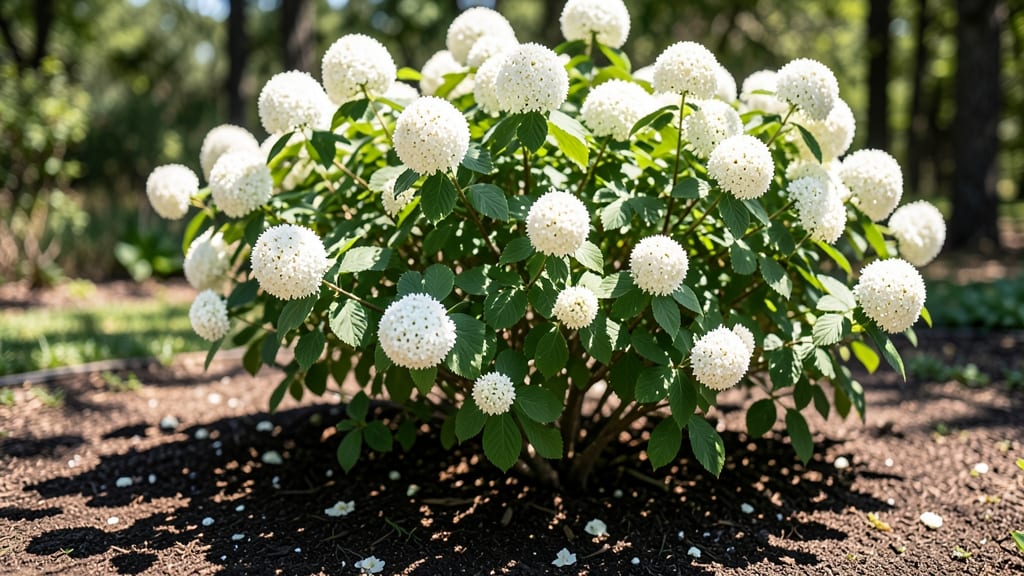
The snowball viburnum thrives in sun or shade — but getting that balance right is the key to those iconic white spring blooms you’ve been dreaming of.
Picture this: You’ve planted your 🌸 snowball viburnum with big plans for a showstopping garden centerpiece, only to watch it struggle with sparse flowers or wilted leaves. The culprit?
Too much harsh afternoon sun or not enough light to fuel its growth. It’s a common mistake, but one that’s easy to fix once you know the tricks.
This shrub is famously adaptable, but it doesn’t do well in deep, dark shade — that’s where the blooms fade fast. On the flip side, full, blazing sun can scorch its delicate leaves. The sweet spot? Morning sun with afternoon shade, or filtered light that keeps things cool.
I’ll show you exactly how to nail that balance, plus how to spot the signs when your plant is begging for a better spot.
From pruning tips to companion plants that create the perfect microclimate, you’ll learn 5 light-smart strategies to keep your snowball viburnum thriving — and blooming like crazy — for years to come.
 Best Window Placement
Optimal sun vs. shade requirements for snowball viburnum growth
Your snowball viburnum thrives on balance—too much sun scorches its delicate leaves, while too little shade stunts those iconic white spring blooms. The key lies in understanding how light intensity changes by season and how your garden’s microclimates affect growth.
Unlike sun-worshippers like roses, snowball viburnum adapts beautifully to partial shade, making it perfect for understory plantings or woodland gardens.
In nature, this shrub grows wild in woodland edges, where it receives dappled sunlight through canopy trees. Recreating this environment in your yard means positioning your viburnum where it gets morning sun and afternoon shade.
The ideal spot offers 3-6 hours of direct light daily, but it can tolerate full shade in hot climates where leaf scorch is a risk.
Here’s the science: Snowball viburnum’s photosynthesis efficiency peaks at 40-60% sunlight intensity. Too much direct sun (70%+ intensity) triggers oxidative stress, causing brown leaf edges. Too little (20% or less) leads to weak stems and sparse flowering.
The goal is to mimic its natural understory conditions—think filtered light through tree branches, not harsh midday glare.
Seasonal adjustments are critical. In spring and fall, when temps are mild, your viburnum can handle 4-5 hours of direct sun. But during summer’s peak heat, reduce exposure to morning sun only to prevent heat stress. Winter? It’s dormant, so full shade is fine—just ensure roots stay slightly moist.
Snowball Viburnum Light Requirements Comparison
| Light Condition | Sun Exposure (Daily) | Bloom Impact | Leaf Health | Best For |
|---|---|---|---|---|
| Full Sun (6+ hrs) | Morning only | Abundant blooms | Risk of scorch | Cool climates |
| Partial Sun (3-6 hrs) | Dappled light | Optimal blooms | Healthy leaves | Most gardens |
| Partial Shade (2-3 hrs) | Filtered light | Moderate blooms | Slow growth | Woodland edges |
| Full Shade (<2 hrs) | Indirect light | Sparse blooms | Leggy stems | North-facing yards |
Assessing your garden’s microclimates is easier than you think. Start by observing sun paths for 3-5 days—note where shadows fall at 10 AM, noon, and 4 PM.
If your yard has east-west exposure, those areas are gold for snowball viburnum. South-facing spots need afternoon shade (try a lattice trellis or tall companion plants). North-facing? Embrace full shade, but expect smaller blooms.
Pro tip: Use a light meter app (like Light Meter Pro) to measure lux levels—ideal ranges are 10,000-20,000 lux for partial sun. If readings hit 30,000+ lux, your viburnum needs shade cloth or a light-colored paint on nearby fences to diffuse harsh rays.
For container growers, rotate pots weekly to ensure even light exposure on all sides.
Watch for visual cues that your light balance is off. Yellowing leaves? Too much sun. Pale, sparse foliage? Not enough. Brown leaf edges in summer? Your viburnum is heat-stressed. The fix?
Adjust pruning to open the canopy for better airflow or add a mulch layer to regulate soil temps. In urban areas, pollution can reduce light penetration—rinse leaves monthly with water to remove dust buildup.
Remember, snowball viburnum’s root system is shallow, so soil moisture and light work hand-in-hand. In full sun, water deeply 2x/week; in shade
5 Light-smart tips to maximize year-round snowball viburnum blooms
Your snowball viburnum thrives when you understand its light preferences—too much sun can scorch leaves, while too little shade may reduce those iconic white spring blooms. The key is finding that sweet spot where your shrub gets morning sun and afternoon shade, especially in warmer climates.
I’ve learned this the hard way after watching my first plant struggle with leaf burn in full afternoon sun!
Don’t worry—adjusting light exposure is simpler than you think. Start by observing your garden’s microclimates. North-facing areas stay cooler, while south-facing spots get intense afternoon rays. Even a 5-foot-tall tree nearby can create the perfect dappled light effect your viburnum craves.
Let’s dive into my top light-smart tips to keep your shrub blooming beautifully all year.
- 🌞 Plant in morning sun—position your viburnum where it gets 3-4 hours of sun before noon for optimal blooms.
- 🌳 Use shade cloth—if your area gets harsh afternoon sun, drape 30-50% shade cloth to prevent leaf scorch.
- ✂️ Prune strategically—thin out dense branches to improve airflow and light penetration to inner stems.
- 🌱 Avoid full shade—deep shade reduces flowering; aim for partial shade with filtered light instead.
- 💧 Monitor soil moisture—dry soil in full sun stresses plants; mulch to retain moisture and regulate temperature.
If your snowball viburnum isn’t flowering as expected, check its light exposure first. Too little sun means fewer blooms, while too much can cause leaf scorch or stunted growth. I once had a client whose viburnum barely bloomed—turns out, it was planted under a dense evergreen that blocked all light.
Moving it to a sunnier spot with afternoon shade transformed its blooms within a season!
For urban gardens with limited space, consider container growing. A large pot lets you move your viburnum to follow the sun—place it near an east-facing window in summer and closer to a south-facing wall in winter.
Just ensure the container has drainage to prevent root rot from overwatering in shadier spots.
One common mistake? Assuming all shade is equal. Deep shade from tall buildings or dense trees weakens viburnums over time. Instead, opt for dappled shade—like under a deciduous tree—where light filters through leaves.
This mimics the plant’s natural habitat and keeps it healthy. If your yard lacks natural shade, a light-colored fence can reflect sunlight gently while reducing intensity.
Finally, don’t forget to adjust care based on seasons. In summer, your viburnum may need more shade, while winter’s weaker sun lets you move it to slightly sunnier spots.
I’ve found that observing your plant’s leaves is the best indicator: dark green and glossy means it’s happy; yellowing or crispy edges signal light stress. With these tips, your snowball viburnum will reward you with lush foliage and abundant blooms year after year! 🌸