
Lawn
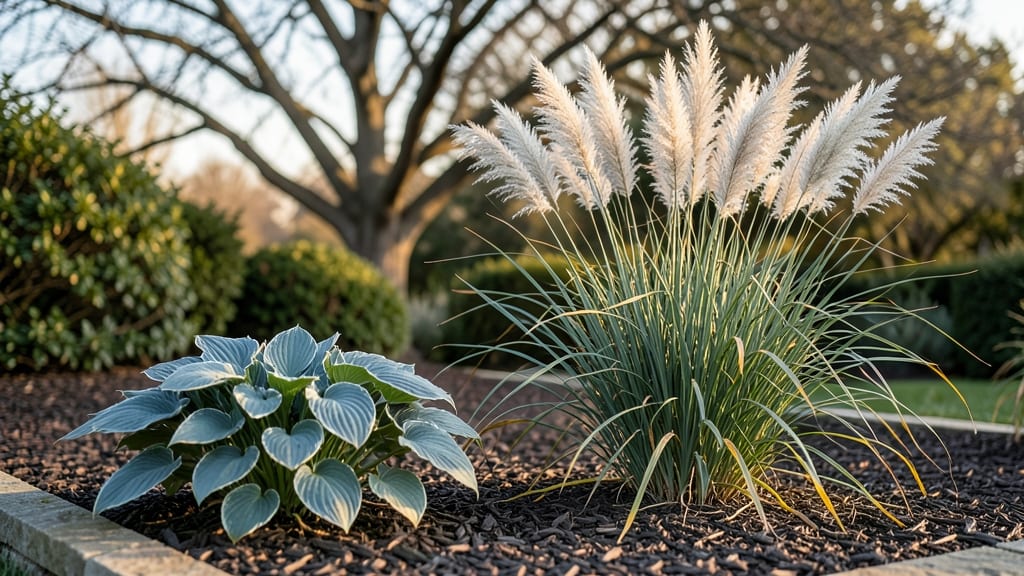
Pampas grass can grow in shade, but it struggles to flourish without full sun exposure, resulting in sparse foliage and minimal plume development. While it may survive in partial shade, deep shade severely limits its ornamental appeal and growth rate.
Pampas grass (Cortaderia selloana) is a sun-loving ornamental grass that relies on direct light for optimal photosynthesis.
When placed in shade, its growth slows dramatically due to reduced energy production, often leading to pale leaves (chlorosis) and fewer showy plumes. 🌿 In partial shade (3-6 hours of sun), you might still see some growth, but the plant's signature fluffy blooms become sparse or fail to develop entirely.
For best results, position it in areas with at least 6+ hours of sunlight daily, where it can reach its full height and ornamental potential.
If your garden has limited sun exposure, consider shade-tolerant alternatives like maiden grass or fountain grass, which handle lower light conditions better while still providing texture and movement.
These grasses often produce more consistent foliage and blooms in shaded spots, making them ideal replacements for pampas grass in low-light landscapes.
💡 In This Article
- How Shade Affects Pampas Grass Growth and Plume Production
- Best Shade-Tolerant Alternatives to Pampas Grass
How shade affects pampas grass growth and plume production
Pampas grass relies heavily on photosynthesis, a process that requires 6-8 hours of direct sunlight daily to produce the energy needed for robust growth. When deprived of adequate light, its cells can't synthesize enough chlorophyll, leading to chlorosis—the yellowing of leaves as green pigment breaks down.
In deep shade, this often manifests as weak, sparse foliage that lacks the vibrant green hue seen in sun-exposed plants. 🌿 The plant's iconic fluffy plumes (inflorescences) are particularly sensitive to light deprivation, as they require high energy reserves to develop fully.
The root system also suffers under shade conditions. Pampas grass develops a deep, fibrous root network that thrives in well-drained soil with ample sunlight. In shade, roots grow more slowly and may become shallow and weak, reducing the plant's stability and nutrient uptake.
Studies show that pampas grass in partial shade (3-6 hours of sun) can grow up to 30% slower than in full sun, with plume production dropping by 50-70%. The plant may still survive, but its ornamental value diminishes significantly.
For comparison, a pampas grass in full sun can reach heights of 8-12 feet with abundant plumes, while the same plant in deep shade may only grow 3-5 feet tall with sparse, underdeveloped blooms. The difference is striking—imagine a 10-foot-tall fountain of fluffy white plumes versus a scraggly, yellowing shrub.
This stark contrast explains why landscape designers often avoid placing pampas grass in shaded areas unless they're prepared for a less dramatic display. 💫
Even partial shade can trigger other issues, like increased susceptibility to fungal diseases. Shaded pampas grass retains more moisture on its leaves, creating a damp environment that fungi like rust or powdery mildew exploit. The plant's natural defenses weaken under stress, making it more vulnerable.
In contrast, sun-exposed pampas grass develops a tougher cuticle and better air circulation, reducing disease risk. This is why many gardeners recommend avoiding shade entirely unless the plant is positioned near a southern-facing wall or in a microclimate with reflected light.
If you're working with a shaded garden, consider the light quality as much as quantity. Pampas grass prefers bright, direct light, but it can tolerate dappled shade (filtering through trees) better than dense shade from buildings or thick canopies.
The key is ensuring the plant receives at least 3 hours of direct sunlight daily—even if spread across morning and late afternoon—to maintain some growth potential. Without this minimum, the plant will struggle to justify its space in your landscape. ✨