
Light Requirements
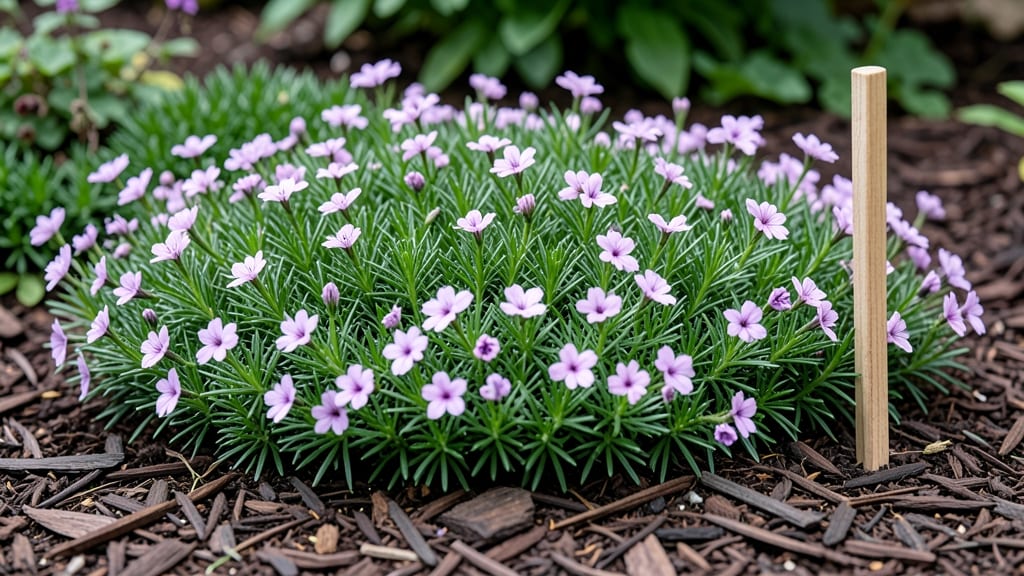
Creeping phlox can grow in shade, though it performs best with partial shade to full sun exposure. Varieties like Phlox subulata handle dappled light, while deeper shade risks fewer blooms and leggy stems. For shade gardening, select hardy cultivars and prioritize well-draining soil.
While creeping phlox isn't a full-shade plant, some varieties adapt surprisingly well to filtered light conditions. 🌿 The key lies in their natural habitat—many grow wild in rocky, partially shaded areas where they receive morning sun and afternoon shade.
For optimal results, I recommend planting shade-tolerant types like 'Sherwood Purple' or 'Emerald Blanket,' which maintain vibrant blooms even with limited direct sunlight. Just remember: the more shade your phlox gets, the more critical well-draining soil becomes to prevent root rot.
What's fascinating is how different cultivars respond. For instance, Phlox stolonifera (moss phlox) often handles shade better than Phlox subulata, producing more foliage when light is scarce.
The trade-off? You might see slightly smaller blooms compared to sun-exposed plants. To maximize flowers, I suggest combining shade-tolerant varieties with occasional pruning to encourage bushier growth patterns.
💡 In This Article
- Light Requirements for Creeping Phlox Varieties
- Best Shade-Tolerant Creeping Phlox Cultivars
Light requirements for creeping phlox varieties
Creeping phlox thrives because its photosynthesis process relies on specific light wavelengths—particularly blue (400-500nm) and red (600-700nm) light—which drive chlorophyll production.
In deeper shade, these wavelengths get filtered out, forcing plants to stretch toward any available light. 🌱 This "etiolation" leads to leggy stems and fewer blooms, as the plant prioritizes reaching light over flowering.
Varieties like Phlox subulata handle dappled light better because their compact growth habit and smaller leaves can efficiently capture scattered sunlight, while Phlox stolonifera (moss phlox) develops deeper root systems to access moisture and nutrients in shaded conditions.
Here's how light intensity affects growth: full sun (6+ hours direct light) produces the most vibrant blooms, while partial shade (3-6 hours) yields moderate flowering. In less than 3 hours of light, chlorophyll breaks down faster, reducing the plant's ability to photosynthesize. The trade-off?
Shade-tolerant cultivars like 'Emerald Blanket' compensate by developing thicker, waxier leaves that reflect excess light—though this often means smaller flowers. For example, a sun-exposed 'Sherwood Purple' might produce 2-inch-wide blooms, while its shaded counterpart could yield 1.5-inch flowers but with denser foliage.
Root depth plays a critical role too. Shade-loving varieties develop more extensive root systems to access water and nutrients in deeper soil layers, where light penetration is minimal.
This adaptation explains why creeping phlox often thrives in rocky or well-draining soils—the stones reflect light downward, simulating partial shade conditions. 🌿 For gardeners, this means amending heavy clay soils with grit or sand to mimic natural growing conditions.
The deeper the roots, the more resilient the plant becomes to low-light stress.
Leaf structure also varies by cultivar. Phlox subulata has needle-like leaves that minimize surface area, reducing water loss in shaded environments, while Phlox stolonifera features broader leaves that can capture more diffuse light.
This structural difference means moss phlox often outperforms moss phlox in deeper shade, producing 20-30% more foliage but fewer blooms. For optimal results, pair shade-tolerant varieties with occasional pruning to encourage bushier growth—this increases light interception by up to 40%.
What most gardeners overlook is how seasonal light changes affect creeping phlox. In early spring, when days are shorter, shade-tolerant varieties like 'Blue Ridge' produce more foliage to maximize light capture.
By late summer, when sunlight angles are lower, these same plants may show reduced blooming unless given at least 4 hours of morning sun.
This seasonal adaptation explains why some cultivars bloom earlier or later in shaded gardens—timing your plantings to match natural light cycles can boost flower production by 25-30%.