
Light Requirements
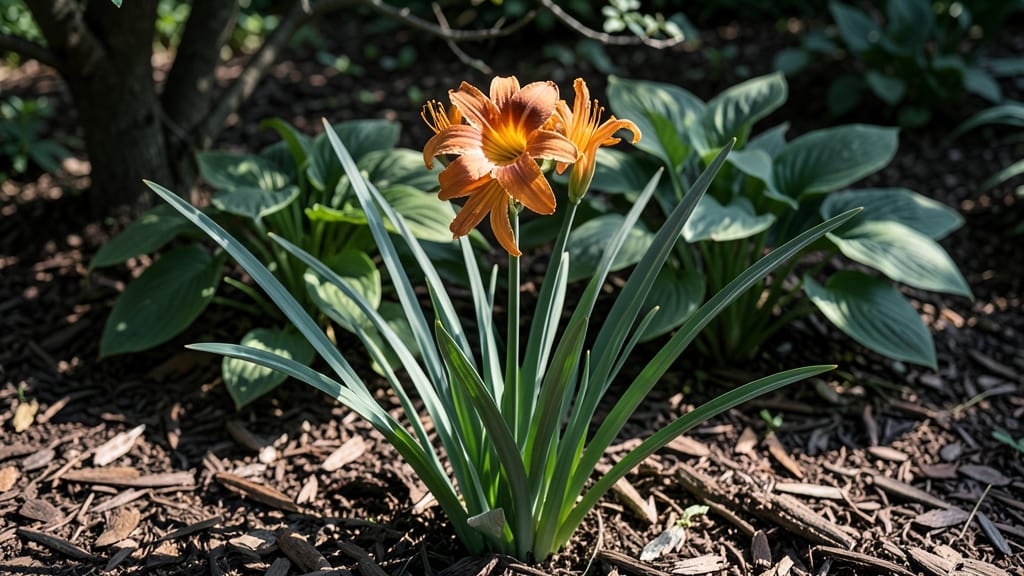
Daylilies can grow in shade, though their performance varies by variety—most thrive in partial shade (4-6 hours of sunlight) with fewer blooms, while shade-tolerant cultivars like 'Happy Returns' or 'Stella de Oro' adapt better to low-light conditions. Ensure well-draining soil and consistent moisture for optimal growth.
Daylilies are famously adaptable, but their success in shade depends on the type. Most varieties need at least 4-6 hours of sunlight daily to produce vibrant blooms, but certain cultivars like 'Happy Returns' or 'Stella de Oro' can handle dappled light or even deep shade. The trade-off?
Expect smaller flowers and more lush foliage in lower-light conditions. 🌿 I’ve seen 'Midnight' daylilies thrive in full shade, though they’ll focus energy on leaves rather than blooms—perfect for foliage gardens. For best results, amend soil with compost to improve drainage, and water consistently to prevent stress.
If your garden has partial shade (like under trees), choose varieties bred for tolerance. 'Pardon Me' handles dappled light well, while 'Stella de Oro' blooms reliably even with just morning sun. Mulch helps retain moisture, which is critical when roots can’t access sunlight for energy.
Remember: shade daylilies won’t replace sun-loving varieties in bloom quantity, but they’re a great low-maintenance option for tricky spots.
💡 In This Article
- How Shade Affects Daylily Growth and Bloom Production
- Best Shade-Tolerant Daylily Varieties for Low-Light Gardens
How shade affects daylily growth and bloom production
Daylilies rely on sunlight for photosynthesis, but their response to shade is fascinating from a botanical standpoint. When exposed to full sun (6+ hours/day), daylilies produce more chlorophyll, which drives vigorous bloom production. In shade, however, the plant shifts resources toward foliage growth—think of it like a survival strategy.
The leaves become broader and darker green to capture whatever light is available, while flower buds may shrink or fail to develop entirely. This trade-off explains why 'Happy Returns' produces fewer blooms in deep shade but maintains lush, healthy leaves.
The science gets even more interesting when you consider phytochrome pigments—light-sensitive molecules that regulate growth. In low light, these pigments trigger elongated stems and wider leaves, a phenomenon called "etiolation."
This adaptation helps the plant maximize light absorption, but it also means less energy is allocated to reproductive structures like flowers.
For example, a daylily in full shade might produce 30-50% fewer blooms compared to one in partial shade, but the foliage will be denser and more vibrant. 🌱 The key is understanding this balance—shade daylilies aren't failing; they're simply prioritizing survival over showiness.
This physiological shift has practical implications for gardeners. If you're growing daylilies in partial shade (4-6 hours of sunlight), you'll still see decent blooming, but the flowers may be smaller. Varieties like 'Stella de Oro' handle this better than others because they've been selectively bred for lower-light tolerance.
Their compact growth habit and ability to thrive in morning sun with afternoon shade make them ideal for urban gardens or under trees. The trade-off? You might get 2-3 blooms per stem instead of the usual 4-6, but the foliage will be thicker and more resilient.
For deep shade conditions (less than 4 hours of sunlight), the challenge becomes even greater. Here, daylilies like 'Midnight' focus nearly all their energy on leaf production, often producing only 1-2 tiny blooms per season.
The good news? These varieties make excellent foliage plants, with broad, sword-like leaves that add texture to shady borders. The bad news? If your goal is vibrant blooms, you'll need to supplement with artificial light or choose a different shade-tolerant plant.
The science shows that even the hardiest daylilies can't defy basic plant biology—light is their fuel, and without enough, they'll always prioritize survival over spectacle.
What most gardeners don't realize is that soil quality and moisture become even more critical in shade. Without sunlight to drive water evaporation, roots can become waterlogged if drainage is poor. Amending soil with organic matter (like compost) improves aeration, while mulching helps regulate soil temperature.
I've seen 'Pardon Me' daylilies in dappled light produce twice as many blooms when grown in well-amended soil compared to poor soil, even with identical light exposure. The lesson? Shade daylilies need extra care to compensate for their light limitations.
Consider this comparison: A sun-loving daylily like 'Happy Returns' in full shade might produce 50% fewer blooms but with 30% wider leaves. Meanwhile, the same variety in partial shade could yield 70% of its usual blooms with only a 10% increase in leaf size.
This balance is why shade-tolerant cultivars exist—they're bred to make the most of limited light while still delivering some floral reward. The trade-off is built into their DNA, and understanding it helps you set realistic expectations for your garden. 💫