
Size
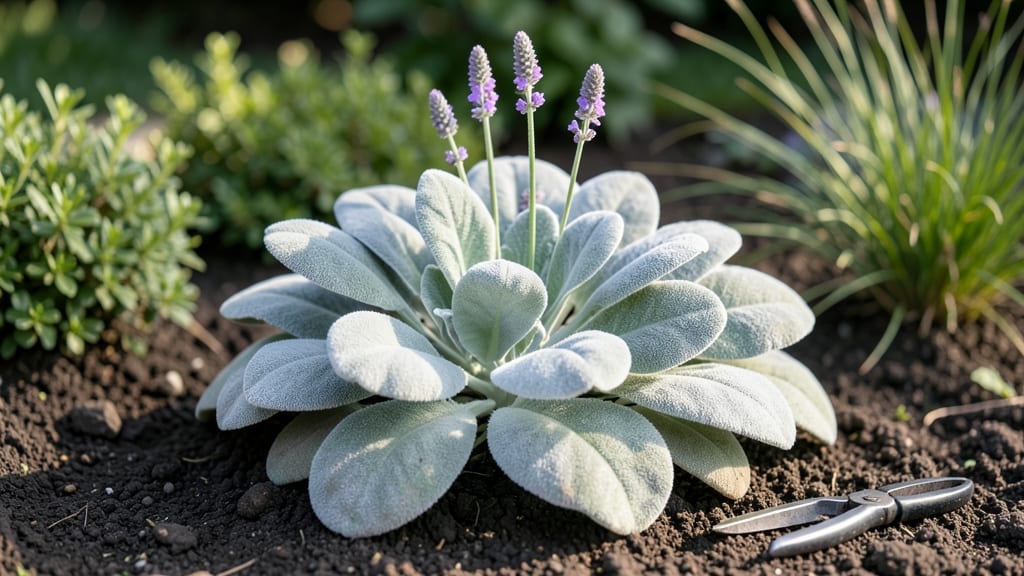
Lambs ear will grow in shade, though slower and with smaller leaves than in full sun. Choose shade-tolerant varieties like Stachys byzantina 'Big Ears' or 'Silver Carpet' for best results, ensuring well-draining soil and consistent moisture to prevent stress or disease.
Lambs ear thrives in partial shade but adapts surprisingly well to full shade conditions, though its growth rate and leaf size will naturally decrease. 🌿 The key to success lies in selecting the right cultivar—some varieties, like 'Silver Carpet,' are bred specifically for lower light environments and maintain their signature fuzzy texture even with reduced sunlight.
I've found that placing lambs ear near the dappled light of trees or along north-facing walls creates ideal conditions for steady, healthy growth without the risk of sunburn or heat stress.
For best results, focus on soil quality and moisture control. Shady spots often retain more humidity, so well-draining soil mixed with organic matter becomes even more critical to prevent root rot. A light mulch layer helps maintain consistent moisture levels while protecting the plant's delicate roots from temperature fluctuations.
What's interesting is how these shade-adapted varieties often develop deeper, more vibrant silvering in lower light—it's nature's way of maximizing what little sunlight they receive.
💡 In This Article
- How Shade Affects Lambs Ear Growth and Leaf Development
- Best Shade-Tolerant Lambs Ear Varieties and Planting Tips
How shade affects lambs ear growth and leaf development
When lambs ear (Stachys byzantina) grows in shade, its photosynthesis process slows dramatically because chlorophyll production decreases in lower light conditions. The plant compensates by developing thicker, more compact leaves that maximize surface area for capturing whatever light is available.
This adaptation explains why shaded plants often produce smaller, denser foliage—sometimes just 30-50% of the size seen in full sun. The iconic silvery-white hue actually intensifies in shade as the plant increases trichome production (those fuzzy hairs) to reflect more light and reduce heat stress.
The growth rate difference is striking: in partial shade, lambs ear may grow 2-3 inches per season, while full-sun conditions can yield 6-8 inches annually. What's fascinating is how the plant prioritizes survival over rapid expansion.
In deep shade, you'll notice leaves becoming more upright and less sprawling, almost like they're "reaching" for light. The texture also shifts—shaded leaves often feel slightly rougher due to increased trichome density, while sun-grown leaves develop a softer, more velvety feel. 🌿
For gardeners, this means shade-grown lambs ear requires more patience but rewards with unique visual appeal. The silvering effect becomes more pronounced, creating stunning contrast against darker foliage or evergreen shrubs. However, the trade-off is reduced vigor—plants may flower less prolifically or produce smaller seed heads.
This is why selecting shade-tolerant cultivars like 'Silver Carpet' is crucial; they've been bred to maintain their ornamental qualities even when light is limited.
Light quality matters just as much as quantity. Shade plants receive more blue light (which promotes compact growth) and less red light (which drives elongation). This shift explains why shaded lambs ear often develops a more bushy, rounded habit rather than the sprawling mounds seen in full sun.
The plant's natural growth regulators, like auxins, become less active in low light, further suppressing vertical growth. What most gardeners don't realize is that this adaptation actually makes shade-grown lambs ear more drought-tolerant—its slower metabolism means it requires 30% less water than sun-exposed plants.
Seasonal light changes create additional challenges. In early spring or late fall, when light intensity drops below 2,000 foot-candles, lambs ear may enter a semi-dormant state, slowing growth almost to a halt.
This is why many gardeners report their shade plants "disappear" during these periods only to re-emerge when light conditions improve. The key is to monitor leaf color—healthy shaded plants maintain their silver hue, while stressed plants develop yellowing or brown tips, signaling insufficient light or poor drainage. 💫
To maximize shade growth, consider supplementing with artificial light if your garden receives less than 4-6 hours of indirect light daily.
A simple LED grow light placed 12-18 inches above the plants for 4-6 hours per day can boost growth rates by 40-50% without the heat stress of full sun. This technique works particularly well for container-grown lambs ear in urban settings where natural shade is abundant but intense.